

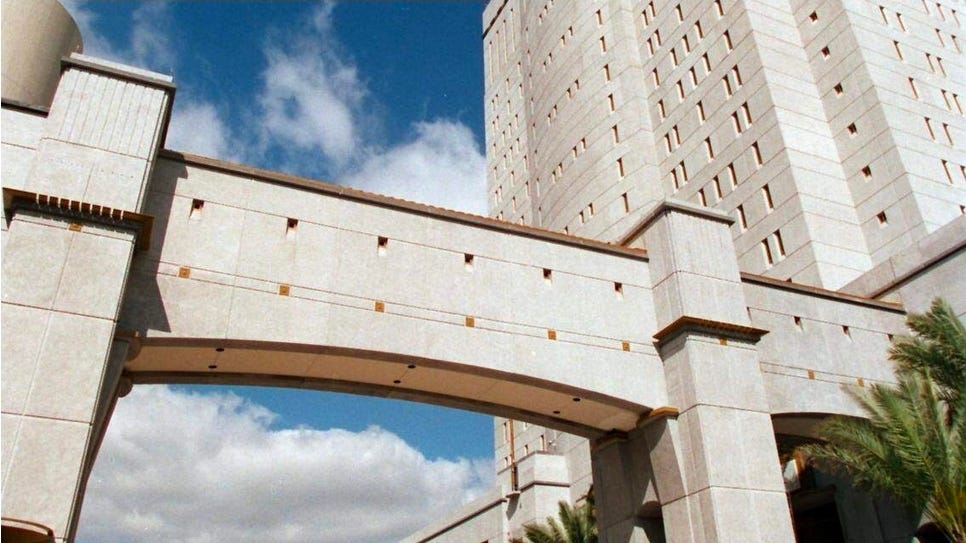
Aled Damien Carbonell-Betancourt was 27 years old when he died this week in the custody of Immigration and Customs Enforcement in Florida. ICE said he was found in his cell on April 12 in what appeared to be a suicide attempt. The official cause of death remains under investigation.
He is the second person in Florida in less than a month to die in ICE custody in what has been described as a presumed suicide.
That alone should have set off immediate alarm. But the details surrounding Carbonell-Betancourt’s detention make his death even harder to ignore. According to reporting, the criminal case that first brought him into ICE’s orbit was not only reduced — prosecutors ultimately declined to pursue it at all.
Even after that, he remained inside the detention system.
That is the fact at the center of this death. A 27-year-old man was pulled into custody through a case that did not hold, kept inside a federal detention facility in downtown Miami, and died there while the government still owed the public basic answers.
Carbonell-Betancourt first entered the United States on Oct. 30, 2024, and was released on parole while placed into deportation proceedings in immigration court, according to ICE. Months later, on Nov. 20, 2025, a Hialeah police officer encountered him at what records described as an abandoned farmer’s market late at night. The officer warned him about trespassing, asked him to place his belongings on the patrol car, and began a pat-down.
When the officer asked for identification, Carbonell-Betancourt did not provide it. He then ran. The officer pursued him, used a taser, and placed him in handcuffs. He was taken to the hospital and charged with resisting an officer with violence, a felony under Florida law.
But that was not where the case ended.
Documents later showed the charge was reduced to resisting an officer without violence, a misdemeanor. Prosecutors then declined to pursue it. The legal path that had been used to justify his arrest weakened and then collapsed. Yet Carbonell-Betancourt still wound up in ICE custody, where he was held beginning in February at the Federal Detention Center in downtown Miami.
By the time he died, the state case had already fallen away.
That sequence matters. It matters because it cuts through the fiction that detention is always a narrow response to clear public danger. In Carbonell-Betancourt’s case, the system kept moving even after the criminal prosecution no longer did. The arrest remained useful to the machinery long after the justification behind it had eroded.
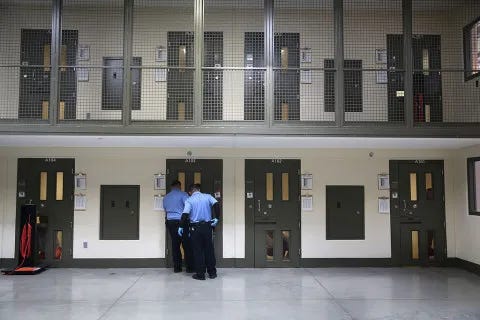
The facility where Carbonell-Betancourt was being held has already drawn scrutiny. The Federal Detention Center in Miami is a federal prison that has increasingly been used to house civil immigration detainees under the Trump administration’s mass deportation push. That shift has blurred the line between civil detention and punitive incarceration, placing immigrants in lockups built for confinement rather than care.
The result has been predictable.
Overcrowding has intensified. Access to medical care and mental health care has remained in question. Lawyers, advocates, and community watchdogs have raised repeated concerns about conditions inside these facilities, including harsh treatment, lack of access to counsel, crumbling infrastructure, and the use of force. A previous Miami Herald investigation found that ICE detainees at the downtown federal detention center faced exactly those conditions.
Carbonell-Betancourt died inside that environment.
His death is not an isolated event drifting free of context. It sits inside a larger pattern that has become harder to deny as deaths in custody rise and detention centers absorb more people under more pressure with less transparency. Immigration detention is often described in bureaucratic language, but the reality is far simpler. People are being confined in overcrowded institutions where the government controls their movement, their access to care, their contact with lawyers and family, and in too many cases, their last days alive.
ICE has not released additional details about Carbonell-Betancourt’s mental health status, the circumstances leading up to his death, or whether surveillance footage and internal reports will be made public. The autopsy is pending. The official investigation is pending. The public record is still incomplete.
But the system that held him is already known.
This is what makes victim-centered reporting necessary. Not because it softens the facts, but because it restores what detention policy tries to erase. Carbonell-Betancourt was not a case file. He was not a detention bed. He was not an administrative body moving through paperwork. He was a 27-year-old man who ended up dead inside a federal lockup after prosecutors had already dropped the case that first fed him into the system.
That should have been impossible to ignore before his death. It is inexcusable now.
The use of prisons and jail-like facilities for civil immigration detention has allowed the government to hide behind a technical distinction while preserving the reality of confinement. Officials can call it processing, custody, or detention. Families still lose people inside concrete institutions. Communities still wait for answers. The dead are still named only after the fact, if the public forces the story into view.
And that is where this article must stop looking away.
Carbonell-Betancourt’s death raises questions the government should be forced to answer in full. Why was he still in custody after the prosecution declined to pursue the reduced charge? What mental health care was available to him inside the facility? What happened in the hours before he was found? What do surveillance footage, housing logs, medical notes, and internal incident reports show? What role did overcrowding, isolation, or neglect play? What policies made his continued detention possible, and who signed off on them?
These are not abstract questions. They are the minimum public standard when someone dies in government custody.
Florida has now seen two presumed suicides in ICE custody in less than a month. That is not a coincidence to be filed away under administrative tragedy. It is a warning. Lawyers, advocates, and local watchdogs have been sounding the alarm about overcrowding, poor medical care, mental health failures, and the use of carceral institutions for civil detention. The deaths are arriving inside the conditions people were already told to notice.
Carbonell-Betancourt should still be alive.
Instead, his family and community are left with a death under investigation, a detention timeline built on a case that did not survive, and a government that still has not produced the full truth about what happened inside its walls.
That is the story. Not only that a man died, but that the detention system kept him long enough to die there.

Support independent reporting that documents ICE abuse, detention deaths, and the systems built to hide them.
Upgrade to a paid subscription to keep this work public.