

A small Georgia town is trying to stop ICE from planting one of the largest detention facilities in the country in its backyard.
That is the real scale of what Social Circle is fighting.
This is not a dispute over a minor federal project or a routine zoning clash dressed up as politics. According to the city’s lawsuit, the federal government moved to convert a local industrial warehouse into a 10,000-bed immigration detention center without properly consulting the town, without completing the required environmental review, and without proving that Social Circle has the infrastructure to survive a project of that size. For a town of about 5,000 people, that is not an ordinary federal ask. It is an attempt to force mass deportation infrastructure into a place that says it cannot carry it.
The numbers alone explain why this matters. A 10,000-bed detention center would not simply sit inside Social Circle as another facility on a map. It would reshape the town’s relationship to its own water system, sewer capacity, hospitals, roads, services, and public identity. The lawsuit argues exactly that. If allowed to proceed, the city says, the project would overwhelm local infrastructure, burden nearby medical systems, and create a public nuisance for residents living around it. That is the part that strips away the abstraction. Detention is never just a policy concept. It is a physical burden imposed somewhere. Pipes, treatment systems, ambulances, roads, land use, staffing, waste, emergency response, and daily disruption all have to land on a real place.
In this case, the place is Social Circle.
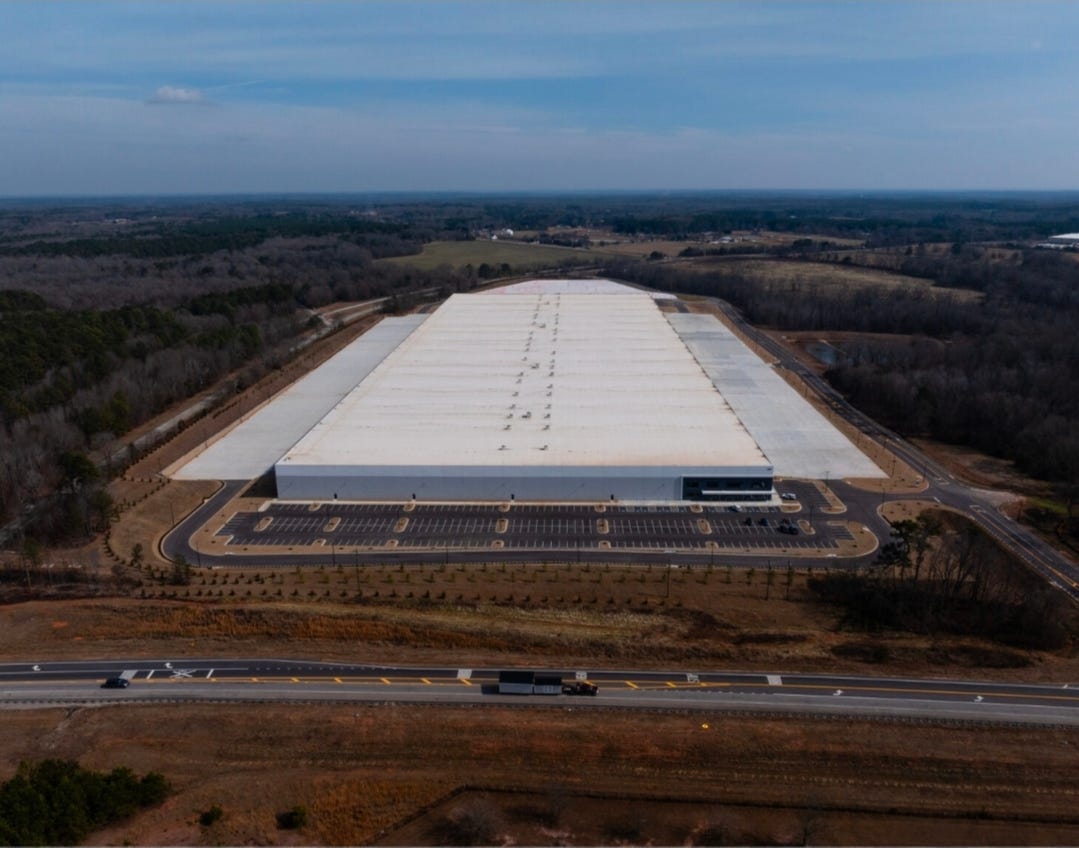
The lawsuit names ICE, the Department of Homeland Security, Homeland Security Secretary Markwayne Mullin, and acting ICE Director Todd Lyons. Social Circle is asking the U.S. District Court for the Middle District of Georgia to stop the project from moving forward. The town’s position is not vague. Federal officials, it argues, moved ahead without respecting the local consequences and without completing the steps required to measure what a project like this would do to the community. That matters because the federal government is not just purchasing land here. It is attempting to install a major detention apparatus inside a town that says it was not given a meaningful chance to protect itself.
That pattern should sound familiar by now. ICE does not simply operate through raids, arrests, vans, and removal flights. It also depends on buildings, contracts, capacity expansions, and long-term detention infrastructure. The enforcement agenda is not only mobile. It is architectural. It needs places to hold people. It needs systems that can absorb mass intake. It needs local communities to become the physical base of federal cruelty.
That is the deeper significance of what is happening in Social Circle.
This project is reportedly part of a $38.6 billion ICE initiative funded through the One Big Beautiful Bill Act, a nationwide expansion designed to facilitate deportations at much larger scale. The Social Circle facility is one of eight planned detention “mega centers.” That term matters because it captures what this buildout really is. These are not scattered local holding sites or marginal facility upgrades. They are concentrated detention hubs built to support mass processing, mass confinement, and mass deportation. ICE is not merely sustaining its existing system. It is trying to enlarge the machinery.
And that machinery has to land somewhere.
In Social Circle, federal officials reportedly closed on the warehouse in February for about $128 million, nearly five times the property’s previously assessed value. Originally, they planned to begin housing detainees by June. That timeline is now uncertain because the town pushed back. Residents protested. Officials refused to cooperate quietly. Social Circle leaders reportedly refused to remove a lock on the water meter at the site in March, trying to halt progress until ICE could show that the facility could operate without crushing the town’s infrastructure. According to the lawsuit, ICE has not done that.
That refusal by the town is one of the most important parts of the story.
Because it shows that local resistance does not have to begin only after a detention center is already functioning. Social Circle is pushing at the point where federal detention infrastructure still needs local systems to cooperate. Water matters. Sewer matters. Service capacity matters. Towns are not powerless just because ICE is federal. The project still has to run through the physical reality of the place it is trying to occupy. The town understands that, and it is using what leverage it has.
That also helps clarify what is actually at stake. The federal government wants to treat detention expansion as a national enforcement necessity. But towns like Social Circle are the ones being told to absorb the consequences. If the sewer system strains, the town carries that. If hospitals are burdened, the region carries that. If nearby residents lose peace, stability, or property value, they carry that. If the town’s identity becomes tied to one of the nation’s largest detention sites, Social Circle carries that too. The federal government gets the facility. The local community gets the burden.
That imbalance runs through the whole dispute.
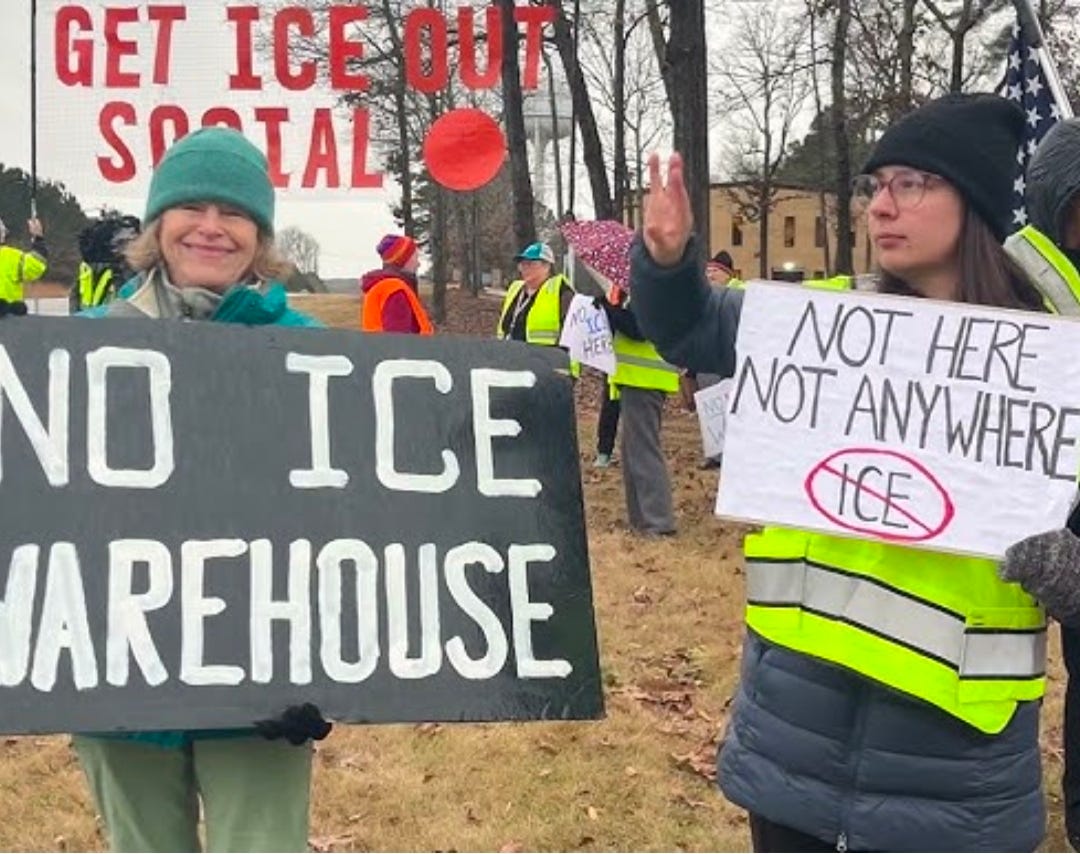
The Department of Homeland Security responded with the kind of language federal agencies often use when they want to sound cooperative without conceding anything. It said it was reviewing policies and proposals and quoted Mullin saying he wanted to work with community leaders and be a good partner. But the town’s lawsuit exists precisely because Social Circle says that did not happen. If the government had truly acted like a partner, there would not now be a lawsuit arguing that the project moved forward without proper consultation, without the necessary environmental process, and without proof the town could withstand the impact.
That contrast matters because federal language too often does public relations work for detention expansion. “Partner.” “Review.” “Community leaders.” “Delivering for the American people.” These phrases are meant to soften what the project actually is: a plan to implant a massive detention facility into a small town that says it cannot sustain it. The scale of the project does not become less coercive because the federal government says the right words around it.
Congressman Mike Collins, who represents the area, reportedly expressed sympathy with town officials and said Social Circle did not have the resources for a project like this. He added that it was not the right fit or the right place for the detention center. That matters because even within the political geography that would normally be expected to accommodate an ICE expansion, the practical reality is difficult to hide. A town of this size cannot casually absorb detention infrastructure on this scale. The material facts are too blunt.
And those material facts are what make this story bigger than Social Circle alone.
This is what mass deportation policy looks like when it leaves the campaign stage and starts demanding concrete space. It needs large-capacity sites. It needs water access. It needs sewer capacity. It needs roads that can handle movement in and out. It needs staffing structures, contracts, security systems, public utility support, emergency responses, and land use that communities have to live beside. When politicians talk about deportation as though it is simply a matter of will, they conceal the physical system required to carry it out. Social Circle is exposing that system in real time.
That exposure is valuable because it breaks the myth that detention exists somewhere else, out of view, handled by someone else’s county, someone else’s roads, someone else’s utility lines, someone else’s residents. The truth is harsher. Federal detention expansion works by selecting real places and telling them, directly or indirectly, that they will host the machinery. Some places comply. Some are cornered. Some are economically pressured. Some are politically aligned. And some, like Social Circle, decide to fight.
That fight should be understood clearly.
This is not a town objecting to immigration in the abstract. It is a town confronting the attempted installation of one of the country’s largest detention facilities inside a community that says it was never consulted properly and never shown that it could survive the load. The difference matters. It keeps the focus where it belongs: on federal overreach, detention expansion, and the burden pushed downward onto local life.
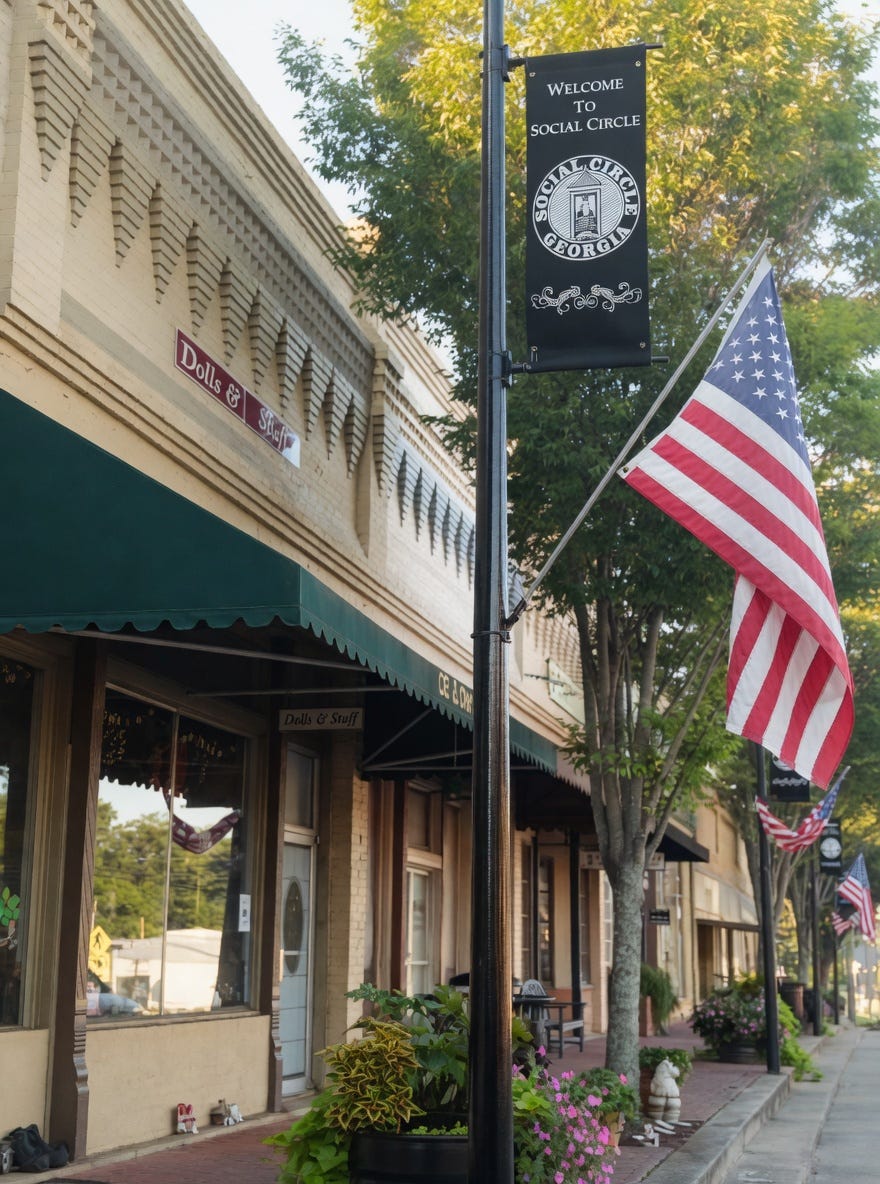
And the size comparison should stay in the reader’s mind. A 10,000-bed detention center in a town of about 5,000 people is not just another facility. It is a structural distortion. It means the detention capacity would effectively dwarf the town itself. That should change the way the project is seen. This is not about a federal agency making modest use of available industrial space. It is about attempting to anchor a major deportation complex inside a small community and expecting that community to absorb the shock.
That is why the lawsuit matters beyond Georgia. It gets at a national truth the administration would prefer to keep hidden: the deportation agenda is only as scalable as the places willing, or forced, to host it. The machinery cannot expand unless towns, counties, utilities, and local systems are made to carry it. Social Circle is refusing to pretend that this is a neutral development decision. It is naming the infrastructure strain, the lack of process, and the irreparable harm it believes the project would cause.
That clarity matters.
Because detention centers are too often discussed only after they are operating, after people are already inside, after the concrete is poured, after the contracts are signed, after the roads are already feeding the site. Social Circle is fighting earlier than that. It is challenging the premise before the detention center becomes a fact on the ground. It is forcing a legal confrontation over whether a small town can be turned into detention infrastructure against its will and without serious respect for what the project would do to the people who live there.
That should be watched closely.
Because if ICE succeeds here, it will not only gain beds. It will reinforce the model: buy the site, move fast, push the burden local, speak in administrative language, and dare small communities to stop the machine before it is already running. If Social Circle succeeds, it will demonstrate something else: that detention expansion is vulnerable where it depends on local capacity, local compliance, and local silence.
The town has already refused silence.
Now the lawsuit is asking the court to decide whether that refusal still matters when federal detention power wants to move in anyway.
Support Americans Against ICE. This work exists to document how detention and deportation expansion actually function once the slogans are stripped away: the infrastructure demands, the local burdens, the federal pressure, and the communities forced to live beside the machinery.
A paid subscription helps fund reporting that keeps naming where this system is growing, how it is being built, and who is being told to absorb the cost.
The roof, the roof is on fire. We don't need no water, let the motherfucker burn. Burn motherfucker, burn. (Such a good song. ) 😉
There will be NO increase in sewage and NO further infrastructure is required. Every normal citizen in the town will be taken into the warehouse and deported. YOU CAN'T HANDLE THE TRUTH.