


Gregory Morgan Jr. did not arrive at the Hennepin County Public Safety Facility like an abandoned officer facing the consequences of his own alleged conduct. He arrived with cameras waiting, an attorney beside him, and the federal government already positioned behind his defense.
Morgan, an ICE agent from Maryland, traveled to Minnesota to surrender on felony assault charges connected to Operation Metro Surge, the aggressive federal immigration operation that pushed fear through immigrant communities across the Twin Cities. Prosecutors allege Morgan pointed a gun at two motorists during a confrontation on Highway 62 near Portland Avenue after driving on the shoulder during traffic.
The public story presented outside the courthouse was not built around the civilians who say they had a gun pointed at them. It was not built around the immigrant families who lived through Metro Surge raids, detention threats, surveillance fear, and the terror of not knowing who ICE would target next. It was built around the fear of the ICE agent.
Defense attorney Ryan Pacyga stood beside Morgan and told the public, “Greg Morgan is not a caricature, he is not a headline.” That sentence was not just legal messaging. It was a demand that the public slow down, soften its gaze, and remember the humanity of a federal agent accused of threatening civilians during an operation that left communities shaken.
That is the inversion at the center of this case.
For weeks, immigrant communities across Minnesota were forced to live under the weight of Metro Surge. Families feared raids. Workers feared detention. Parents feared separation. Communities watched federal enforcement expand through vulnerable neighborhoods while the government framed the operation as public safety. Public outrage intensified after two Minnesotans were killed during the operation and residents described fear spreading through communities already living under the pressure of immigration enforcement.
Now, one of the ICE agents charged during that same operation is being publicly recast as the endangered party.
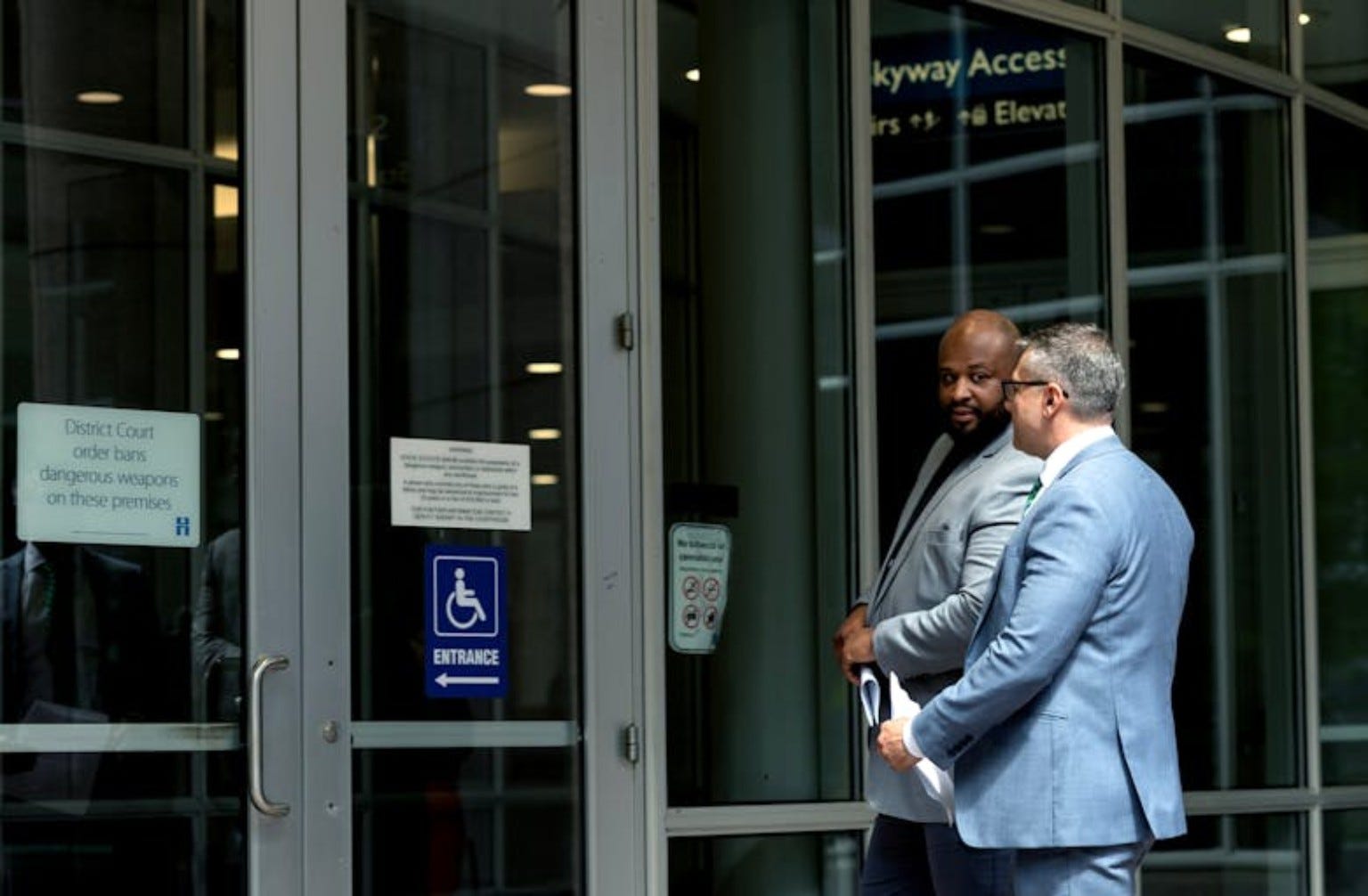
According to prosecutors, Morgan faces two counts of second-degree assault after allegedly pointing a firearm at motorists during the highway confrontation. A nationwide warrant was issued for his arrest in April before negotiations between his attorney and local prosecutors led to his surrender in Minneapolis.
Minutes after arriving, Morgan posted $100,000 bond and walked free ahead of his first court appearance. He remains on active duty with ICE. His attorney also confirmed that ICE and the Department of Justice are funding his legal defense.
That fact matters because it shows the public exactly how fast the state moves when one of its own is accused of violence.
Immigrant families detained by ICE do not receive that kind of protection from the government. People pulled into detention systems are not surrounded by federal resources designed to defend their humanity. Communities targeted by raids are not given press conferences where the state asks the public to understand their fear, their stress, their confusion, or the split-second terror of seeing armed agents enter their lives.
But when an ICE agent faces charges, the protection machine is already waiting.
Pacyga argued that ICE officers were being harassed and threatened during Metro Surge. He said citizens and ICE officers were concerned for their safety. He claimed Morgan was operating under extreme pressure and suggested motorists had “aggressively swerved” toward him before the alleged gun-pointing incident.
“Human beings under stress can perceive danger differently and make split-second decisions in rapidly evolving situations,” Pacyga said.
That defense asks the public to understand fear from the position of the armed federal agent. But immigrant communities had already been living under stress, fear, confusion, and danger long before Morgan stood in front of the cameras.
Metro Surge did not happen in a vacuum. It happened inside communities already made vulnerable by immigration status, poverty, surveillance, racial profiling, and the constant threat of family separation. ICE operations are not abstract policy events for those communities. They are door knocks, arrests, raids, rumors, children watching parents disappear, and families trying to survive a government that can enter their lives with overwhelming force.
The government calls it enforcement.
The people living under it often experience it as terror.
That is why the courthouse scene matters. Morgan’s attorney was not merely defending a client against criminal charges. He was trying to move the emotional center of the story away from communities harmed by federal immigration power and toward the agent accused of abusing that power.
The structure is familiar. Federal agents are complicated. Immigrant communities are treated as consequences. Agents get fear, stress, nuance, and taxpayer-funded defense. Families get raids, detention, silence, and the burden of proving their fear was real.
That is not balance. That is power protecting itself.
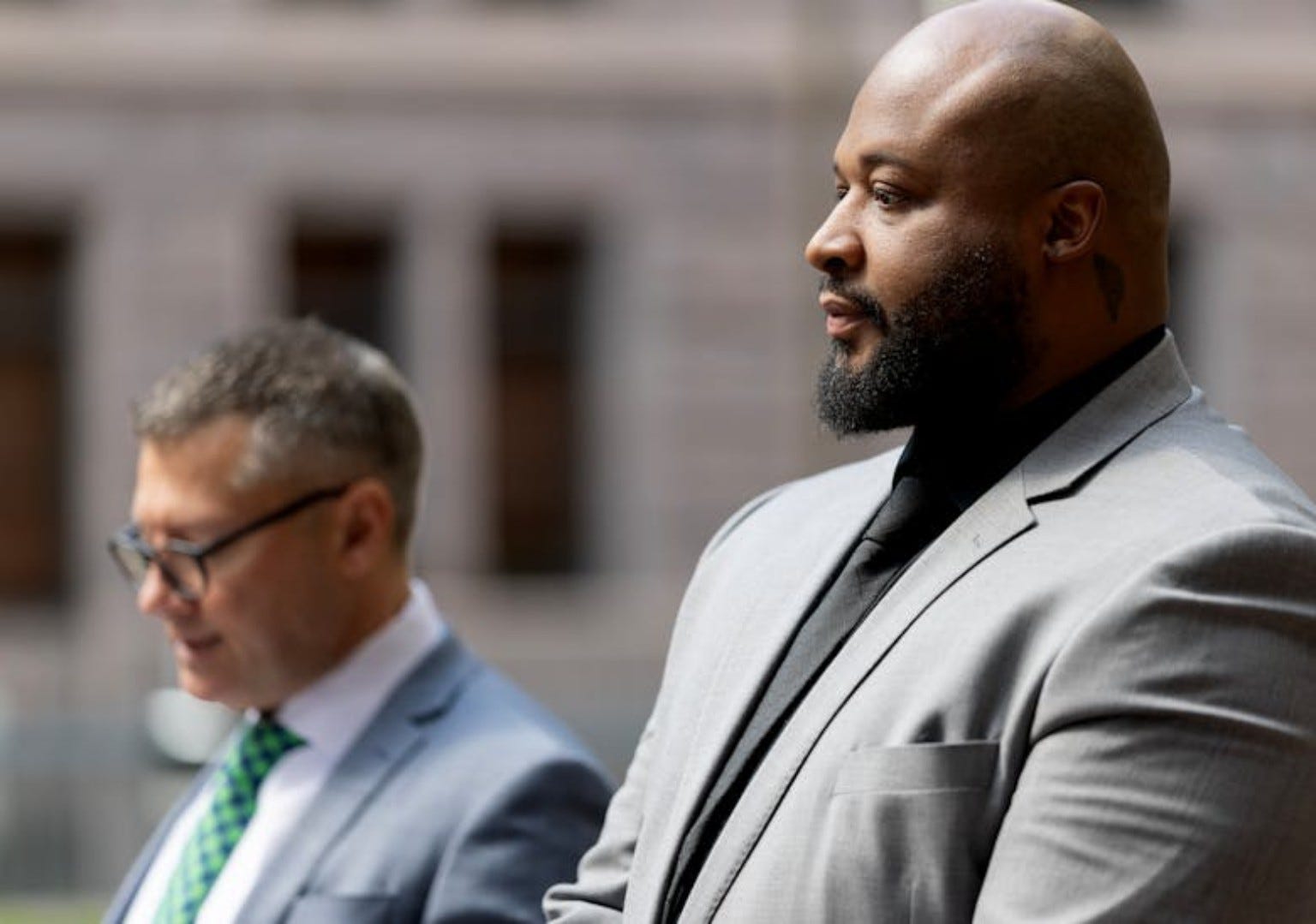
Pacyga said he intends to seek removal of the case from Hennepin County District Court to federal court by arguing Morgan was acting within the scope of his federal duties when the incident occurred. That legal move could shift the case away from local state jurisdiction and into the federal system connected to the same government employing him.
That is why this case is bigger than one highway confrontation. It is becoming a test of whether local prosecutors can hold federal immigration agents accountable when violence allegations emerge from ICE operations backed by federal authority, federal politics, and federal legal resources.
The same government paying for Morgan’s defense is part of the system whose conduct is under scrutiny. The same federal enforcement apparatus that sent agents into Minnesota communities is now helping defend one of those agents after prosecutors accused him of pointing a gun at civilians. The same administration connected to Metro Surge has reportedly resisted sharing investigative evidence with Minnesota prosecutors and local law enforcement.
That is the accountability problem at the heart of this story.
If the public is expected to believe ICE operations are lawful, necessary, and controlled, then the public is also entitled to see what happens when ICE agents are accused of crossing the line. If federal agents can bring force into local communities, then local communities deserve transparency when that force turns into alleged criminal conduct. If ICE can demand obedience from the public during an operation, then ICE cannot also demand protection from scrutiny once the operation produces fear, death, and criminal charges.
Morgan’s defense is already asking the public to see him as human. But immigrant communities have been demanding the same recognition from the government for years.
They have asked to be seen as parents, workers, neighbors, students, patients, caregivers, and families — not targets, not statistics, not removable bodies, not collateral damage in federal enforcement campaigns. They have asked for the humanity that institutions suddenly remember when the person facing accountability is wearing a badge.
That is what makes this case so revealing.
The state knows how to speak the language of humanity. It knows how to ask for patience. It knows how to demand context, complexity, fairness, and restraint. It knows how to tell the public that one person should not be reduced to a headline.
But when immigrant communities are raided, detained, separated, surveilled, and terrorized, that same language disappears.
Metro Surge left communities carrying fear. Morgan arrived at court carrying federal protection.
That contrast is the story.
The question now is not only whether Gregory Morgan Jr. pointed a gun at motorists during Operation Metro Surge. The question is whether the public will be asked, once again, to extend more sympathy to an armed federal agent accused of violence than to the immigrant communities forced to live under the violence of federal enforcement itself.
Americans Against ICE exists for this exact reason: because ICE brings force into immigrant communities, leaves families carrying the fear, and then watches the federal government move quickly to protect its own when accountability reaches the courthouse steps.
This reporting keeps that pattern in public view. It follows the raids, the detention systems, the abuse, the legal shielding, and the communities forced to live under the consequences while federal agencies demand silence, obedience, and forgetting.
Help keep Americans Against ICE independent.