

Minnesota investigators now possess major portions of the evidence connected to the killings of Renee Good and Alex Pretti after federal officials kept critical material from state authorities for more than six months. The transfer includes hard drives containing statements and police body-camera footage, along with the sport utility vehicle Good was driving when ICE agent Jonathan Ross shot and killed her in January.
The handover materially changes the scope of Minnesota’s independent review. State prosecutors can now examine recorded footage, compare official accounts with witness and officer statements, inspect digital files, and evaluate physical evidence that had remained under federal control. Until this month, the agencies connected to the federal personnel involved in the killings controlled material Minnesota authorities said they needed to determine whether state criminal laws had been violated.
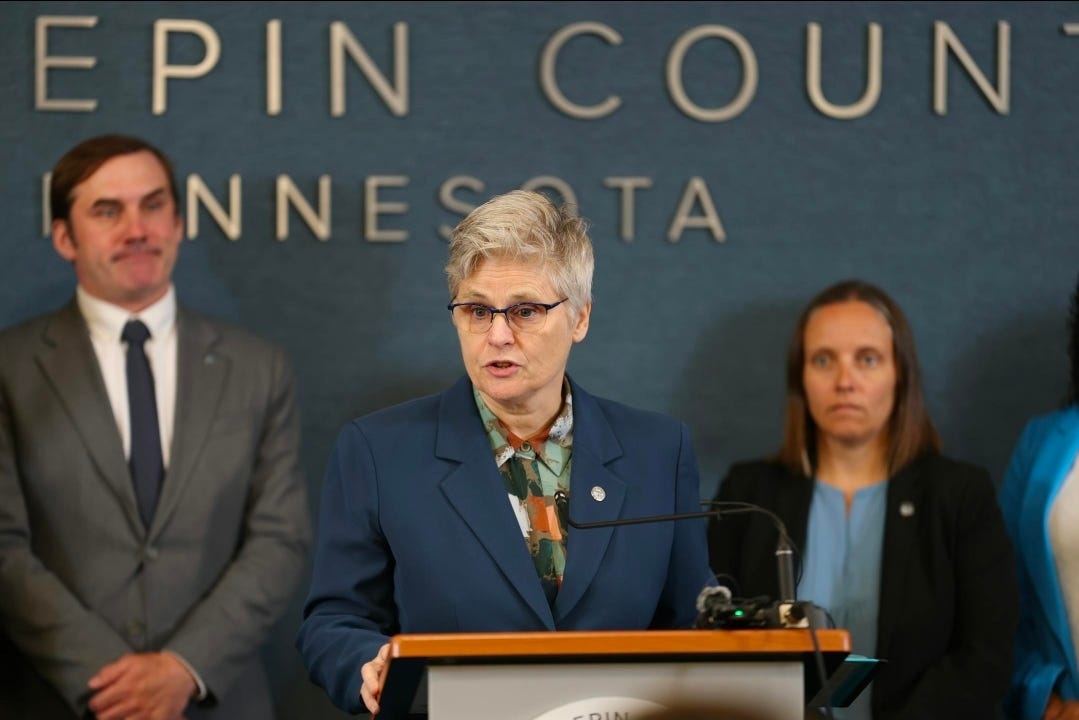
Hennepin County Attorney Mary Moriarty publicly acknowledged the transfer on Monday, saying state officials no longer had to speculate about evidence they had not been permitted to review. Her statement identified the practical significance of the handover: prosecutors can now assess the cases through a fuller evidentiary record rather than attempting to reconstruct two killings while federal agencies retained key portions of the evidence.
That access followed months of resistance. Minnesota investigators opened independent inquiries after federal authorities refused to cooperate in the Good and Pretti cases. In March, state officials sued the Trump administration for access, alleging that the federal government was withholding evidence from authorities investigating possible violations of Minnesota criminal law committed against people within the state.
The dispute was not procedural background. It determined whether Minnesota could conduct a complete investigation independent of the agencies employing the federal agents whose conduct was under review. Body-camera footage, statements, digital records, and Good’s vehicle were not peripheral materials. They were central to reconstructing the shootings, testing official narratives, examining the use of force, and deciding whether the evidence supported criminal charges.
Renee Good’s and Alex Pretti’s families were forced to wait while federal officials controlled that record. Attorneys for Good’s family called the transfer an important step toward justice and accountability, but it came only after more than half a year without assurance that Minnesota investigators could independently review the evidence tied to her killing.
Steve Schleicher, the attorney representing Pretti’s family, said federal officials had refused to make a clear public commitment to cooperate with Minnesota authorities. He described a recent meeting in which U.S. Attorney for Minnesota Daniel Rosen would not answer basic questions about evidence in Pretti’s case. The family was left pressing federal officials for investigative cooperation that should have followed the killing from the beginning.
Minnesota Attorney General Keith Ellison said he was deeply troubled that the federal government had spent more than half a year attempting to conceal evidence from state investigators. The chronology supports that concern. The material was not missing because it had never been collected. Federal officials possessed it and controlled when Minnesota authorities would be allowed to examine it.
Good and Pretti were both U.S. citizens with no criminal records. They were shot and killed by masked federal immigration agents during Operation Metro Surge. Their deaths intensified scrutiny of federal agents’ use of force and of the systems responsible for investigating those agents afterward.
In Good’s case, Jonathan Ross returned to duty while Minnesota authorities remained without access to major evidence held by the federal government. Good’s vehicle stayed in federal possession along with footage, statements, and digital records relevant to an independent review of the shooting. That control limited the state’s ability to determine whether Ross’s actions violated Minnesota law.
The Pretti investigation involved a separate killing and a separate factual record, but the same institutional barrier. Federal authorities retained evidence while his family and state officials sought answers. In both cases, agencies connected to the agents involved controlled information outside investigators needed in order to evaluate their conduct.
The transfer now allows Minnesota prosecutors to reconstruct the events with access to evidence that had previously been unavailable to them. They can compare body-camera footage with statements, inspect digital material, examine Good’s SUV, and evaluate whether the combined record supports criminal charges. Moriarty’s statement that prosecutors no longer have to speculate about missing evidence demonstrates how deeply the withholding had constrained the earlier review.
The handover does not determine what charging decisions prosecutors will reach. It removes a major obstacle that federal officials maintained for more than six months and places a renewed obligation on Minnesota authorities to complete their review, explain their findings publicly, and determine whether the evidence supports charges against any of the agents involved.
Recent legal filings suggest the transfer may have occurred in connection with reciprocal evidence negotiations involving the prosecution of ICE agent Christian Castro, who faces charges related to the nonfatal shooting of Julio Cesar Sosa-Celis. The record has not established the federal government’s full reason for releasing the Good and Pretti evidence now. What is established is that the material remained withheld through months of litigation, public criticism, and pressure from state officials and the victims’ families.
The withholding shaped the investigations long before the transfer occurred. Investigators lost time. Families waited without a complete accounting. Federal agents remained uncharged while the agencies connected to their conduct controlled the evidence required for independent state review.
The concern extends beyond these two cases. Prosecutors in Houston have also accused federal authorities of withholding information connected to the killing of Lorenzo Salgado Araujo by an ICE agent, including the identities of agents involved. That allegation reinforces the need to examine federal evidence control as a recurring obstacle to outside scrutiny of immigration-enforcement shootings.
Renee Good and Alex Pretti remain the center of this investigation. The transfer matters because Minnesota authorities can now review major evidence without relying solely on records filtered through the federal agencies whose personnel were involved. It also documents how long the families were denied that independent process.
The production of evidence does not erase the litigation Minnesota had to file, the investigative time that was lost, or the protection federal agents received while state authorities lacked access to the record. No agent has been charged in either killing. The families still do not have final answers, and federal officials have not publicly explained why the evidence remained unavailable to Minnesota for more than six months.
Minnesota now has access to evidence that federal officials withheld during the first six months of the investigations. The remaining question is whether state review produces public findings, charging decisions, and accountability for the killings of Renee Good and Alex Pretti.
Federal officials kept critical evidence in the Renee Good and Alex Pretti killings from Minnesota investigators for more than six months while their families waited for answers.
Share this report to preserve the record of that obstruction and keep pressure on state and federal authorities to issue public findings and pursue meaningful accountability.
…how much of it anyone will see?
..i still dont not trust motherfuckers
About time! 🤬😡