

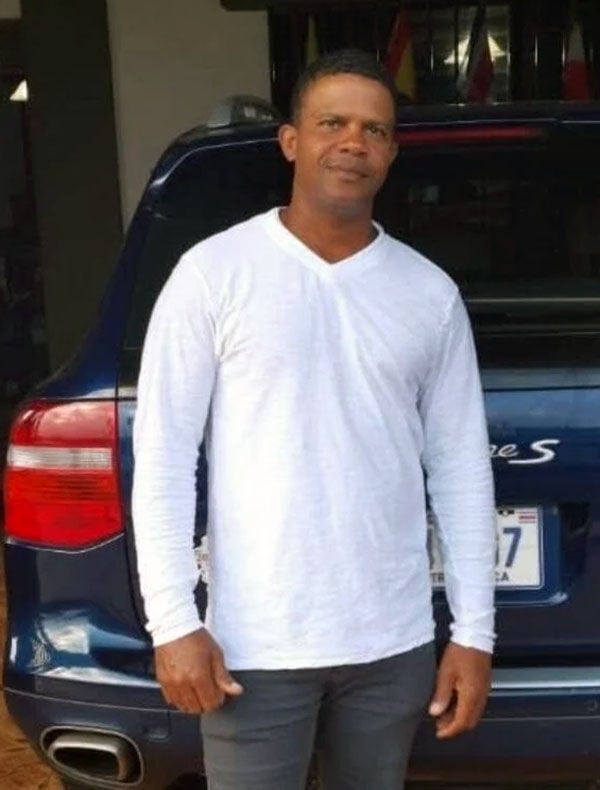
Alexander Hernández says he went to the medical unit at ICE’s Eloy Detention Center because his body was failing him and he needed emergency care. He was not asking for comfort. He was not asking for special treatment. He was asking for help with severe back pain that had made it nearly impossible for him to move through the detention facility without a wheelchair.
Hernández, a 45-year-old Cuban asylum seeker, had been detained at Eloy since August 2025. By late April, he told the Arizona Daily Star that he had been dealing with debilitating back pain for months and had relied on a wheelchair since December. Then, according to Hernández and other detained people who spoke to the Star, Eloy staff took the wheelchair away. Without it, he said, moving through the facility became nearly impossible.
On April 25, Hernández said another detained person helped him get to Eloy’s medical unit. He told staff he would not leave until he received emergency care for back pain he described as a level “10.” Instead of being sent out for the care he was demanding, Hernández said he was placed in solitary confinement.
Two days later, guards found him unconscious in his cell after what he described as a suicide attempt.
That sequence is the center of the story: a detained man says he asked for medical care, was sent to solitary confinement, became delirious with fever, and woke up in a hospital only after guards found him unconscious. It is not a story about paperwork moving too slowly. It is about what happens when a person in federal custody has no power to leave, no power to seek another doctor, and no power to force the institution holding him to treat his pain as urgent.
Eloy is owned and operated by CoreCivic, a private, for-profit prison company. Medical and mental health care at the facility is handled by ICE Health Services Corps, the medical arm of U.S. Immigration and Customs Enforcement. That structure matters because Hernández’s medical need existed inside a system built on confinement. He could not drive himself to a hospital. He could not choose another clinic. He could not walk away from staff who refused to treat him. His body was inside a facility where ICE custody, private prison management, and detention medical care all controlled the conditions of his survival.
Hernández had already told the Star that he was having liver problems after taking large amounts of ibuprofen for his back pain during his eight months at Eloy. After he was hospitalized, he wrote that doctors confirmed his liver was still inflamed because of what he described as mismanagement and improper administration of medication by doctors at Eloy. He said the hospital care helped him “beyond measure” and that he was kept there until his fever went down after three days.
That detail makes the timeline more damning. Hernández says the care he received outside Eloy helped him, but he only reached that care after he was found unconscious. He had been asking for medical attention before the crisis reached that point. He had been describing severe pain. He had been relying on a wheelchair. He said he went to the medical unit and refused to leave because he needed emergency help. The hospital did not create the emergency. It exposed how far the facility had allowed the emergency to go.
Medical neglect inside detention is different from medical neglect outside the walls because custody turns need into dependence. A detained person cannot simply seek a second opinion. A detained person cannot decide the pain is too severe and leave for urgent care. A detained person cannot escape the staff, procedures, delays, discipline, and internal decisions of the same institution controlling his body. When that institution ignores or delays care, the harm is not only medical. It becomes a custody problem, because the same power that confines the person also controls whether help arrives.
Hernández said being sent to solitary confinement as punishment for misconduct could be justified, but being isolated for requesting medical help was an “injustice.” He wrote that the worst part was asking for help with his health, being ignored, and ending up in a place against his will. He said that is what led things to get out of control, especially when he looked around and had no one to ask for help.
“What they do here every day is an injustice, not just to me,” he wrote. “There are many more.”
That line matters because Hernández was not only describing one night in one cell. He was describing a detention environment where requests for help can become discipline, where discipline can become isolation, and where isolation can become dangerous for someone already in medical distress. Solitary confinement did not appear in this story as a side detail. It appears as the turning point between a man demanding care and a man being found unconscious.
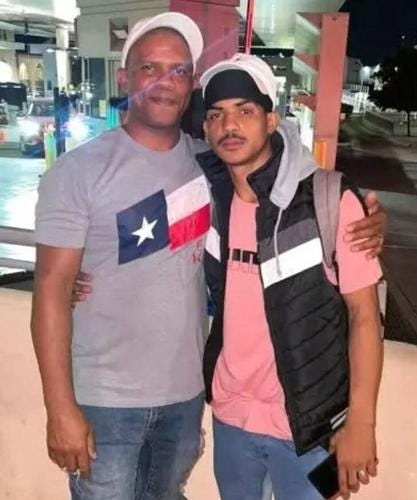
After Hernández was hospitalized, his family spent 10 days trying to find out whether he was alive. His 24-year-old son, Dasnel, told the Star that the family was calling everywhere after receiving Hernández’s last messages at the end of April. They were not given clear information from ICE. They learned Hernández had been hospitalized only after his attorney went to Eloy on April 29 for a wellness check.
That silence is part of the harm. ICE had custody. ICE had control. ICE had access to the information. Hernández’s family had fear. His significant other said the family was already thinking the worst because they could not get news about him. That is what detention does outside the walls: it forces families to search through silence while the agency holding their loved one controls the truth.
The questions around Hernández’s medical care are also tied to a larger detention structure. ICE Health Services Corps handles medical care at 18 detention facilities, including Eloy, with a budget of $421 million in fiscal year 2024. The Star asked whether reports that ICE had not paid third-party medical contractors since October 2025 could explain inadequate medical care at Eloy. ICE did not respond. Acentra Health, ICE’s new private claims administrator, initially indicated it would respond to questions before referring them back to ICE.
That does not excuse what happened to Hernández. It makes the system harder to separate from the harm. If claims processing is delayed, if medical contractors are waiting for payment, if outside care is tangled inside federal detention bureaucracy, then medical neglect is not just an individual failure. It becomes part of the infrastructure surrounding detained people who cannot leave to get care on their own.
CoreCivic operates the facility. ICE holds people there under federal immigration authority. ICE Health Services Corps handles medical and mental health care. Private medical claims administration sits around the system. When a detained asylum seeker says he was placed in solitary confinement after demanding medical help, responsibility does not disappear into that chain. It runs through it.
Hernández survived. That matters. But survival does not erase the sequence. He should not have had to be found unconscious before receiving hospital care that helped him. His family should not have had to spend 10 days trying to learn whether he was alive. A person in detention should not have medical need turned into discipline, discipline turned into isolation, and isolation turned into a suicide attempt.
This is what ICE detention can do behind the walls. It controls the body, controls the movement, controls the medical access, controls the punishment, and then controls the information the family receives after the crisis. For Hernández, the result was not an abstract complaint about conditions. It was severe pain, a lost wheelchair, solitary confinement, fever, a suicide attempt, hospitalization, and a family left searching for proof that he survived.
At Eloy, medical neglect did not stay medical. It became punishment through isolation, and that isolation nearly became death. ICE still has not answered the questions Hernández’s case demands.
Support independent reporting that documents what ICE detention does behind the walls — medical neglect, solitary confinement, private prison custody, family silence, and the human cost of federal immigration power.
Upgrade to a paid subscription and help keep this work in public view.
Sources / reporting referenced: Arizona Daily Star reporting on Alexander Hernández at Eloy Detention Center; reporting on ICE Health Services Corps, CoreCivic, and ICE medical contractor payment delays.
It truly terrifies me as a person who has had seizures since the age of five if someone else like me is not given nessasary medications seizures that are out of control can turn deadly.
I think back to a time of neglect from my stepmother and think ice neglect is ten fold worse.
Stop ice and its medical neglect.
Those people in custody are as vulnerable as a five year old unable to take care of themselves in the same way.
Stop ice neglect. Stop ice apathy.
It appears you fixed that "settings" problem. I had no issues with sharing on Substack from your newsletter this morning, after my usual daily share on Spoutible. Thanks. You rock, you know? Keep up the good trouble.