

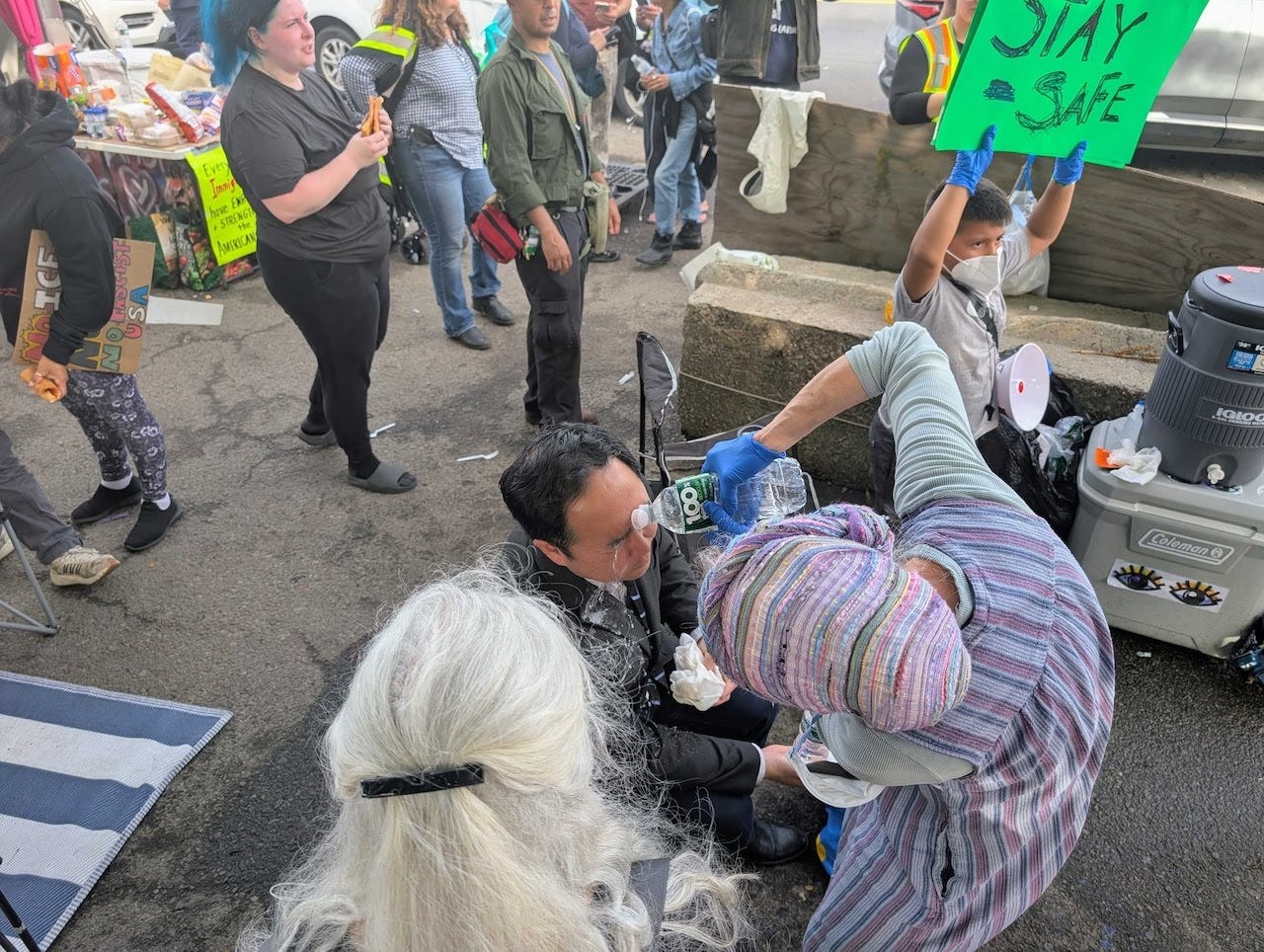
🎥 Sen. Andy Kim receives aid after exposure to chemical irritants outside Delaney Hall in Newark, where detained immigrants reported hunger strikes and inhumane conditions.
The video shows the public part.
What detained immigrants described inside Delaney Hall is worse: hunger strikes, spoiled food, medical neglect, extreme heat, and fear over forced transfers.
Federal agents fired chemical irritants outside the privately run ICE detention center in Newark on Monday as protesters gathered around the facility to demand attention to the conditions people inside said they were forced to survive.
U.S. Senator Andy Kim said he struggled to breathe after exposure to pepper spray in the chaos outside the facility. He later said his eyes and throat were burning, his lungs hurt, and his hand had been struck while he tried to stand between federal agents and the crowd.
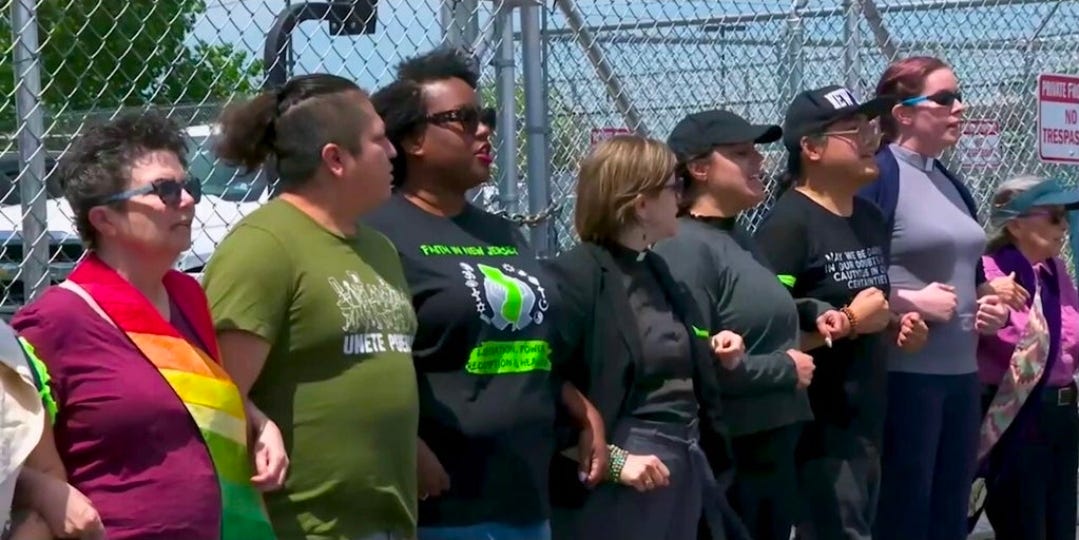
The scene outside Delaney Hall was not separate from the conditions people inside described. Protesters had gathered because detained immigrants were reportedly refusing food over inhumane conditions. Families, advocates, elected officials, and community members were responding to reports that the facility was failing to provide basic care. The confrontation outside became another layer of the same public harm: people inside said they were being neglected, people outside tried to force attention, and federal agents answered with force.
Kim was not there as a bystander. He had been attempting to de-escalate the situation and keep people safe as tensions rose outside the detention center. He described armored vehicles and armed agents at the scene and said he was trying to stop federal officers from pointing weapons toward the crowd. At one point, he reportedly stepped between agents and protesters with his arms raised as the confrontation escalated. Kim said he wanted the situation to end without violence, but federal agents began pushing people back and firing less-lethal rounds containing chemical irritants.
DHS later denied that anyone had been directly struck by pepper ball projectiles and described the people outside the facility as “rioters.” The agency claimed officers issued verbal commands and used the minimum force necessary to protect officers, the public, and federal property. That framing does not erase what was visible outside Delaney Hall or what brought people there in the first place. Chemical force was used in public while a sitting U.S. Senator, cameras, families, and community members were present.
The conditions inside remain the center of the story. Detained immigrants at Delaney Hall have reportedly described poor-quality food, lack of adequate medical care, extreme heat, and fear over what will happen next. Kim said he spoke with people who described inhumane treatment, including a pregnant woman who was not receiving the OBGYN care she needed. He also said he spoke with a woman who had a miscarriage inside Delaney Hall and was not given medical support. Another person he described was an 18-year-old high school senior who wanted to graduate this month instead of sitting inside a detention facility, separated from her mother and uncertain about her future.
Those stories matter more than DHS talking points. A pregnant woman denied necessary care is not a public-relations issue. A miscarriage without medical support is not a political stunt. An 18-year-old student detained before graduation is not background noise. These are people whose lives have been thrown into a system that can make neglect disappear behind doors, paperwork, and official denial. The public confrontation outside Delaney Hall became visible because families, advocates, and community members refused to let those conditions remain hidden.
DHS and ICE officials have denied the hunger strike and denied poor conditions at the facility. ICE officials said detained people have access to food, clean water, clothing, medical care, and phones to communicate with family and lawyers. Federal officials also accused New Jersey Democrats and immigrant advocates of using the situation for political attention. That denial belongs in the record because it shows the agency posture clearly: detained immigrants say they are facing abuse, lawmakers say they heard reports directly from people inside, and federal officials respond by attacking the credibility of those raising the alarm.
This is where oversight matters. Members of Congress are allowed to conduct oversight visits at immigration detention facilities. Kim said he had to push for access to Delaney Hall, and once inside, he spoke with detained people about what they were experiencing. That oversight is not symbolic when the complaints involve hunger strikes, medical neglect, pregnancy care, miscarriage, and a high school senior detained before graduation. It becomes part of the public record, especially when federal agencies deny the conditions and continue operating the facility as if the reports are not urgent.
The force outside Delaney Hall also raises a direct question: if federal agents were willing to use chemical irritants while a U.S. Senator was present, what happens to hunger strikers and detained immigrants when nobody with power is watching? That question is not abstract. Detention abuse depends on isolation. It depends on the public not seeing the food, the heat, the medical neglect, the fear of transfer, the family separation, and the exhaustion of people trying to survive a system designed to keep them out of sight.
Kim made clear afterward that the focus should remain on the people living in poor conditions and fearful about what comes next. That is the correct center. The story is not only that a senator struggled to breathe outside a detention center. The story is that a senator went inside, heard people describe conditions that should trigger urgent accountability, then came outside and was exposed to the kind of force used against protesters demanding those conditions be addressed.
Delaney Hall has become a public test of whether ICE detention abuse can be denied in real time while people are watching. Federal officials can call protesters agitators, deny the hunger strike, deny poor conditions, and insist officers acted properly. But the record now includes reports of spoiled food, medical neglect, extreme heat, pregnancy-related medical concerns, a miscarriage without support, and a student detained before graduation. It also includes federal agents deploying chemical force outside the facility while families, advocates, cameras, and a U.S. Senator were present.
The public should not be asked to treat official denial and human testimony as equal weights on a scale. The people inside Delaney Hall are the ones living under detention. Their reports are the reason protesters showed up. Their fear is the reason the story matters. Their bodies are the ones still inside the facility when cameras leave.
ICE brutality does not begin at the protest line. It begins when detained immigrants are held in conditions that force hunger strikes, when medical care becomes a demand instead of a guarantee, when pregnancy and miscarriage are met with neglect, and when young people are detained while their lives are still unfolding. The chemical force outside Delaney Hall made the violence visible. The abuse detained immigrants described inside is why people were there.
RESIST|FIGHT WITH US
The video shows the public part. The record is what keeps the rest from disappearing.
Delaney Hall matters because detention abuse depends on isolation — people locked inside, families forced to fight from outside, and federal agencies denying harm while the evidence keeps growing.
Americans Against ICE exists to keep that record public, follow the people inside the machinery, and document what ICE tries to bury behind locked doors, official denials, and force.
Upgrade to a paid subscription to support this reporting.