

Gabriela Soto was already carrying the weight of detention before Delaney Hall guards began blocking her family from visits.
Her husband has been detained inside the Newark, New Jersey, ICE detention center since January. In the months since, Soto has tried to comfort heartbroken children, pay thousands of dollars connected to asylum cases, and make regular weekend visits so her family can stay connected to the person ICE has taken from their daily life.
But Soto says Delaney Hall has rejected her family again and again over clothing.
More than 10 times, she said, either she or her children have been told they could not visit because of what they were wearing. On one visit, she said guards nearly rejected her 11-month-old baby over a onesie. On another, she said her four-year-old daughter was blocked because she wore leggings. When Soto asked why the clothing was not allowed, she said guards called it too “provocative.”
“How is that provocative if she’s only four years old?” Soto said, referring to her daughter.
That question sits at the center of the harm. This is not just a story about shoes, leggings, dresses, or detention-center rules. It is about an ICE detention center where families say clothing enforcement has become another way to separate detained people from the spouses, children, parents, siblings, and relatives trying to reach them.
Delaney Hall is operated by GEO Group under ICE detention authority. In recent weeks, the facility has drawn national attention after protests outside the center, reports of a detainee hunger strike inside, and legal action by the state of New Jersey seeking greater access for health inspectors. New Jersey has alleged problems involving food and drink preparation and storage, and legal filings have referenced a report of possible tuberculosis-control concerns. The Department of Homeland Security has said inspectors were granted access and has denied that there is a hunger strike.
Those conditions matter because visitation does not happen in isolation. Families arrive at Delaney Hall already afraid, already exhausted, already carrying legal costs, detention stress, and uncertainty about whether their loved one will remain in New Jersey, be transferred, or be deported. Then they face another gate: a dress code that visitors and advocates say is enforced in ways that are arbitrary, invasive, and humiliating.
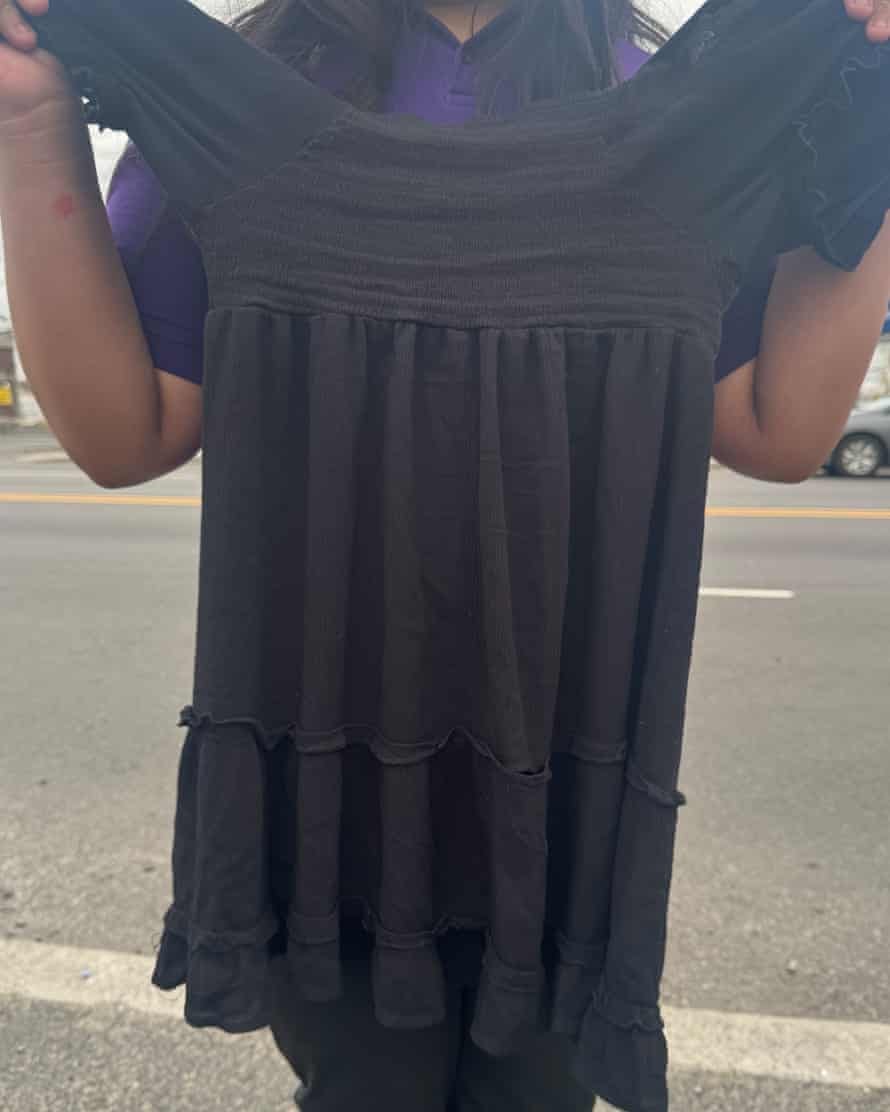
The facility’s rules resemble prison visitation policies, banning clothing described as form-fitting or revealing, including leggings, open-toed shoes, pants with holes, and other items. “Gang colors,” which are not clearly defined in the public rules, are also prohibited. The dress code says it applies to visitors age 12 and older, yet families and advocates say Delaney Hall has rejected much younger children, including preschool and elementary-aged girls, over clothing such as frocks and leggings.
That gap between written policy and reported practice is where families say the cruelty lives. A rule that appears on paper as security becomes, at the gate, a shifting test of obedience. Visitors say they can follow the rules one week and be rejected the next. They say one guard will allow an item of clothing while another will block it. They say every delay cuts into visitation time with loved ones who are already tense, isolated, and detained.
For families, minutes matter. A delayed visit is not a minor inconvenience when someone is locked inside an ICE facility. It is time stolen from a child trying to see a parent, a spouse trying to hold a family together, or a relative trying to reassure someone who does not know what will happen next.
Valeria, a young mother visiting her baby’s father at Delaney Hall, said she had been rejected approximately 10 times over dress-code issues. She said the rules seemed to change depending on which officer was working. She also described visits being delayed for hours, cut short, or threatened with cancellation if she arrived late.
That is how detention reaches beyond the detained person. It trains families to move carefully, speak carefully, dress carefully, arrive early, avoid questions, and accept humiliation because the price of objecting may be losing the visit altogether.
Soto described one of the clearest examples of that power. On her daughter’s fourth birthday, she brought the child to Delaney Hall to see her father. Her daughter had made a drawing for him. Soto said guards refused to let the drawing in. When she handed it over so they could check it, she said the guards ripped it in front of the child, who burst into tears.
“She was destroyed,” Soto said.
According to Soto’s account, a child came to see her detained father with a birthday drawing and left watching that drawing torn apart. That is not ordinary visitation enforcement. It is the kind of humiliation that turns a family visit into another site of punishment.
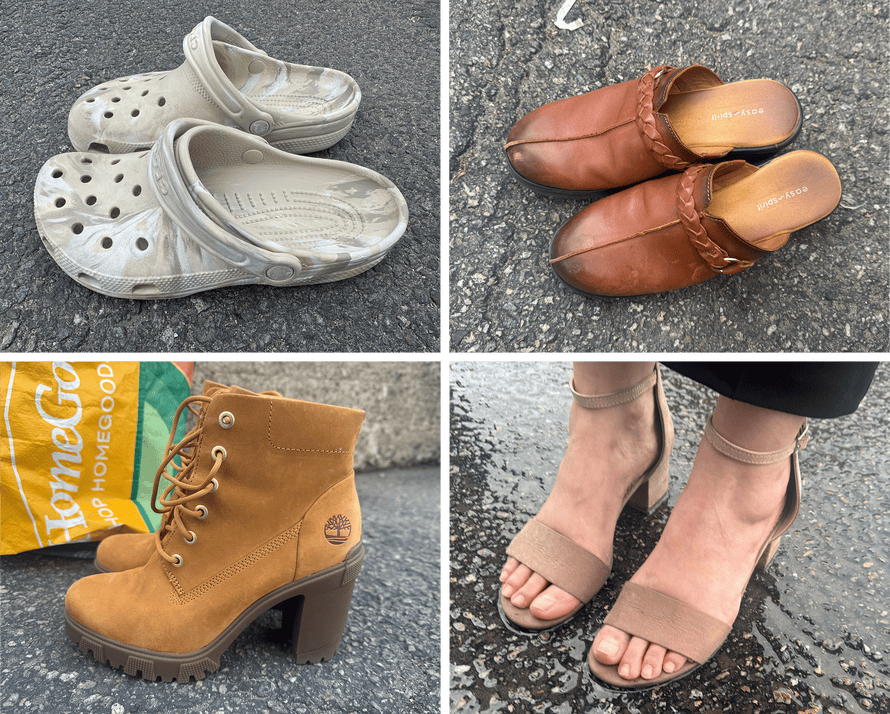
Advocates outside Delaney Hall have responded by building a kind of emergency clothing station at the gate. Volunteers with #EyesOnIce have handed out free clothes to visitors who were rejected, offering pants, shirts, shoes, and other items so families can change and try again. Their bins have reportedly included everything from baby-sized clothing to plus-sized sweatpants. In the summer, rejected Crocs and sandals can pile up outside the facility as families try to comply with rules they say are inconsistently applied.
That volunteer work has allowed many visitors to see loved ones they otherwise would have been blocked from reaching. But the fact that such a system is needed is itself an indictment. Families should not need an outside clothing bank to survive a detention-center visitation policy. Children should not need emergency wardrobe changes to see a detained parent. Spouses should not have to run through rain, borrow shoes, and return shivering to a gate because one guard objects to footwear another guard might allow.
The clothing rules also carry a gendered humiliation that should not be ignored. Families say women and girls have been told that leggings, dresses, bodysuits, shorts, or other clothing are inappropriate or “provocative.” When that logic is reportedly applied to a four-year-old child, the harm becomes impossible to excuse as ordinary security. It becomes a system projecting suspicion onto children and then using that suspicion to block family contact.
That is why this cannot be treated as a small visitation problem. It is another form of punishment.
ICE detention already separates families by putting people behind walls, fences, locked doors, and transfer systems. When visitation barriers are layered on top of that separation, the punishment expands. It reaches the child waiting outside. It reaches the spouse paying legal fees. It reaches the mother changing clothes in a parking lot. It reaches the elderly relative rejected over shoes. It reaches everyone who learns that seeing someone they love depends on the discretion of guards at the door.
Delaney Hall’s operator, GEO Group, has directed questions about the facility to ICE, according to reporting. ICE and DHS have not answered every allegation raised by families and advocates, and DHS has denied some claims about conditions inside the facility. Those denials belong in the record. But they do not erase the pattern described by visitors: families arriving to see detained loved ones, being rejected over clothing, losing time, borrowing clothes, trying again, and learning that visitation itself can become a site of control.
For Americans Against ICE, the public record here is not only what happens inside the detention center. It is also what happens at the gate.
The gate is where children are told they cannot enter. The gate is where spouses are delayed. The gate is where guards decide whether a skirt, a shoe, a onesie, a pair of leggings, or a drawing can become a reason to keep a family apart. The gate is where detention extends itself outward, turning family contact into another test families must survive.
That is the harm official language often hides. A dress code sounds administrative. A visitation policy sounds routine. A security rule sounds neutral. But when families say those rules are used to block children from seeing parents, humiliate women and girls, and cut into the limited time detained people have with loved ones, the language must change.
This is family separation by procedure.
A detention center that can treat a child’s leggings as a visitation problem is not simply enforcing order. It is extending punishment to the family outside the fence.
ICE detention does not stop at the cell door. It reaches spouses, children, visitors, legal cases, bond money, family contact, and every moment a loved one has to beg for access through a system built to control them.
Americans Against ICE documents the harm behind immigration enforcement — the raids, detention systems, county jail contracts, private detention centers, family separation, and public trauma that official statements often flatten or erase.
Support this work by upgrading to a paid subscription.
Heartbreaking. For those imprisoned by ICE, and by our "department of justice" - hell exists. And it's in America. 😰
Make good use of the facilities. Release the people and lock up the guards, the not-people.