

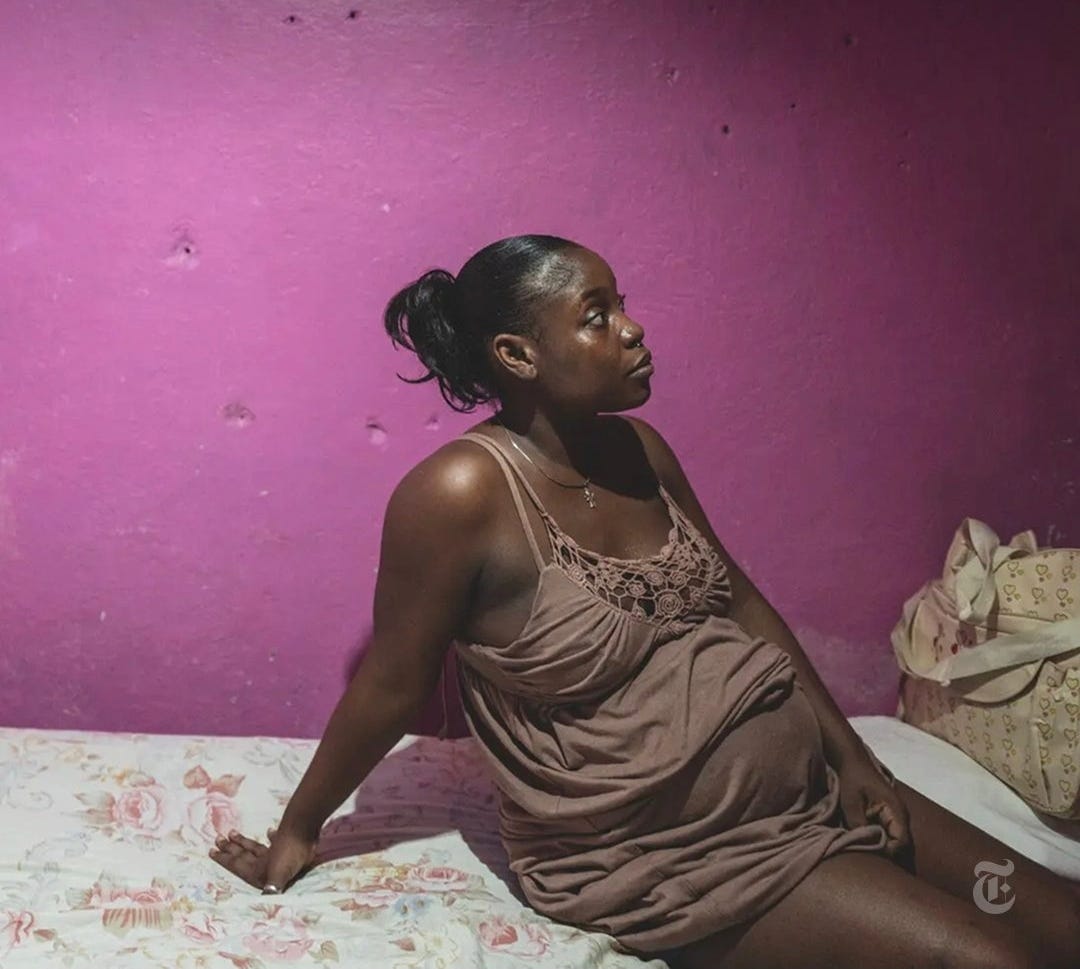
The Dominican Republic’s mass deportation campaign is not only pushing Haitians across a border. It is pushing Haitian mothers away from hospitals, doctors, emergency rooms, and the medical care that can mean the difference between life and death during childbirth.
The New York Times reported that the Dominican Republic is carrying out one of the most extensive mass deportation campaigns in the Western Hemisphere, expelling thousands of Haitians who fled crisis in neighboring Haiti. The crackdown has created a new danger for pregnant Haitian women: many are now giving birth at home or in unsupervised settings because hospitals have become places where they fear detention and deportation.
That is the cruelty at the center of this story. A hospital should be a place where a woman in labor can go without calculating whether medical help will cost her freedom, her child, or her ability to stay in the country where she is trying to survive. When immigration enforcement turns hospitals into places of fear, childbirth is forced into hiding.
Medical professionals and advocacy groups have warned that mothers and newborns face life-threatening risks without medical intervention, including infections, hemorrhages, septic shock, and complications that can kill a baby within hours. The Times documented the death of one newborn who had medical complications and the death of one mother who went into septic shock two weeks after delivering twin boys at home.
Those deaths are not background details. They are the human cost of a deportation campaign that has made Haitian women afraid to seek care. When a pregnant woman avoids a hospital because immigration agents may be waiting, the policy has already entered the delivery room. When a mother bleeds at home instead of receiving emergency treatment, the harm is not theoretical. When a newborn dies after complications that required medical intervention, deportation fear has become a public health weapon.
The Dominican government has defended its crackdown as immigration control, but the impact falls on people already living inside a humanitarian collapse. Haiti’s health system has been battered by gang violence, shortages, and institutional breakdown. Reuters has reported that many Haitian mothers seek care in the Dominican Republic because violence and lack of health infrastructure in Haiti have made medical care difficult to access. AP has also reported that the Dominican Republic has faced international criticism for deporting pregnant and breastfeeding Haitian women as Haiti’s crisis deepens.
That means many women are trapped between two dangers: a collapsing health system in Haiti and an immigration system in the Dominican Republic that makes care feel unsafe. The choice being forced onto them is not a real choice. It is a survival trap.
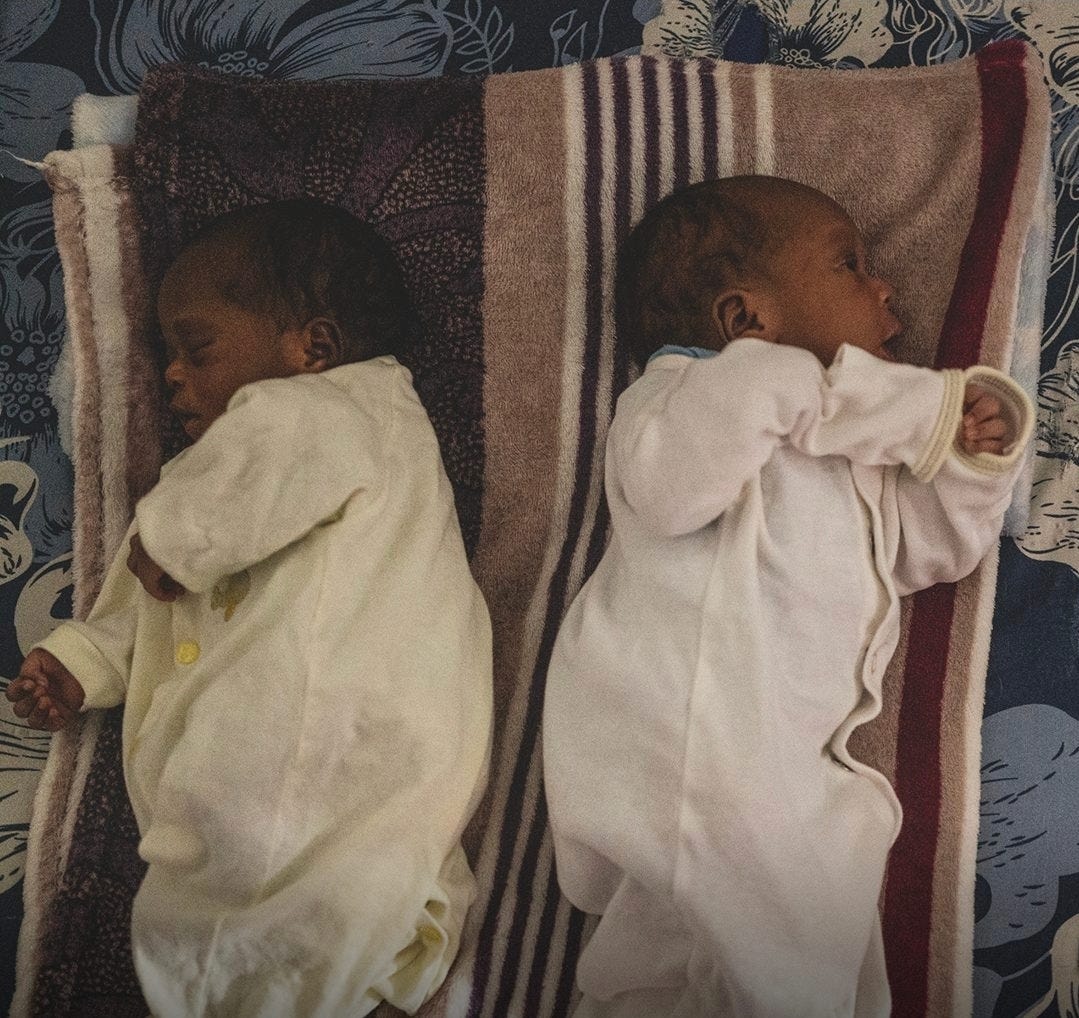
The crackdown did not appear out of nowhere. President Luis Abinader’s government announced expanded migration controls as Haiti’s violence deepened, including hospital checks and efforts to deport thousands of Haitians every week. AP reported that the Dominican government ordered identification checks at hospitals and placed migration agents in medical settings, with undocumented patients receiving care before deportation. Human rights groups warned that those measures would terrify Haitians and push people away from medical care.
That warning has now become visible in the most intimate part of human life: birth. Haitian women are giving birth in homes, back rooms, buildings under construction, and other places where emergency care is limited or absent. Informal midwives and neighbors are being pushed into roles that should not exist because immigration fear has made hospitals dangerous.
The harm does not stop with the mothers. The newborns are being born into the consequences of state violence before they can even cry. A baby with complications needs immediate care. A mother hemorrhaging after birth needs trained medical intervention. Septic shock is not a political metaphor. It is a medical emergency that can kill. When women are forced to delay or avoid care because immigration enforcement is waiting at the door, the deportation campaign is no longer only about removal. It is about making survival harder.
Human rights organizations have condemned the Dominican Republic’s treatment of Haitians as discriminatory and dangerous. Amnesty International has warned that hospital-based migration policies tie health care to immigration status and place people perceived as Haitian at risk of arrest and deportation. The NYU Global Justice Clinic has reported that Haitian migrants and Dominicans of Haitian descent have faced arbitrary detention, family separation, racial profiling, violence, and worsening abuses since the government announced a policy targeting up to 10,000 deportations per week.
That racial profiling matters. This is not simply an immigration campaign operating on paperwork. Haitians and people of Haitian descent in the Dominican Republic have long faced anti-Haitian discrimination rooted in race, nationality, language, and class. When enforcement is aimed at people perceived as Haitian, it does not stay neatly inside legal categories. It reaches bodies. It reaches accents. It reaches hospitals. It reaches pregnant women.
The Dominican Republic is not just removing people. It is making care dangerous for the very people most in need of it. The state does not have to drag every pregnant woman out of a hospital to create fear. It only has to make enough examples, station enough agents, and spread enough terror that women begin to believe the safer option is to labor alone.
That is how deportation policy becomes maternal violence.
Officials can talk about borders, undocumented migration, national security, hospital strain, and legal status. But a mother in labor is not an abstract migration category. A newborn fighting for breath is not a border-management problem. A woman dying from septic shock after giving birth at home is not proof of a system working. It is proof of a system willing to make Haitian life disposable.
The United Nations and humanitarian groups have warned against deporting pregnant and breastfeeding women into Haiti’s crisis. The Haiti Humanitarian Country Team has expressed concern over rising deportations of pregnant and breastfeeding women from the Dominican Republic, warning that these women are being returned into conditions where access to basic services and protection is already severely strained.
The harm is being documented in funerals, home births, hospital avoidance, frightened mothers, grieving families, and babies born without the medical support they deserve. It is being carried by Haitian women who already fled one crisis and are now being forced to navigate another.
No mother should have to weigh a safe birth against the threat of deportation. No newborn should enter the world under a system that makes medical care feel like a trap. When hospitals become extensions of immigration enforcement, the deaths and injuries that follow cannot be separated from the fear the state created.
The Dominican Republic’s crackdown is forcing Haitian mothers to give birth in the shadows. That is not immigration control. It is state violence reaching the delivery room.
Related pattern: Jamaica called it security. America called it ICE enforcement. The same state-violence pattern keeps appearing under different names.
Jamaica Calls It Security. America Calls It ICE Enforcement. The Machinery Is the Same.

In Jamaica, the state calls it security.
Deportation campaigns do not stop at borders. They reach hospitals, homes, workplaces, schools, children, newborns, pregnant women, and every public space where fear can be used to control who gets care and who is pushed into danger.
Upgrade to a paid subscription. Americans Against ICE keeps the record public because governments should not be able to rename deportation terror as enforcement while mothers and babies absorb the cost.
Source note: Reporting reviewed from The New York Times, AP, Reuters, Amnesty International, NYU Global Justice Clinic, and the Haiti Humanitarian Country Team.