

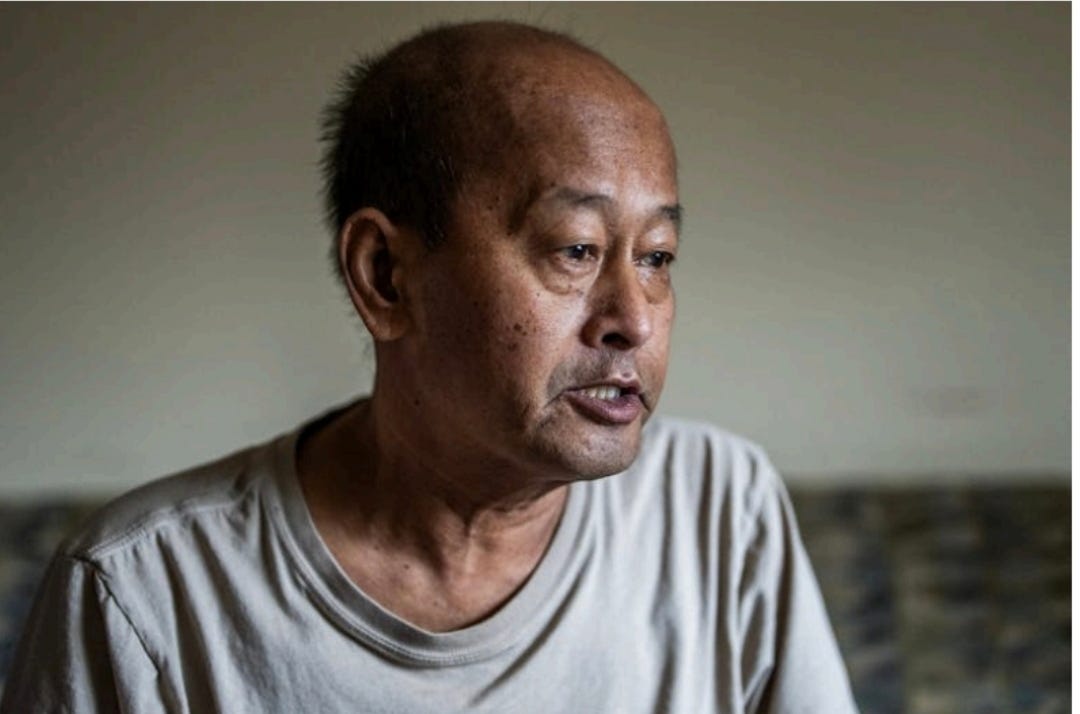
Oudone (“Don”) Lothirath is a refugee who arrived in the United States as a child in the early 1980s with his family, seeking safety and a stable life. For years, he complied with immigration requirements, including routine check-ins. According to his caregiver, he was told at a recent check-in to return again in six months. Instead, he was detained by ICE and held for 10 days in El Paso, Texas. The detention did not occur in a vacuum; it occurred while he was living with aggressive lymphoma and relying on scheduled treatment to buy time.
Lothirath entered custody with multiple serious medical conditions. His caregiver, Christina Vilay, has described terminal lymphoma cancer, insulin-dependent diabetes, and heart issues requiring a cardiac defibrillator. In a medical context like that, continuity of care is not a preference—it is survival. When treatment is time-bound and medication access is daily, interruption becomes harm by design, even if no one uses the word. That is the core question this case forces into the open: what happens when “detention” collides with a body that cannot tolerate delays? In Lothirath’s case, the answer is visible in a single timeline.
During the January detention, Lothirath missed four out of five chemotherapy sessions scheduled as part of his treatment plan. He has described the medical neglect in custody in plain language: “When I was down in Texas, I didn’t get no medical attention, nothing.” He expected the disease would eventually kill him, but he hoped to live as long as possible with treatment. A scan later showed the cancer had spread into his bone marrow. “I was in shock, seeing those little dots,” he said, describing what he saw and what it meant after treatment disruption. This is the part that cannot be euphemized: missed chemo is not a paperwork problem, and aggressive cancer does not pause for detention logistics.
Release came only after the severity of his condition was documented. A letter from M Health Fairview stated he would “succumb” without ongoing chemotherapy. ICE agreed to fly him back to Minnesota after 10 days in custody, without the need for a lawsuit. Vilay has described the decision bluntly: “Shockingly enough, they let him out, but I think it’s because they just knew if he stayed, he would have died in their custody.” Even then, clearance for travel took additional time because he was so frail. In cases like this, “release” does not mean recovery—it means the system chose not to keep him long enough for the death to happen in its hands.
When Lothirath returned to the Twin Cities, he was immediately hospitalized. He was treated for a bladder infection and sepsis, and Vilay has also described severe anemia and dangerously high blood sugar on admission. On March 20, Lothirath entered hospice. He is now living his final days in Vilay’s home. The sequence is straightforward and devastating: detention, missed chemotherapy, deterioration, hospitalization, sepsis, hospice. That timeline is not an argument about politics; it is a record of what medical fragility looks like when a detention system interrupts care.
The harm did not end with medical disruption. Vilay has said Lothirath returned home without personal belongings, including a phone he relied on to coordinate care and transportation. She has also described the ongoing threat of deportation without an attorney, even as his health continues to fail. In other words, the system did not simply interrupt his treatment; it returned him to Minnesota in crisis and left him facing legal jeopardy while he entered end-of-life care. This is not an abstract concept of “stress.” It is fear layered on top of terminal illness, enforced through uncertainty.
Vilay has also described why returning home did not feel safe. Lothirath’s apartment is near the site where Alex Pretti was murdered by ICE, and she has said the continued ICE activity and tension in the neighborhood make him afraid to go back. She has described agents entering his building by posing as an Amazon delivery—an allegation that, if accurate, speaks to how easily ordinary routines can be weaponized into access. For medically fragile immigrants, the terror is not only in detention facilities; it is in the way daily life becomes a surveillance and extraction environment. When people begin to fear their own front door, “freedom” becomes conditional even outside custody.
Lothirath’s story makes the stakes impossible to miss. A man with aggressive cancer missed most of his scheduled chemotherapy while in ICE custody, returned severely ill, and is now in hospice. It is the kind of case that forces accountability language back into the conversation because the consequences are not theoretical. This is what happens when enforcement is allowed to operate without guardrails strong enough to protect the medically fragile. And it is what happens when the public is told to think in terms of procedure while bodies deteriorate in real time.
This is what “enforcement” looks like when the body is fragile: missed care, collapse, hospice. Don’t let it vanish.
Upgrade to a paid subscription to keep this reporting alive — and keep pressure for accountability with a public record that can’t be buried.
Sourcenote (single reference): Photo credit and quoted reporting details sourced from The Minnesota Star Tribune; additional statements and context attributed to Christina Vilay as publicly shared.
More reasons why IVE needs to be abolished. There number main goal seems to be persecution and death.