

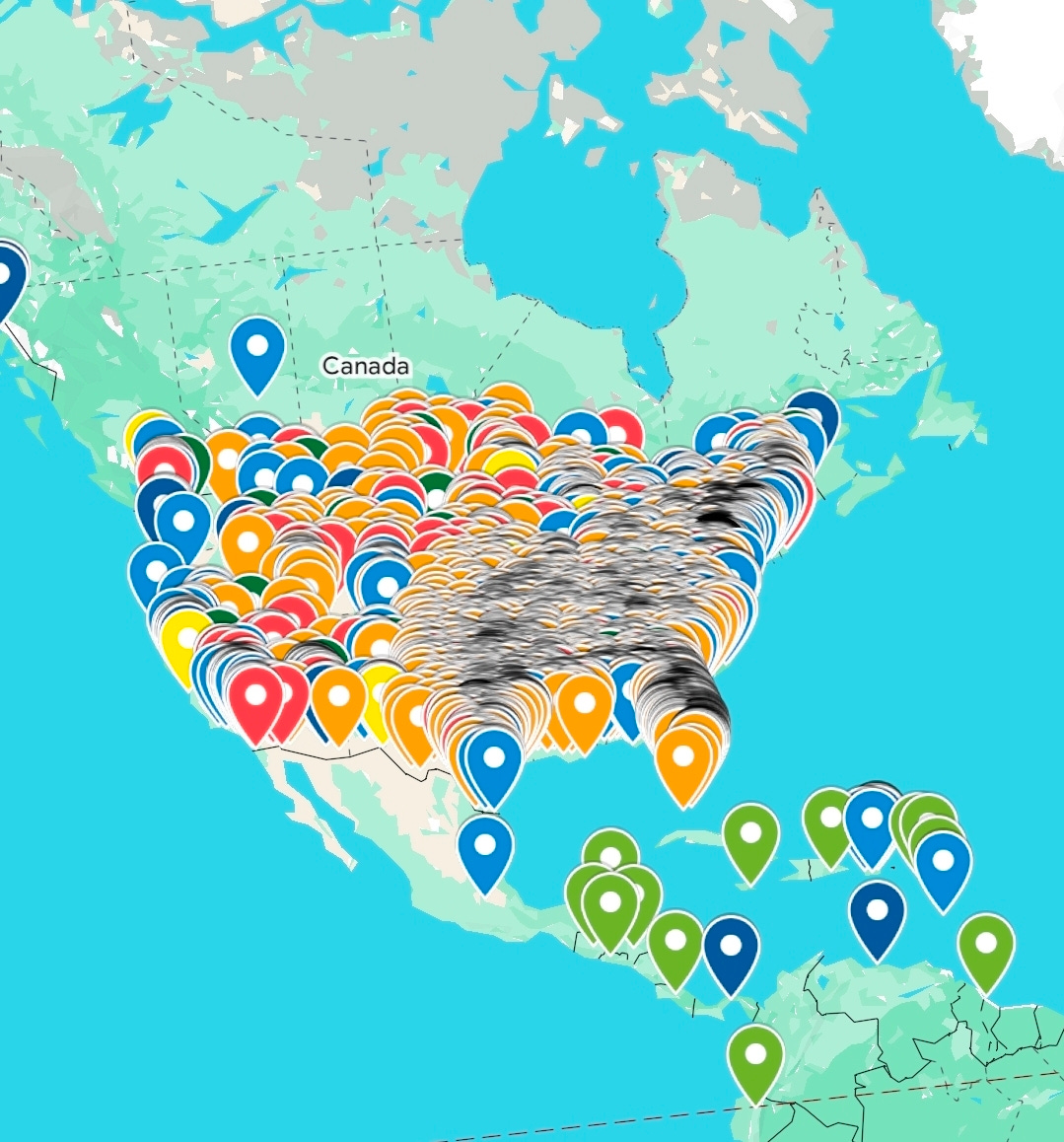
Every person pushed through ICE detention, deportation, electronic monitoring or removal encounters more than a federal agency. Behind the agents and detention facilities sits a commercial network of prison companies, lenders, transportation providers, technology firms, surveillance vendors and other contractors whose money and services help immigration enforcement operate across the country.
Laura Berlin, an independent researcher who began tracing ICE-linked companies and financial relationships through public records in 2025, created “Who is Profiting from ICE?” as an interactive database and map. The project assembled those connections into a searchable record of the companies and institutions tied to the machinery of detention and deportation.
The significance of the project grew when organizers began using that information to identify financial pressure points. Instead of treating ICE as an enforcement apparatus isolated inside the federal government, the database made visible the businesses and financial institutions whose contracts, credit and services helped sustain a system that confines, monitors and removes immigrants.
Citizens Bank became one of the clearest examples. The bank maintained financing relationships with GEO Group and CoreCivic, two major private detention companies that contract with ICE. Organizers began targeting Citizens over those relationships through demonstrations, customer withdrawal campaigns, municipal pressure and other public actions.
The financial consequences became substantial. Jersey City announced that it would withdraw $265 million from Citizens Bank over its financing ties to GEO Group and CoreCivic. Montclair, New Jersey, later voted to remove another $90 million. Organizers also collected individual withdrawal pledges while expanding demonstrations across the East Coast and beyond.
By June, roughly 140 protests had been planned across 17 states. Berlin’s database, once a relatively small research project, had surged to nearly 10 million visits as public attention to ICE intensified following the January 2026 killings of Renee Good and Alex Pretti by federal immigration officers.
Citizens announced in July that it would exit the credit facilities involving GEO Group and CoreCivic. The decision followed months of organized pressure and municipal withdrawals totaling hundreds of millions of dollars, while changes inside the detention industry were also reducing the companies’ dependence on traditional bank financing.
CoreCivic, for example, sold two California detention facilities to the Department of Homeland Security for $1.5 billion. The transaction transferred ownership to the federal government while CoreCivic expected to continue operating facilities under ICE agreements, leaving the company embedded in a detention system whose consequences are borne by the immigrants held inside it even as the financing structure around that system changes.
Berlin’s database expanded beyond detention operators to trace major corporations including AT&T, Comcast, Dell, Deloitte, FedEx, Motorola and Palantir. As those connections became easier to examine, the project itself entered Department of Homeland Security intelligence reporting. A February DHS intelligence bulletin obtained by USA TODAY specifically referenced the website and was issued under HSEC SIN 8 — Homeland Security Standing Information Need 8, an intelligence category used for domestic-terrorism threat reporting.
The bulletin discussed anti-ICE activity alongside warnings about potential violence by what DHS described as anarchist extremists, while also acknowledging that some of the activity it described was protected by the First Amendment. Berlin’s project consisted of organizing publicly available information about government contracts, corporate relationships and political ties into a form that people could search and use to understand who was helping sustain the enforcement system affecting immigrant families and communities.
That federal scrutiny landed after the database had already shown how public records could become leverage. Organizers moved from generalized opposition to targeted pressure against specific institutions financing or servicing detention infrastructure. Customers could withdraw money, municipalities could reconsider banking relationships, and campaigns could confront corporations whose role in detaining, surveilling or facilitating the removal of immigrants had previously remained scattered across contracts and filings.
The results exposed pressure points inside ICE’s private support system. Immigration enforcement depends on companies with customers, investors, lenders, reputations and political relationships outside the detention system itself. Those dependencies create places where organized public pressure can produce financial consequences against institutions helping sustain machinery that directly affects people subjected to detention and deportation.
DHS intelligence reporting added another mechanism to that record. A project designed to make government and corporate relationships easier to understand became an object of federal security attention after people began using those relationships to organize against ICE-linked institutions and the infrastructure surrounding immigrant detention and removal.
For Americans Against ICE, the significance is larger than any single company or campaign. Berlin’s research traced federal contracts, corporate financing and campaign contributions across an enforcement system whose consequences fall on immigrants and their families, while the government agency overseeing ICE placed the public-facing research used to examine those connections inside domestic-terrorism intelligence reporting. The same record that exposed where private money intersects with federal enforcement also documented what happened when people began using that information to demand consequences.
Upgrade to a paid subscription to help sustain Americans Against ICE’s independent reporting, public-interest investigations and long-term accountability work.
Laura is a hero! Thank you for telling her story! She is also a member of the Coalition for Values-Based Investment with me, and we hope all y'all will join our nationwide divestment movement. Find out more here:
https://sarahtowle.substack.com/p/divest-from-for-profit-prisons-a?r=464pd&utm_campaign=post&utm_medium=web&showWelcomeOnShare=true
I gotta' say that ever since ICE started targeting construction sites, it made me think about Trump's exposure to Fear City, the Concrete Club and how Construction groups faced harassment. The number of foreign born workers in construction makes that kind of harassment and site disruption pretty open for extortion. Especially if you control the FBI.