

European politicians are calling the new law a returns system. Critics are calling it something closer to ICE.
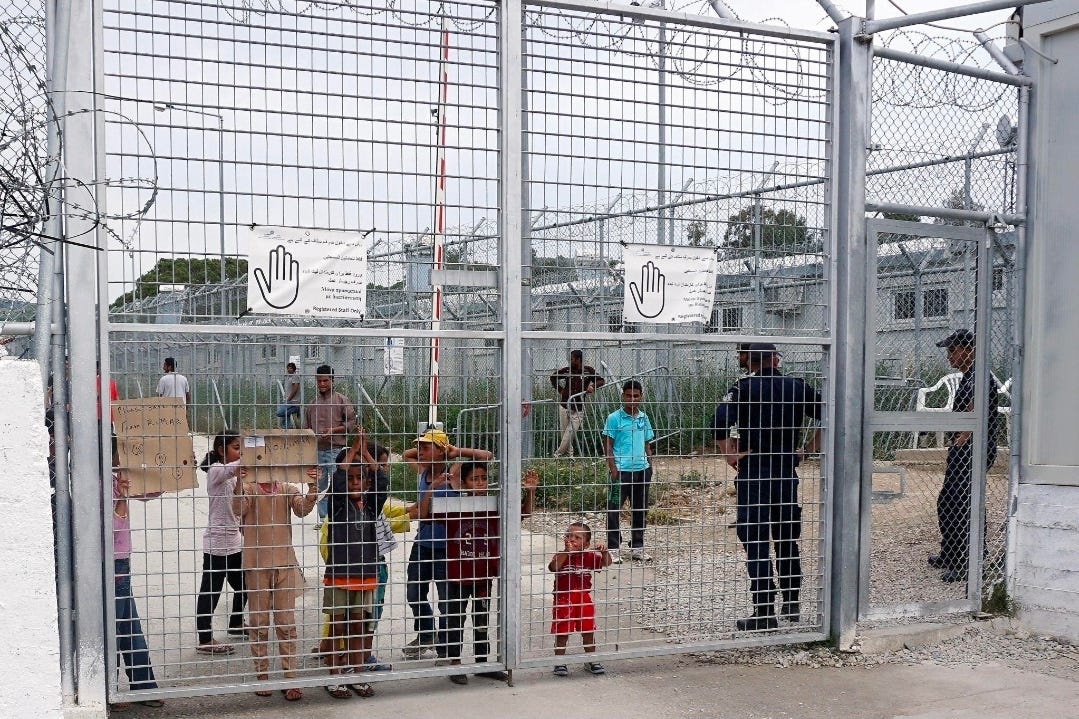
The European Union has agreed to a new returns regulation meant to increase deportations of undocumented migrants and people denied the right to remain. The law is being presented as migration management, but the powers inside it go far beyond paperwork. It allows authorities to search people’s homes or other premises to enforce deportation orders, expands detention for people deemed uncooperative or a flight risk, permits the detention of unaccompanied minors and families with children as a “last resort,” and opens the door to offshore return hubs outside the EU.
The EU is not importing the name ICE, but it is moving toward an enforcement model Americans already recognize. The system grows by giving the state more power over migrants’ homes, movement, documents, family life, and access to support, while presenting each expansion as ordinary administration. That is how force gets normalized: not by announcing cruelty, but by turning raids, detention, and removal into procedures.
Under the new regulation, people facing deportation could be detained for up to two years, extendable to 30 months. That is a major increase from the existing 18-month detention period. People who refuse to comply with deportation orders could also see benefits or other allowances cut, giving authorities another way to pressure people into removal.
The law’s treatment of children is one of its clearest warnings. Detention will be permitted for unaccompanied minors and families with children under language describing it as a last resort and for the shortest appropriate period. That wording is meant to sound careful, but the harm remains obvious. A child held in immigration detention is still a child confined by the state because of an immigration order. A family placed inside detention is still a family forced to live under state control while officials describe the process as managed return.
The offshore return hubs are another escalation. These centers would be located outside the EU, where undocumented people could be held while their removal is arranged. Several European countries are already in talks with countries outside the bloc, mostly in Africa, although no final agreements have been announced. Moving detention offshore does not erase the harm. It moves the harm farther from public view.

EU officials are presenting the regulation as a way to make deportations faster and more effective. The public-facing language is control, credibility, efficiency, and compliance. The lived reality for the people underneath the policy is different: officers at doors, longer detention, reduced support, family fear, removal orders, and the possibility of being sent outside the EU to wait in a return hub.
Critics have named the ICE comparison directly. Green MEP Mélissa Camara said the text weakens procedural rights, extends detention, and endorses ICE practices by allowing authorities to conduct home raids. Silvia Carta of the Platform for Cooperation on Undocumented Migrants warned that the law could expose hundreds of thousands of people to harm and violence, including long detention, family separation, and removal to countries they may not know.
This is how immigration enforcement spreads across systems. It does not need the same agency name or the same flag. It only needs the same sequence: mark a politically vulnerable population as removable, expand the state’s power over them, describe the expansion as order, and rely on the public to accept harm once the people targeted have been pushed outside sympathy.
The political path to the agreement matters too. The deal became possible after the center-right European People’s Party aligned with far-right groups in the European Parliament to push through tougher measures. That shift shows how far-right migration politics can reshape policy even when the final language sounds institutional. The result is a law carrying the force of the right while wearing the vocabulary of administration.
Supporters insist the law applies to people who have gone through the legal process and been found not to have the right to remain. That framing is meant to close the moral question before enforcement begins. But immigration systems are not clean machines. They are shaped by poverty, war, racism, colonial history, labor exploitation, border panic, bureaucracy, and political pressure. A government label does not erase what happens to a person when the state comes to remove them.
The danger is not only that Europe is copying a U.S. model. The danger is that governments are learning from one another how to make the same violence sound normal. A raid becomes compliance. Offshore detention becomes a hub. Confining families becomes a last resort. Holding people for months or years becomes procedure. Forcing people out becomes return.
Americans Against ICE has tracked this pattern before. In Jamaica, state violence was sold through the language of security. In the United States, ICE enforcement uses law-and-order language to make raids, detention, and family separation sound like management. The EU’s new returns law belongs to the same political family: clean words placed over coercive power, with vulnerable people made to absorb the damage.
The people who will feel this first are not the politicians praising the deal. They are undocumented migrants, rejected asylum seekers, workers, families, children, and people whose lives are already shaped by borders they did not create. They are the ones who will face the knock at the door, the detention order, the benefit cut, the family separation, or the return hub outside public view.
The EU may call this a returns system. The powers inside it tell a harder story. When a government expands raids, detention, offshore confinement, and punishment against migrants, the name is not the protection. The structure is the warning.
A deportation system does not become humane because officials call it management.
This law matters because the same enforcement logic keeps spreading: raids framed as procedure, detention framed as control, offshore confinement framed as efficiency, and family fear treated as policy design. Whether the agency is called ICE or the system is called returns, the people underneath it are the ones forced to live with the violence.
Upgrade to a paid subscription.
Americans Against ICE keeps the record public before governments can rename the harm and ask the public to forget what it is seeing.
Related pattern: Jamaica called it security. America called it ICE enforcement. The same machinery keeps appearing under different names.
Jamaica Calls It Security. America Calls It ICE Enforcement. The Machinery Is the Same.

In Jamaica, the state calls it security.
…FUCK BORDERS !!!
…people can’t be illegal - BORDERS ARE ILLEGAL