

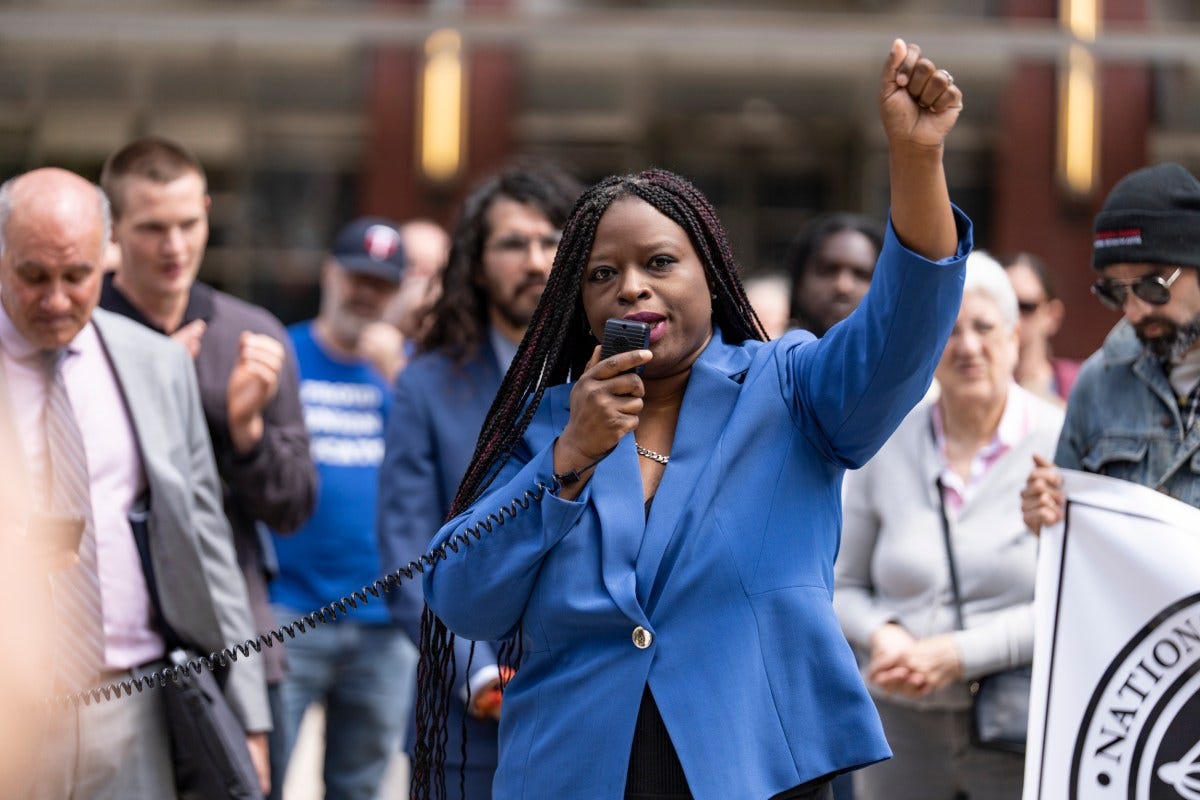
Federal prosecutors have charged 15 Minnesota anti-ICE activists in a broad conspiracy case tied to protests, patrols, and resistance around immigration enforcement during Operation Metro Surge.
The indictment, announced by U.S. Attorney Daniel Rosen and Homeland Security Investigations Special Agent in Charge Michael McCarthy, accuses the defendants of conspiracy to impede or injure federal officers. Prosecutors say the case centers on activity around the Whipple Federal Building, where ICE is headquartered in Minnesota.
The charges arrive after other federal protest cases in Minnesota have already fallen apart. Federal prosecutors have dismissed or downgraded a significant share of earlier cases brought against anti-ICE protesters, including cases dropped for lack of evidence and one abandoned in a way that led a judge to bar the government from refiling to prevent prosecutorial harassment.
That history matters because the new indictment is not limited to one alleged incident outside one federal building. It reaches across protest planning, Signal messages, blockade logistics, patrol activity, trainings, political language, and alleged confrontations with federal agents.
The Justice Department is using conspiracy law to build a case around anti-ICE organizing.
According to the indictment, the defendants are members or participants in a group called Direct Action Minnesota, also referred to as DAMN. Prosecutors allege that defendants used Signal messages to coordinate meetings, trainings, patrols, and blockade materials connected to anti-ICE actions near the Whipple Federal Building.
The indictment cites plans for “shield” trainings and “de-arrest” trainings, as well as messages about bringing blockade materials to the area. It also describes protesters blocking streets, forming human chains, and flipping a trailer to obstruct roadways near the federal building.
Those allegations have not been tested in court. They are the prosecution’s claims.
What makes the case broader than the individual allegations is the structure prosecutors are building around them. Group chats, meetings, patrol coordination, protest training, and planning for direct action are being presented as evidence of a criminal agreement.
That is where the public danger sits: the infrastructure of protest is being pulled into the architecture of a federal conspiracy case.
Four defendants face additional charges tied to specific alleged conduct. Prosecutors allege that William Morgan and Isaac Sant separately followed ICE officers from the Whipple Building to Hudson, Wisconsin. Both face interstate stalking charges. Morgan is also accused of knocking notes from an ICE agent’s hand and kicking a federal vehicle, leaving dents, leading to additional charges including assault on a federal officer and destruction of federal property.
Another defendant, Natasha Rakotz, is charged with assaulting a federal officer for allegedly brake-checking and side-swiping a federal vehicle while following it. Kyle Wagner, who was already in custody on earlier charges, is accused by prosecutors of posting an inflammatory Instagram video calling on anti-ICE protesters to arm themselves and stop federal agents.
Those allegations are serious and must be reported as allegations. They are not convictions. They are not the full public meaning of the case.
The larger issue is how federal prosecutors are using the most inflammatory claims in the indictment to support a broader theory that anti-ICE organizing belongs inside a conspiracy prosecution.
At the press conference announcing the charges, Rosen declined to say whether any federal agents were injured in relation to the events described in the indictment. That refusal matters because prosecutors are using grave federal charges while leaving a basic injury question unanswered in public.
The federal government has already shown how weak some of its Minnesota protest cases were. According to reporting on Operation Metro Surge cases, more than one-third of federal charges tied to alleged assaults or resistance against federal agents have been dismissed or are moving toward dismissal, and many others have been downgraded.
Last week, prosecutors dropped assault charges against Juan Carlos Rodriguez Romero for lack of evidence. Days later, prosecutors abandoned another assault case against Nasra Ahmed, a U.S. citizen. In Ahmed’s case, the judge barred prosecutors from bringing the charge again to prevent prosecutorial harassment.
That history is not background noise. DOJ already tried to turn anti-ICE protest moments into assault cases. Some of those cases collapsed. Now prosecutors are reaching for something larger: anti-ICE coordination itself as conspiracy.
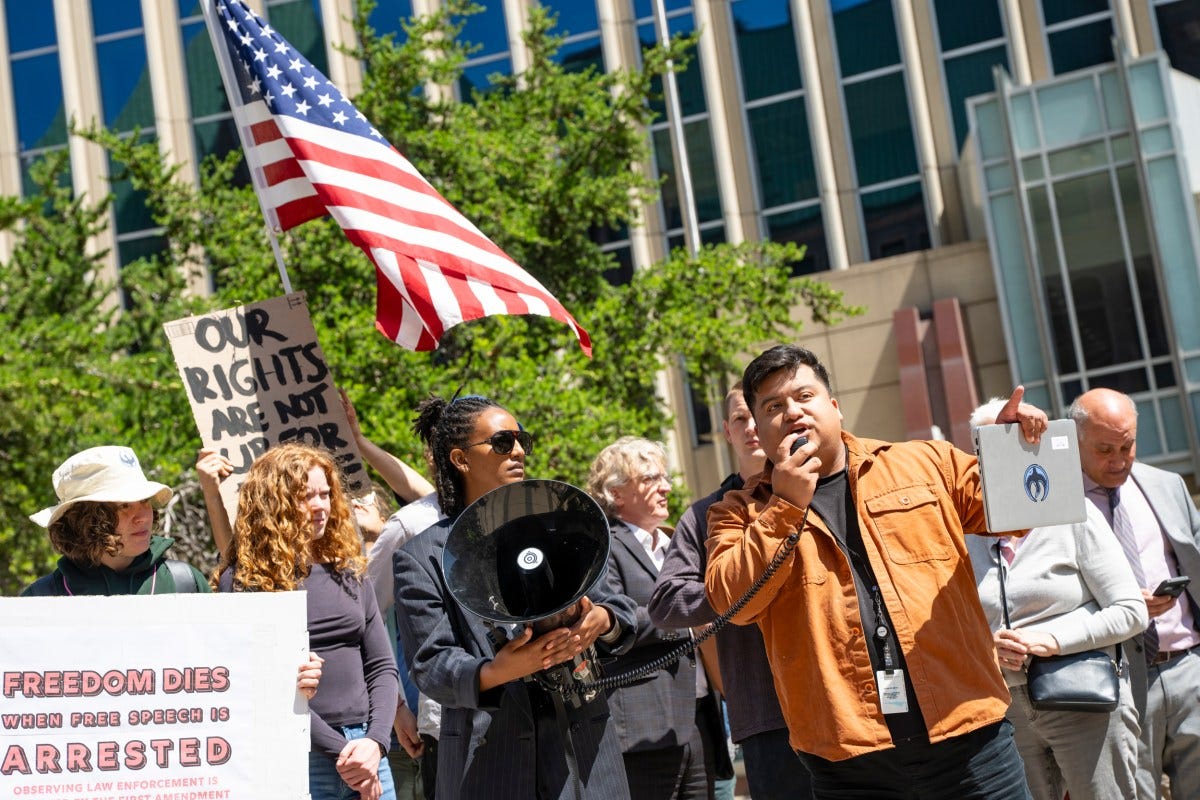
Operation Metro Surge created the enforcement conditions that produced the rapid response networks, community patrols, and public resistance now being pulled into the indictment. People in the Twin Cities organized because ICE activity was tearing through communities, and because federal agents were operating inside a national deportation crackdown.
Community patrols and rapid response networks were not created in a vacuum. They emerged because people were trying to document ICE activity, warn neighbors, follow federal vehicles, track raids, and keep immigrant communities from being taken quietly.
The indictment now turns that protest ecosystem into evidence. It treats group chats, trainings, planning meetings, patrols, and blockade preparation not only as signs of political resistance, but as components of a criminal theory.
The issue is not whether every allegation will survive in court. The issue is that the federal government is choosing to turn a wide field of anti-ICE activity into one sweeping prosecution.
Federal prosecutors and HSI officials have tried to present the case as a line between lawful protest and criminal conduct. But the government’s line is not neutral when the government is the actor using ICE-adjacent power, criminal charges, surveillance, press conferences, and federal court to punish people who organized against immigration enforcement.
Terms like “clashes” or “unrest” flatten the power imbalance and move the moral center toward federal agents instead of the anti-ICE organizers facing a sweeping indictment after months of aggressive immigration enforcement and failed protest prosecutions.
The federal government is now using the case to send a message beyond the 15 defendants. The message is aimed at the infrastructure of resistance: the people who watch ICE, follow vehicles, warn neighbors, show up at federal buildings, organize rapid response, and refuse to let deportation machinery operate without public opposition.
If anti-ICE organizing can be treated as conspiracy, community defense becomes a target before a person ever steps into a courtroom. Under that theory, group chats, trainings, protest plans, patrols, and demands to stop ICE can all be pulled into the government’s evidence map.
That is how repression works when it leaves the street and enters the courtroom.
The Justice Department’s escalation shifts public attention away from the enforcement system people were protesting: raids, detention, deportations, family separation, surveillance, and the violence of immigration enforcement. The federal government narrows the story to the conduct it wants to prosecute while moving ICE’s underlying harm out of the center.
This case reaches across alleged incidents, protest messages, direct action planning, federal vehicle tracking, social media posts, and community organizing. It presents anti-ICE resistance as a coordinated criminal project. It arrives after prosecutors already had to retreat from other Minnesota protest cases.
For the defendants, the consequences are immediate: arrests, detention, federal charges, legal exposure, and the weight of being named in a major indictment. For anti-ICE organizers beyond the case, the message is also clear. The federal government is watching the networks that respond to ICE, and it is willing to use conspiracy charges against them.
Anti-ICE activists are being criminalized for resistance to a deportation system that already harms immigrant communities. DOJ, HSI, and ICE-adjacent enforcement power are turning protest activity into federal prosecution after earlier cases collapsed under scrutiny.
The case is not only about what prosecutors say happened outside the Whipple Federal Building. It is about how far the federal government is willing to go to punish people who organize against ICE.
Immigration enforcement does not end at the raid scene.
It moves into indictments, conspiracy charges, surveillance of organizers, press conferences, courtrooms, and federal cases built around the people who show up to resist ICE.
The Minnesota charges show how DOJ power can be used against anti-ICE organizers after the streets have already been cleared. Protest logistics, rapid response work, community patrols, group chats, trainings, and blockade planning can be pulled into a federal conspiracy frame and used to punish resistance.
Americans Against ICE documents that machinery because ICE violence does not only harm the people taken by ICE agents. It also targets the people who try to stop the raids, document them, follow the vehicles, warn the community, and refuse to let immigration enforcement happen quietly.
Support this work by upgrading to a paid subscription.
We must stay United.
They are not just trying to silence us, they are trying to isolate us. Divide and conquer is not a new tactic.
Stay Strong. Stay United.