

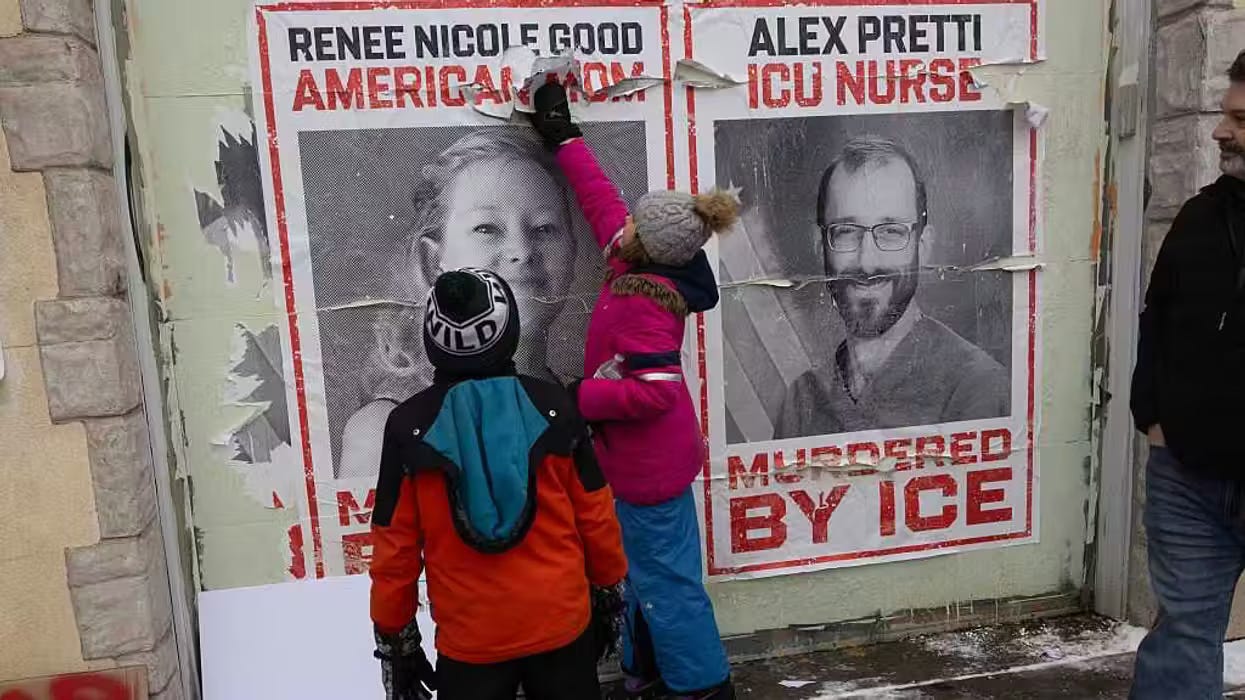
The deaths of Renée Nicole Good and Alex Pretti in Minneapolis did not unfold solely as tragic encounters involving federal immigration enforcement. What followed the shootings revealed a second and equally consequential struggle: the battle over how the events would be understood. The shootings triggered more than investigations into federal immigration enforcement — they triggered a battle over narrative. Almost immediately after the killings, commentary began shifting away from the actions of the agents involved and toward the identities of the people who had been killed. Within days of the killings, attention began shifting away from the conduct of federal agents and toward scrutiny of the victims themselves. That shift—away from state violence and toward examination of those who were killed—did not occur by accident. It reflected a familiar pattern in which identity-based narratives are used to reshape public understanding of deadly encounters with government authority.
The shootings of Good and Pretti therefore triggered more than inquiries into federal immigration enforcement. They triggered a narrative process in which attention was gradually redirected away from the central question of lethal force and toward speculation about the victims themselves. In this environment, anti-trans and anti-gay rhetoric quickly entered the public conversation. Anti-trans and anti-gay rhetoric reframed the victims themselves as the controversy. The effect was subtle but powerful: by reframing the identities of the victims as controversial or morally suspect, the narrative surrounding the killings began to shift in ways that could soften scrutiny of the agents who fired the shots.
In the weeks following the shootings, both Good and Pretti became subjects of intense online scrutiny that extended far beyond the factual circumstances of the encounters. What began as discussion about the shootings gradually evolved into commentary about the victims’ identities, their past social media activity, and speculation about aspects of their personal lives. Anti-trans rhetoric appeared quickly within this discourse, accompanied by attempts to portray the victims in ways that could weaken public sympathy for them.
Much of the attention centered on Alex Pretti. After the shooting, images began circulating across social media platforms that commentators claimed depicted Pretti participating in drag performances. Some of these images were later shown to have been digitally manipulated, while others were photographs that had been miscaptioned and attributed to the wrong individual. In several cases the photographs had no connection to Pretti at all, yet they circulated widely as supposed evidence about his identity.
One widely shared photograph was eventually confirmed to depict another person entirely, a performer named Kyle Wagner. Journalists and community members attempted to correct the record once the misidentification became clear. Despite those efforts, the image continued to circulate across social media networks as supposed proof about Pretti’s personal life. The speed with which the narrative spread vastly outpaced the attempts to correct it.
In online spaces the speculation quickly expanded. Photographs of unrelated individuals wearing bright clothing or expressing gender nonconforming identity were reposted and attributed to Pretti. Within a matter of days the internet had constructed a fictionalized version of him that bore little resemblance to the verified facts of his life. Identity speculation replaced factual discussion of the shooting itself.
Whether Pretti had ever explored drag or other forms of gender expression should have been irrelevant to the central question raised by his death. Yet the circulation of these narratives suggested that identity could be used to reshape how the public interpreted the killings. If a victim can be portrayed as deceptive, deviant, or morally suspect, violence against them becomes easier to rationalize. In this way the focus of the public conversation subtly shifted away from the use of lethal force and toward debates about character and identity.
This rhetorical maneuver has deep historical roots. For decades opponents of LGBTQ equality have attempted to associate gender diversity with deception, deviance, or moral instability. In such narratives gender nonconformity is framed as evidence that a person cannot be trusted or that their actions should be interpreted with suspicion. Similar language quickly surfaced in commentary surrounding the deaths of Good and Pretti.
Some commentators went further, suggesting that if Pretti had presented himself differently in different contexts, he might also have been misleading federal agents during the encounter that ended in gunfire. The implication behind such claims was unmistakable. Gender expression was being reframed as evidence of duplicity. Through this rhetorical move, identity itself became part of the narrative used to interpret the shooting.
The attacks on Pretti’s identity did not emerge in isolation. They reflected a broader political climate in which transgender people are frequently portrayed as deceptive, dangerous, or morally suspect. In that environment, speculation about Pretti’s gender expression functioned as more than gossip. It became part of a familiar narrative strategy: when a victim can be portrayed as deviant, violence committed against them becomes easier to rationalize. The same rhetoric used for years to stigmatize transgender communities suddenly appeared in the aftermath of a fatal encounter with federal agents.
None of these identity-focused narratives addressed the core evidence surrounding the shootings themselves. Video footage, eyewitness testimony, and investigative records will ultimately determine what occurred during the encounters with federal agents. Instead of focusing on the conduct of the agents, attention was redirected toward speculation about the victims. The effect was to move the center of the conversation away from the use of lethal force and toward the identities of the people who had been killed.
This shift in focus is not unusual. When individuals from marginalized communities become victims of violence, public discourse frequently moves toward examining their personal lives rather than the institutions involved in their deaths. In cases involving queer or transgender individuals, sexuality and gender identity often become tools used to reshape how the public interprets events.
The deaths of Good and Pretti occurred within a broader climate of hostility toward LGBTQ communities. Advocacy organizations tracking anti-LGBTQ incidents have documented a significant rise in harassment, intimidation, and violence in recent years. During the first half of 2025 alone, more than nine hundred incidents targeting LGBTQ individuals or institutions were recorded across the United States. Since 2022, the cumulative total of documented incidents has surpassed three thousand, a number that likely underestimates the true scale of the problem.
Within such an environment, identity-based narratives can spread rapidly through online networks and political commentary. Once introduced into public discourse, these narratives frequently redirect conversation away from the original event and toward debates about morality, identity, and character. The controversy surrounding Alex Pretti’s identity demonstrates how quickly that shift can occur.
Instead of focusing primarily on the actions that led to the shootings, significant portions of the conversation became consumed with speculation about gender expression and sexuality. The identities of the victims were transformed into objects of public scrutiny, while the conduct of the agents receded from the center of the discussion.
Demonizing gender identity can function as a mechanism for reframing violence. When a victim is portrayed as morally suspect or socially deviant, public sympathy can erode, and the legitimacy of lethal force may appear less controversial. In this way, identity-based rhetoric becomes intertwined with the broader politics of state violence.
Ultimately, the debate surrounding Alex Pretti’s identity reveals more about the cultural forces shaping public discourse than it does about the facts of the shooting itself. The rapid circulation of anti-trans narratives following the killings illustrates how identity can be weaponized to influence how violent events are interpreted.
Whatever the outcome of ongoing investigations into the deaths of Renée Nicole Good and Alex Pretti, the legitimacy of lethal force cannot be determined by speculation about a victim’s gender identity or sexuality. Yet the narratives that emerged after the shootings demonstrate how quickly identity can be mobilized to reshape public understanding of violence.
Recognizing this pattern is essential if public scrutiny is to remain focused on the institutions and agents who wield the power of the state.
Support Independent Accountability Reporting
The reporting you just read exists because readers choose to sustain it.
Coverage of ICE enforcement, deaths in custody, and the treatment of marginalized communities often disappears from mainstream attention. Independent platforms like this one continue documenting these stories so they cannot be ignored.
Upgrade to a paid subscription to support this work and keep the reporting going.
This investigation builds on earlier reporting as the legal questions around the shootings continue to unfold.
Minnesota prosecutors have already indicated they can charge the ICE agent who shot Renée Nicole Good if state law was violated.
Earlier note here:
https://substack.com/@resistfight/note/c-222849513?r=4agxul