

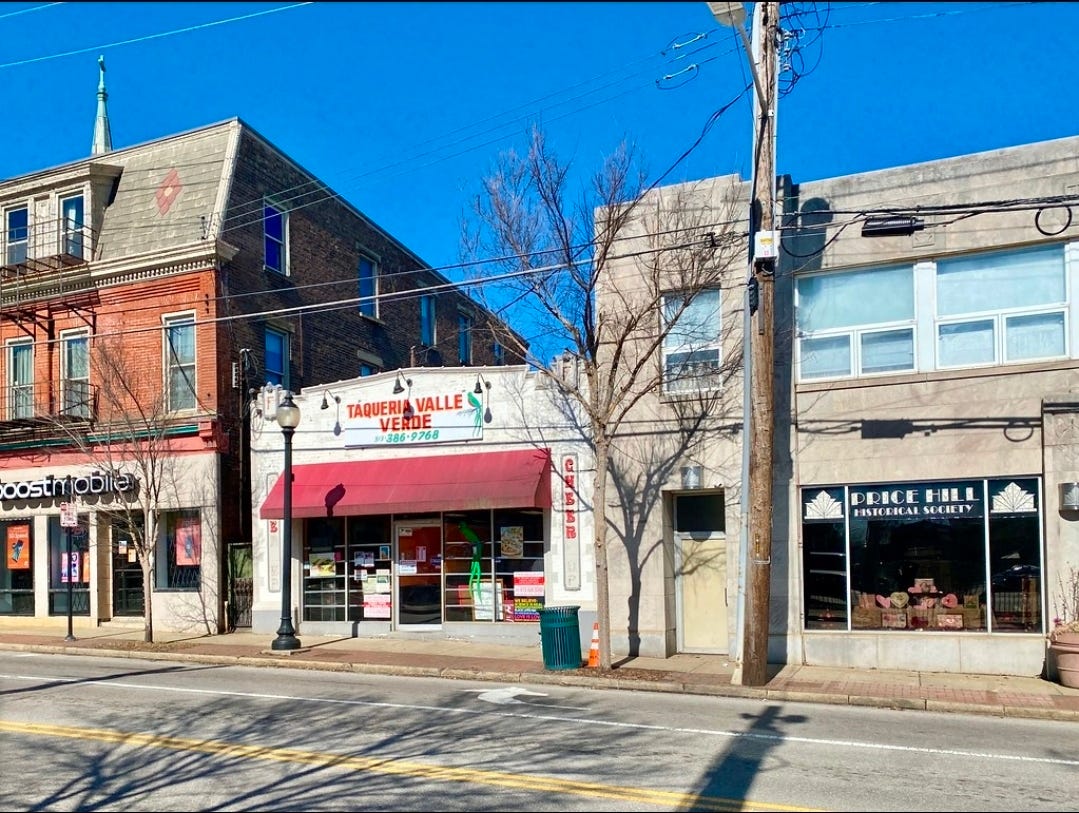
Cincinnati’s Price Hill neighborhood is one of those places where a city’s real life is easy to see if you are paying attention. On Warsaw Avenue, Guatemalan flags hang over storefronts and taco trucks claim corners and parking lots. Students pour out of school buildings in the afternoon. Families move between work, pickup, errands, church, and home. Children gather in small patches of green space and kick soccer balls around while adults talk nearby. It is ordinary neighborhood life. It is also exactly the kind of life that becomes fragile when immigration enforcement starts testing how far it can reach.
That is what makes what happened in Cincinnati so dangerous.
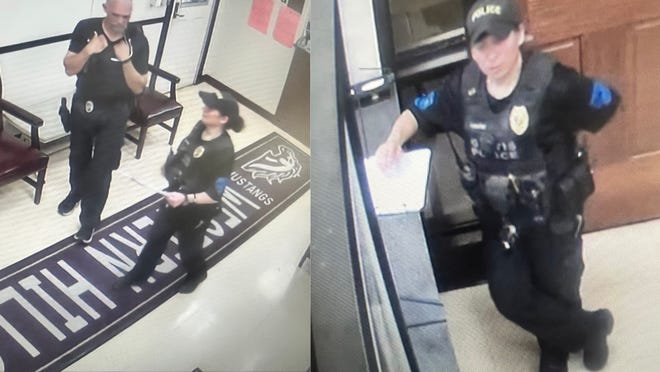
On 15 April, two Ohio police officers acting on behalf of Immigration and Customs Enforcement attempted to question administrators at three schools about children attending those schools. They called the visits “wellness checks.” They showed up armed. They did not produce warrants. They were not working within their own jurisdiction. And at the schools they visited, staff refused to give them the access they wanted.
That should be the center of this story.
Not a bureaucratic dispute. Not a misunderstanding between agencies. Not a paperwork problem. Armed law enforcement officers showed up at Latino-majority schools looking for children under the soft, almost protective language of “wellness checks,” while withholding the full truth about who they were working for and what authority they actually had. When immigration enforcement reaches schools this way, the point is not simply information gathering. The point is pressure. The point is intimidation. The point is to make immigrant communities understand that there may be no ordinary space left untouched.
At Western Hills University High School, staff said officers entered the main office, displayed a list of approximately 30 names, and asked whether anyone on the list was enrolled there. Staff confirmed the enrollment of two students. The officers reportedly had visible sidearms at the time. They failed to produce warrants or the papers needed to justify access. At the other schools, the pattern was the same. The officers were denied access to the children they were seeking.
That refusal matters.
School staff did what they were supposed to do. They treated schools like schools, not as extension offices for federal immigration enforcement. They understood, correctly, that the presence of armed officers asking about children is not neutral, no matter how gentle the label attached to the visit might sound. “Wellness check” is the kind of phrase that is meant to lower the public’s guard. It suggests concern. It suggests safety. It suggests a child-centered purpose. But when officers arrive armed, without warrants, outside their jurisdiction, seeking information about students on behalf of ICE, “wellness check” stops sounding protective. It starts sounding like cover language for an immigration search effort that knows the public would recoil if it were named more plainly.
That is the deeper problem here. The language is doing work. It is there to soften what is actually happening.
ICE says it does not target schools for enforcement actions. But if local law enforcement partners can appear at schools, ask about named children, and invoke child welfare while carrying visible weapons and withholding clear legal authority, then the distinction becomes almost meaningless to the people living under it. For a child, for a parent, for a school secretary, for a teacher, for a principal, for the families in the parking lot outside, the technical wording does not change the lived reality. Officers came to schools looking for children. They came attached to immigration enforcement. They came without warrants. They came with guns visible. That is the reality immigrant families have to absorb.
And in communities like Price Hill, that reality does not arrive in a vacuum.
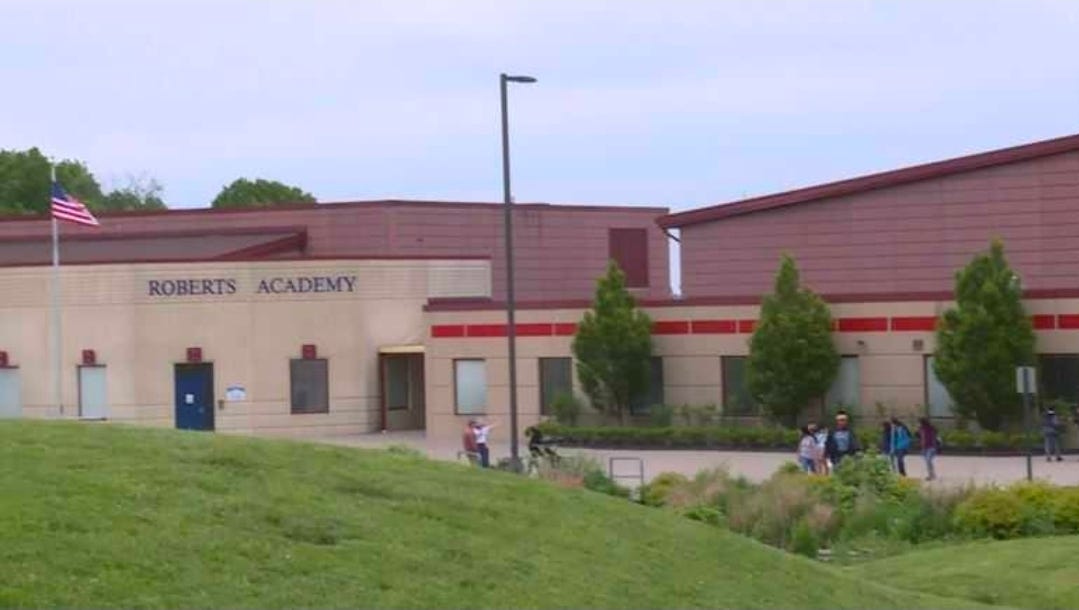
Price Hill is not just a neighborhood where Latino life exists. It is a neighborhood where Latino life has helped hold a city together. Like many formerly industrial Midwestern cities, Cincinnati has been shaped by the arrival of immigrants who kept neighborhoods alive after decades of manufacturing decline and depopulation. The schools, shops, churches, parking lots, and sidewalks in Price Hill are not incidental to that story. They are the story. They are the visible evidence of a community building life in a country that continues to treat that life as conditional.
That is why the school visits cannot be treated as a one-off incident. They belong to a broader pattern of enforcement pressure aimed at the same community. Last May, ICE agents descended on a Kroger supermarket parking lot in Price Hill to arrest four immigrants, including a father who was with his young family. Around the same time, 19-year-old Emerson Colindres, a star soccer player with no criminal record, was deported to Honduras. Local businesses felt the impact immediately. One Mexican store owner said customers practically disappeared for about a week after the Kroger action because people were too scared to come out.
That is how enforcement works when it is doing exactly what it was built to do. It does not only remove people. It reorganizes daily life through fear. It empties parking lots. It keeps parents home. It teaches families to think twice about pickup lines, grocery runs, school attendance, church, work, and the smallest routines of public life. It turns the ordinary into a risk calculation.
The school visits pushed that fear even deeper.
There are few places a community should be able to treat as non-negotiable. Schools should be one of them. They are where parents send children believing, or at least hoping, that the work of learning can happen apart from the full force of the state. When that boundary is breached, even indirectly, it changes the emotional climate around education itself. How is a child supposed to focus in class if police or ICE-linked officers might be asking about them in the office? How is a parent supposed to feel safe walking onto school grounds if enforcement can hover just inside or outside those spaces? How is a teacher supposed to reassure students when the threat has already shown up at the building?
This is why the visits matter beyond the legal questions. They changed the meaning of the schools for the families targeted by them.
And the legal questions matter plenty.
The officers involved were not simply neighborhood patrol officers from Cincinnati responding to an immediate local emergency. One of them, Tonina Lamanna, was a police officer in Gratis, Ohio, a village roughly 50 miles away. The other officer, Jeff Baylor, accompanied her. Their jurisdiction was not Cincinnati. That detail should stop people cold. Officers traveled from outside the city into Latino-majority school zones to carry out ICE-linked “wellness checks” concerning children. Even if officials want to hide behind procedural language, the shape of it is unmistakable. A distant law enforcement apparatus extended itself into schools serving Latino children and attempted to use institutional access to gather information it could not lawfully or openly compel.
That is not public reassurance. That is jurisdiction stretched into intimidation.
The details around Lamanna sharpen the alarm even further. She had previously been fired from another department in 2017 for allegedly being untruthful and filing false documents. That history does not sit off to the side here as a character footnote. It goes directly to credibility and power. When armed officers appear at schools asking about children while invoking federal immigration purposes, trust should already be minimal. When one of those officers carries a history tied to dishonesty and false documentation, the entire premise becomes even more intolerable. Communities are being asked to absorb school-based immigration pressure carried out by people whose credibility is already fractured.
After the incident, Lamanna and Baylor were placed on leave. That was appropriate, but it was not the end of the story. In Gratis, residents later turned out at a public meeting to protest the decision to put the officers on leave, arguing that it would affect safety in their own community. That response deserves more attention than it will probably get.
Because here, again, the country reveals itself.
In one place, Latino families are made to wonder whether schools are still safe from immigration pressure. In another, residents rally around the officers who helped create that fear. In one place, children become searchable. In another, the grievance that gathers public sympathy is the discomfort of losing police coverage. The split is not subtle. It shows whose fear counts. It shows whose institutions get protected. It shows whose children can be treated as subjects of suspicion while another community still frames the consequences for officers as the real hardship.
The surveillance dimension of all this makes the story even worse.
Across the country, concerns have been growing about local police departments sharing license plate reader data with ICE in violation of their own policies. In Cincinnati, the presence of nearby Flock cameras adds to the sense that the infrastructure around immigrant communities is becoming increasingly searchable, traceable, and interoperable. Schools do not exist outside that environment. They sit inside it. Parents drive to them. Students are dropped off and picked up there. Families pass through nearby intersections and parking lots. When you combine ICE partnerships, school visits, local police cooperation, and surveillance technologies, the result is not just a bad encounter. It is a machinery problem.
That machinery is what immigrant communities are being forced to live inside.
The administration insists these efforts are about children who entered the United States as unaccompanied minors and may have been placed with unvetted sponsors. But the conduct in Cincinnati exposes something uglier beneath that justification. If concern for children were truly the governing principle, schools would not be approached through vague pretexts, visible firearms, and officers acting outside their jurisdiction without warrants. Child welfare does not require concealment. It does not require misleading labels. It does not require turning educators into reluctant gatekeepers against armed state intrusion. When officials say “protection” while behaving this way, protection is not what they are offering. They are offering a rationale for access.
And access is exactly what matters to ICE.
The lesson is not only that enforcement can reach your workplace, the grocery store, the road, or the parking lot. The lesson is that it is willing to reach into school systems too, using local police as the face of the encounter whenever useful. That is the line Cincinnati exposed. Not because the officers succeeded, but because school staff stopped them before they could. The refusal of those schools did more than block access. It revealed the shape of the effort itself.
That is why this should be seen as a warning.
Once schools become places where immigration-linked officers feel entitled to ask about named children without warrants, a precedent is being tested. Once a neighborhood like Price Hill becomes a site where parking lot arrests, deportations, vanishing customers, and school visits all begin stacking on top of each other, the message is no longer ambiguous. The message is that Latino life can be surrounded, watched, disrupted, and pressed from multiple directions until fear starts doing the work that law alone cannot.
But fear is not the whole story here. Resistance is part of it too.
School staff refused access. City leaders condemned what happened. Rights groups named the danger clearly. Families kept speaking. Businesses endured the aftershock and told the truth about it. These acts may seem smaller than the scale of the machinery facing them, but they matter because they interrupt normalization. They refuse the lie that this is just procedure. They refuse the language that turns a child-search effort into a “wellness check.” They refuse the idea that schools should quietly become one more doorway through which immigration enforcement reaches children.
That refusal needs to spread.
Because what happened in Cincinnati is not just about three schools. It is about what kind of country the United States is willing to become in plain sight. A country where armed officers can arrive at Latino-majority schools looking for children on behalf of ICE and still expect cooperation. A country where the language of child welfare can be used to soften immigration pressure. A country where local police can be stretched beyond their own jurisdictions to serve a federal deportation agenda. A country where one community’s children are treated as objects of search while another community rallies around the officers who made that search possible.
Price Hill deserved better than this. So did the schools. So did the families. So did the children whose names appeared on those lists.
And the rest of the country should understand what Cincinnati just revealed: when immigration enforcement says it is only checking on children, what it may really be checking is how much intrusion the public is willing to tolerate before it finally says no.
Support Americans Against ICE. This work exists to document what enforcement does after the press release language fades: the school visits, the family terror, the intimidation dressed up as procedure, and the machinery that keeps pressing into immigrant life while asking the public to treat it as normal.
A paid subscription helps fund reporting that names these patterns, tracks the systems behind them, and keeps the record from being cleaned up after the harm is done.
Bastards
Very good article. It deserves far more attention than it appears to have gotten. I did my best to spread it around. I may even repost it.