

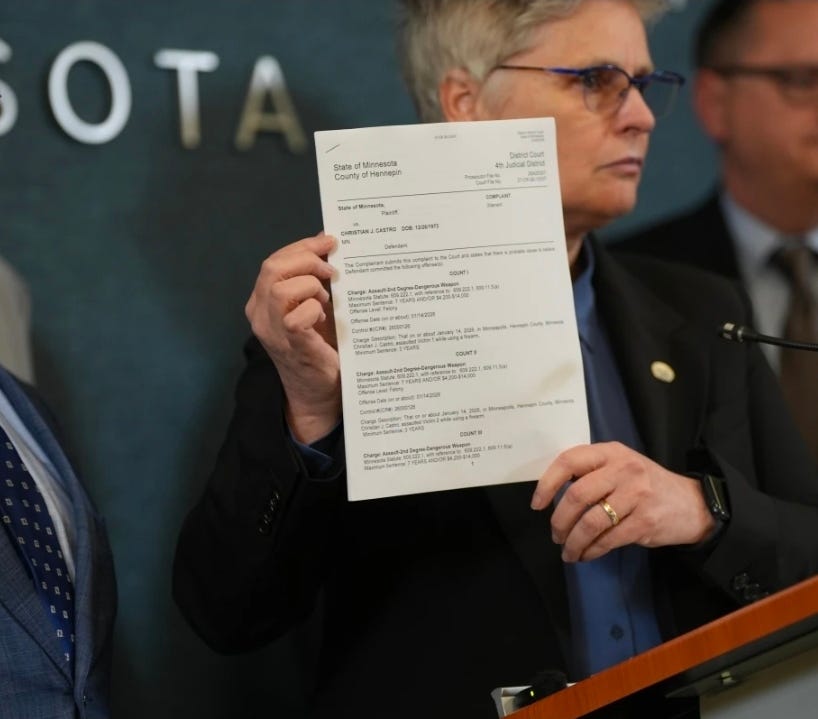
ICE agent Christian Castro was arrested in Texas after Minneapolis prosecutors charged him with assault and falsely reporting a crime in the shooting of Julio Cesar Sosa Celis, a Venezuelan man wounded during Trump’s sweeping immigration crackdown in Minnesota. Castro was taken into custody eleven days after Hennepin County prosecutors filed charges tied to the shooting, which took place during Operation Metro Surge, the federal immigration campaign that brought heavily armed agents into the Minneapolis and Saint Paul area.
The arrest matters because this is not just another case of an ICE agent accused of excessive force. Prosecutors say Castro fired through the front door of a Minneapolis apartment duplex and shot Sosa Celis in the thigh. Federal authorities initially told a different story. They accused Sosa Celis of repeatedly striking an ICE officer in the face with a broom handle and claimed another man attacked the officer with a snow shovel during an altercation that lasted about three minutes. Surveillance video later undercut that account.
That video is now central to the case. According to prosecutors, neither Sosa Celis nor Alfredo Alejandro Aljorna attacked the officer with broomsticks and shovels. There was no third man. The confrontation lasted roughly twelve seconds, not three minutes. Prosecutors reviewed the footage and took the unusual step of moving to dismiss their own case against Sosa Celis after the video contradicted the federal version of events.
That is the core of the story: ICE told the public one thing, and the video showed something else. The charge against Castro is not only about the shot fired through a door. It is about what prosecutors say happened afterward, when the official account blamed the wounded man and described a violent attack that the video did not support. In an immigration enforcement system built on secrecy, force, and federal control, a camera became one of the few things powerful enough to interrupt the script.
Castro is now the second federal agent charged over conduct tied to Operation Metro Surge. Hennepin County prosecutors also charged immigration agent Gregory Donnell Morgan Jr. with assault after he allegedly pointed a gun at people in a car on a highway. Morgan turned himself in last week, and his lawyer disputes the charges. Together, the Castro and Morgan cases show a rare pattern of local prosecutors refusing to let federal immigration officers define the facts alone.
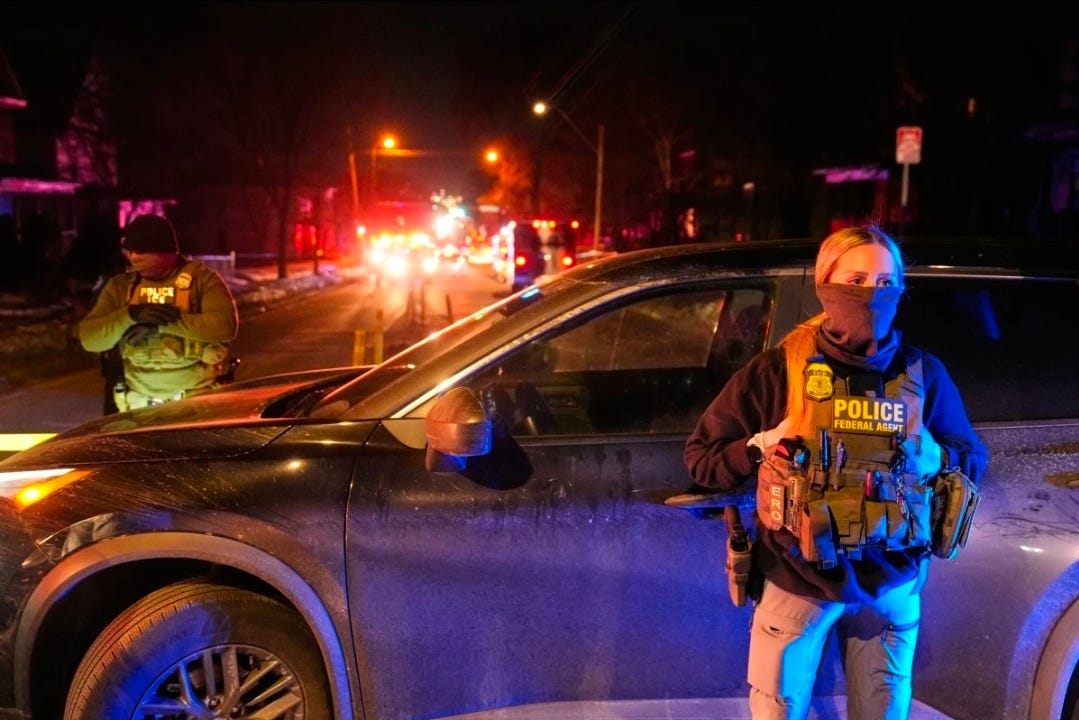
Hennepin County Attorney Mary Moriarty called Castro’s arrest a critical step forward in the prosecution. Her office said the Minnesota Bureau of Criminal Apprehension located Castro in Texas and worked with the Department of Homeland Security inspector general’s office and the Texas Rangers to arrest him. That detail matters because the DHS inspector general is supposed to serve as a watchdog over DHS agencies, including ICE. ICE itself, however, called the local prosecution unlawful and dismissed it as a political stunt.
That response follows a familiar pattern. When ICE officers are accused of violence, the agency often leans on federal authority, institutional language, and claims of self-defense. But the facts in this case are not being controlled only by ICE. Local prosecutors, surveillance footage, and the public record are now forcing a different kind of review. The question is no longer whether ICE gets to announce its version and move on. The question is whether local authorities can hold federal agents accountable when the evidence points somewhere else.
According to prosecutors, Castro and another officer had chased Aljorna to the Minneapolis duplex where he and Sosa Celis lived. Moriarty said both Sosa Celis and Aljorna were legally residing in the United States. The shooting that followed left Sosa Celis wounded, then placed him under a federal narrative that the video later contradicted. That is why the false-reporting charge cuts so deeply into the public record. It raises the possibility that the wounded man was not only shot, but also accused through a story prosecutors say the evidence did not support.
This is where the Minnesota case becomes larger than one officer. ICE’s public image during Trump’s deportation campaign has been shaped by masked officers, high-profile shootings, disputed self-defense claims, and aggressive enforcement actions that often leave communities with more questions than answers. The agency’s officers became notorious for concealing their identities with masks, using force against protesters, and injuring people with less-lethal weapons. Operation Metro Surge sits directly inside that larger record.
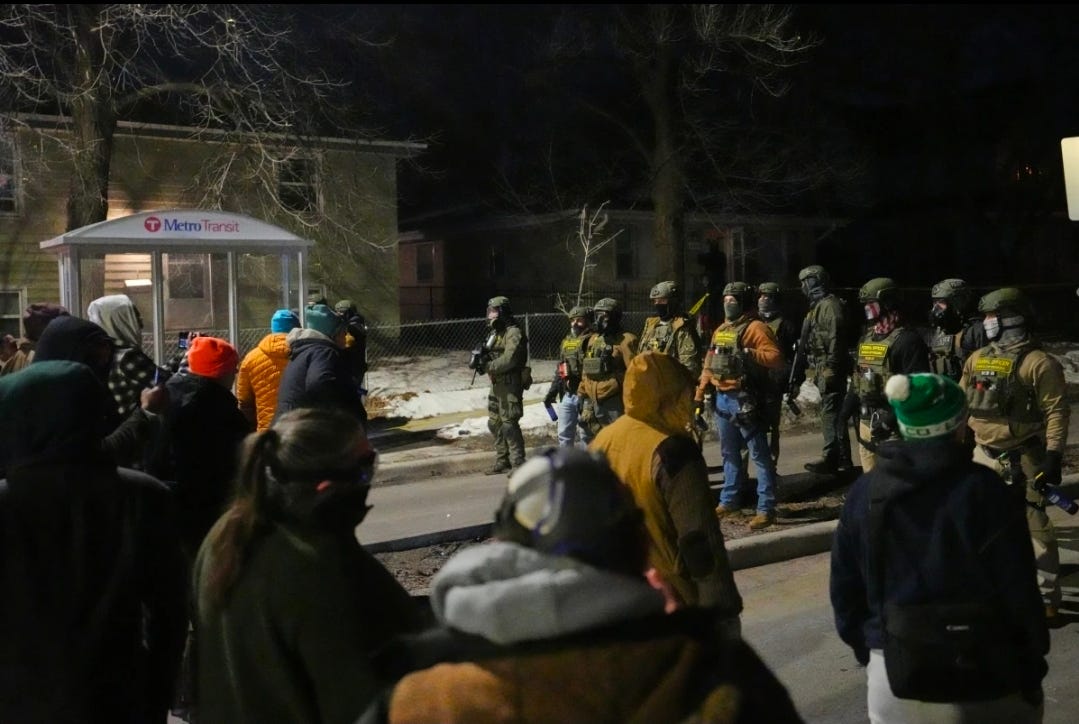
The Twin Cities campaign escalated tensions across Minnesota. The shooting deaths of Renee Good and Alex Pretti by federal officers sparked mass unrest and raised serious questions about federal agents’ conduct. Videos in those cases also cast doubt on ICE’s portrayal of its officers’ shootings as acts of self-defense. Those cases should not be folded into Castro’s case as if they are identical, but they belong in the same public pattern: federal force, disputed official accounts, video evidence, and local demands for answers.
That pattern is what makes Castro’s arrest important. It shows that local prosecution can become one of the few tools left when federal immigration enforcement tries to place itself beyond ordinary accountability. ICE operates with enormous power. Its officers can raid homes, detain people, conceal their faces, and move through communities under the protection of federal authority. When something goes wrong, the agency’s version often arrives first. The people harmed by that force are then forced to fight not only the injury, but the story told about them.
Video changes that balance. A camera does not guarantee justice, but it can break the official account open. In Sosa Celis’s case, prosecutors say the video showed that the federal story did not match what happened. That is why the arrest of Christian Castro is not only a legal development. It is a warning to ICE that local prosecutors, public evidence, and community documentation can still interrupt a machine that depends on secrecy.
The legal fight will now test how far that accountability can go. Minnesota leaders and the Trump administration have already clashed over who has the authority to investigate and prosecute federal officers for on-duty conduct. That clash matters because ICE cannot be allowed to treat federal status as a shield against state-level criminal accountability. If an officer shoots someone, if an officer allegedly files a false report, if video contradicts the official story, the public has a right to know whether the law applies.
ICE’s response to the charges shows why this prosecution must be watched closely. Calling the case a political stunt does not erase the video. It does not erase Sosa Celis’s wound. It does not erase the prosecutors’ decision to dismiss the original case after reviewing the footage. It does not erase the fact that Castro was arrested after being charged. ICE can attack the prosecution, but the public record now contains something the agency cannot easily control: a contradiction between the story federal authorities told and the evidence prosecutors say they saw.
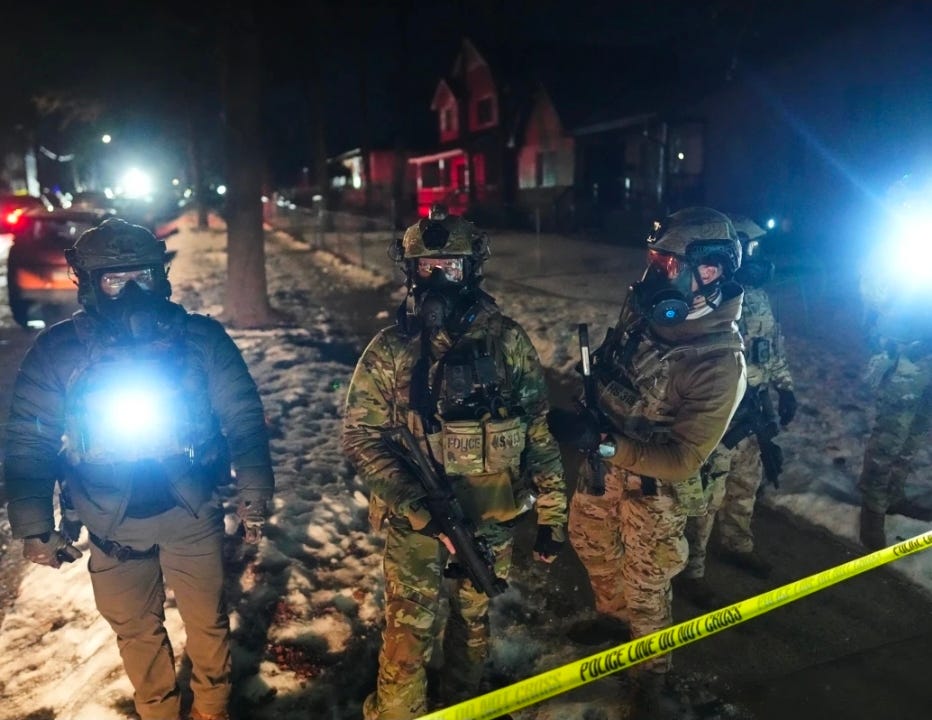
This is why the Castro case has to remain visible. It is not enough to say an ICE agent was arrested. The deeper point is that prosecutors say a man was shot, blamed, and placed inside a version of events that surveillance footage did not support. That is the kind of machinery that can destroy someone twice: first through force, then through the official story that follows.
For communities targeted by immigration enforcement, that machinery is not abstract. It decides who is believed, who is criminalized, who is injured, who is detained, and who has to spend months fighting to prove what happened. When ICE controls the scene, controls the report, and controls the public explanation, the people harmed by federal force are left with almost no protection except outside evidence and outside accountability.
Christian Castro’s arrest does not resolve the case. He is charged, not convicted, and the legal process will determine what happens next. But the arrest marks a rare moment when an ICE agent is being forced into a public courtroom instead of being hidden behind the agency’s own account. That matters. It matters for Julio Cesar Sosa Celis. It matters for Minnesota. It matters for every community being told to accept federal immigration force without question.
ICE told a story. Prosecutors say the video exposed the lie. Now the question is whether accountability will reach beyond one arrest and into the system that made the lie possible.
When ICE controls the force, the report, and the first public story, the people harmed by that force are left fighting for the truth after the damage is already done.
This reporting exists to keep that record from disappearing.
Support independent coverage that follows ICE shootings, false reports, local prosecutions, video evidence, and the families and communities left to fight federal power after the cameras stop rolling.
Upgrade to a paid subscription or share this report so more people can see what ICE tried to bury.