

🎥 Speaking after the violent ICE arrest in Arlington, Virginia, José Mejía Hernandez describes the attack that left him with severe facial injuries and documented brain trauma.
José Mejía Hernandez was walking toward a bus stop in Arlington, Virginia, on August 11 when federal immigration agents came for him from unmarked vehicles. What began as an ordinary morning ended with José in a hospital, his face swollen and bloodied and his brain injured. Medical records later documented a traumatic brain injury and a subarachnoid brain bleed. The physical damage was severe, but ICE’s control over José did not stop when the violence on the street ended.
José says he did not initially know the men approaching him were federal officers. He ran. He says an ICE agent Tasered him in the back, and his memory of what happened next disappears. The next clear chapter in his account is the hospital, where the injuries left on his body exposed the force that had been used against him: deep facial bruising, swelling, cuts, blood, injuries across his body, a brain injury, and bleeding around his brain.
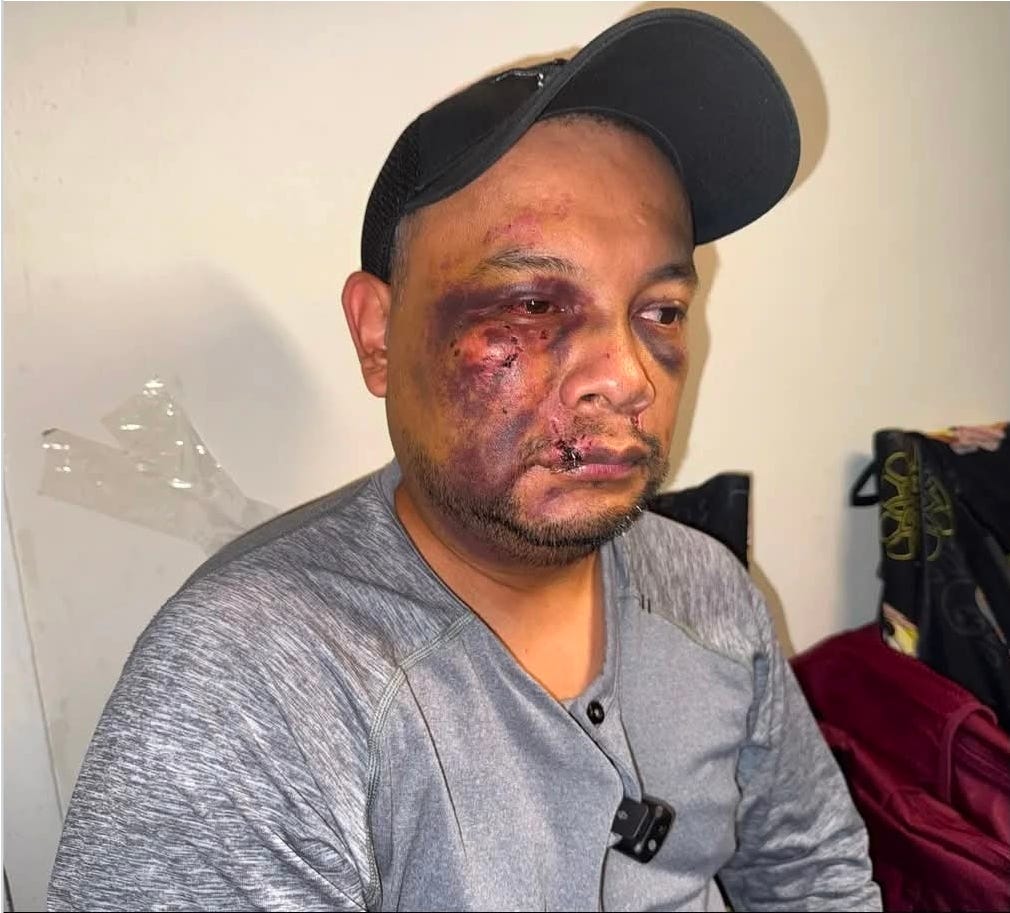
The missing period between the Taser and the hospital is one of the most important parts of the accountability record. José cannot describe everything that happened during that time because his memory stops. ICE controlled the scene while he could no longer account for what was being done to him. He later emerged with neurological injuries serious enough to require days of hospitalization. What force followed the Taser, which officers used it, what footage exists, and how José ended up with a traumatic brain injury and brain bleed remain questions that demand answers because his injuries were not an abstract dispute over immigration policy; they were physical damage carried in his brain, his face, and the rest of his body after ICE took control of him on a public street.
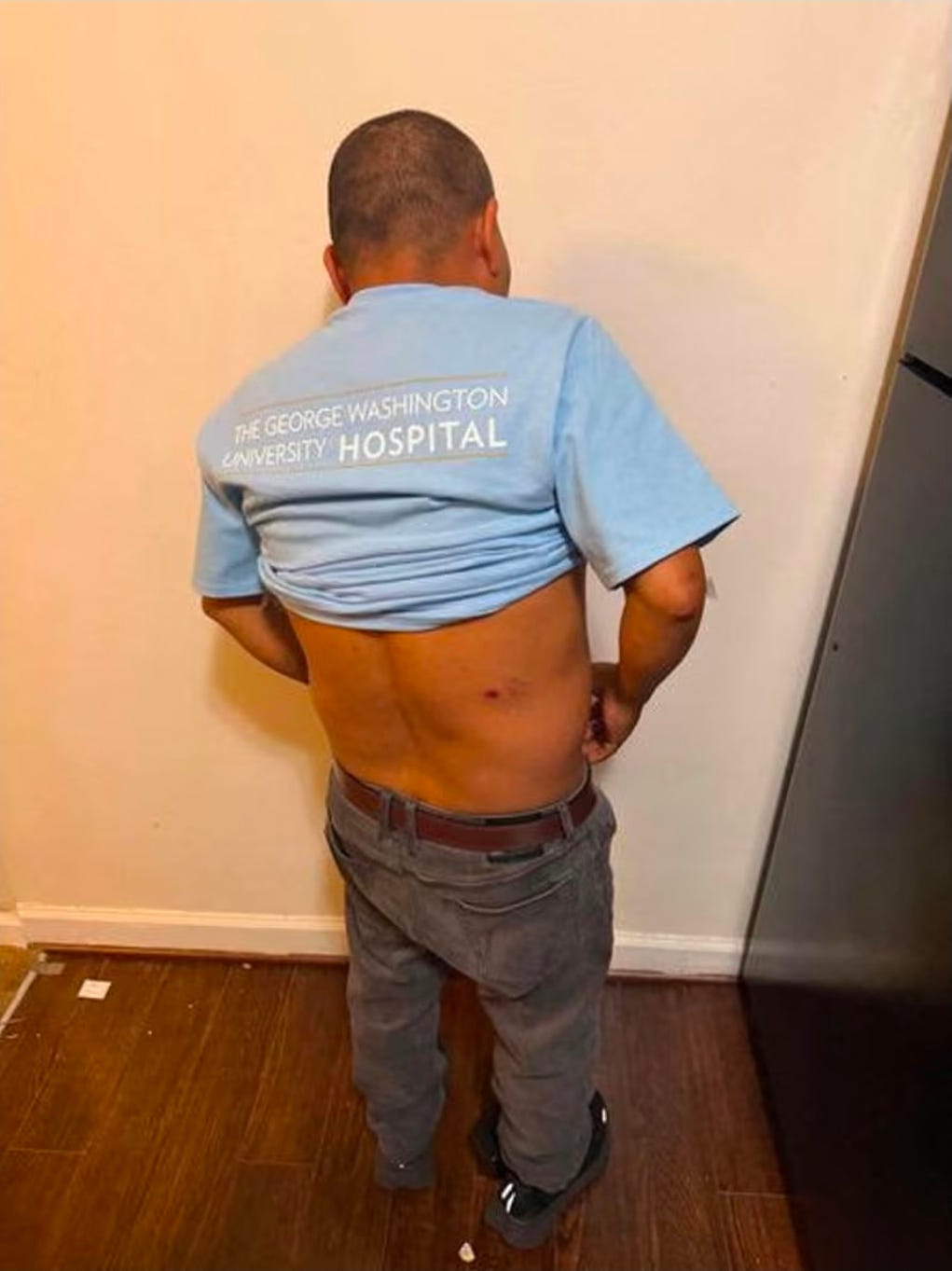
José remained hospitalized for several days while ICE kept him under guard. His attorney said his family did not know where he was during part of that hospitalization. While doctors were treating the injuries left after the arrest, the people closest to José were left without knowing where federal agents had taken him. The violence on the street had become another form of control inside the hospital: José was seriously injured and kept under ICE guard while his family remained without answers about where federal agents had taken him.
That chain did not end when doctors discharged him. ICE placed an ankle monitor on José while he was still recovering from the traumatic brain injury and brain bleed. His doctors had ordered additional neurological imaging, including an MRI, to understand the extent of the damage. The enforcement device ICE attached to his injured body then became an obstacle to that medically ordered care because it had to be removed before the MRI could be completed. Instead of focusing only on healing, José had to confront ICE again simply to continue the medical treatment required after ICE had violently arrested him.
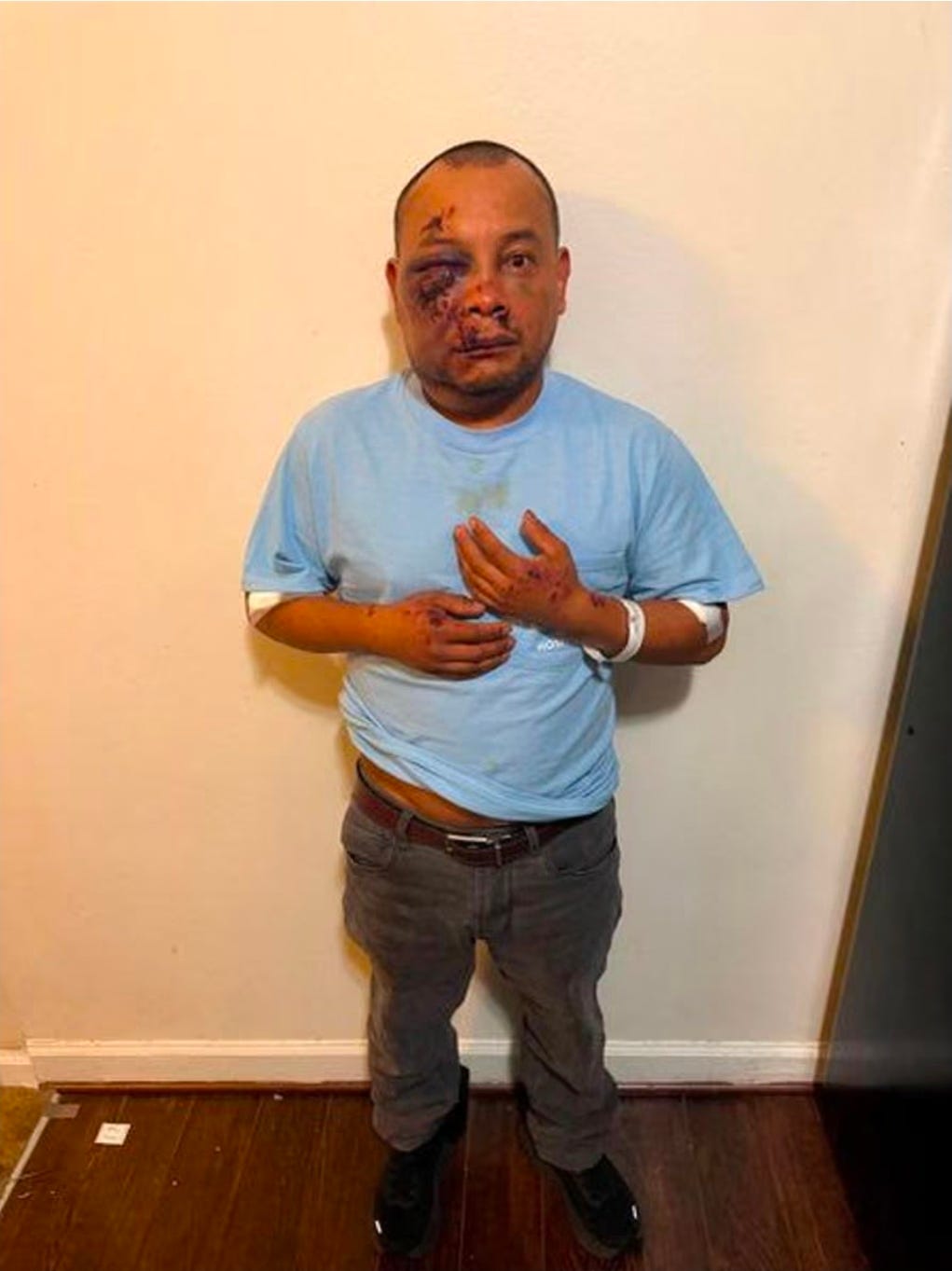
José and the people supporting him had to push immigration authorities to remove the monitor. Mexico’s consul became involved and accompanied him as he sought permission to have the device taken off so doctors could scan his injured brain. Reporting from Univision described José remaining in pain during that process, and his lawyers characterized aspects of his treatment as torture. The cruelty was cumulative: ICE violently arrested José, and he emerged with documented neurological trauma; ICE then kept control over him while he was hospitalized, attached electronic surveillance to his body after discharge, and forced him to navigate the same enforcement apparatus simply to continue medically ordered care.
That continuity is what makes José’s case a record of state terror rather than only a record of one brutal arrest. The terror is in the sequence: federal agents arriving from unmarked vehicles, sudden seizure, a Taser, catastrophic bodily injury, missing memory, family unable to locate him, hospital guard, electronic monitoring, interference with neurological care, and continued removal pressure while he was still recovering. José experienced that machinery across the street, the hospital, the ICE office, and his medical recovery, with ICE’s control following him from one stage to the next.
The harm also reaches beyond one person. When immigrant communities watch federal agents move through ordinary streets in unmarked vehicles, take people without warning, use overwhelming force, separate people from family contact, confine them, surveil them, and continue deportation pressure after serious injury, the message is unmistakable: the same machinery can reach them too. That is how state terror expands beyond the body first harmed.
Human Rights Watch, the ACLU, and immigration-rights investigators have documented the same machinery beyond José’s case: violent ICE street arrests, masked or unidentified agents, detention deaths, medical neglect, family separation, surveillance, confinement, and families unable to locate people taken into federal immigration custody. José survived, but others caught inside that detention and deportation machinery have died, making his injuries part of a broader record of violence, neglect, confinement, and death rather than an isolated failure.
ICE has not publicly explained how José emerged from its custody with a traumatic brain injury, a subarachnoid brain bleed, a bloodied and swollen face, widespread bruising, and a missing stretch of memory after the Taser. What happened after the Taser — and what force produced those injuries — remains part of the unanswered record.
Arlington Commonwealth’s Attorney Parisa Dehghani-Tafti called for an immediate investigation into what happened to José and sought evidence from witnesses, including photographs and video. Rep. Don Beyer also demanded answers. A serious investigation would have to account for the officers involved, the force they used, available body-camera or surveillance footage, use-of-force documentation, hospital custody records, family notification, electronic-monitoring decisions, and the medical consequences José carried afterward. His medical records establish the damage; the unanswered question is what ICE did to him, who participated, what happened during the period his memory cannot recover, and who will answer for the violence that left him with a damaged brain.
José’s case also shows why Americans Against ICE cannot treat immigration enforcement as merely a debate over visas, paperwork, borders, or administrative procedure. State power entered José’s ordinary morning through unmarked vehicles and physical force. It followed him into a hospital, remained attached to his body through electronic monitoring, complicated his medical recovery, and kept removal machinery hanging over him while he was still carrying the injuries. That is an apparatus of state terror operating through one human life: surprise, seizure, violence, injury, isolation, surveillance, medical interference, and deportation pressure applied in sequence.
José is the person forced to live inside that aftermath. He left home expecting to reach a bus stop and came back carrying a traumatic brain injury, a brain bleed, severe facial trauma, injuries across his body, continuing neurological needs, electronic monitoring, and an immigration case that did not stop because he was hurt. While ICE continued its enforcement machinery, José was left trying to recover from the neurological and physical damage it inflicted, making his body the clearest record of what state terror looks like when federal power lands on one person.
José’s body still carries what ICE did to him. Americans Against ICE documents the violence, the machinery behind it, and the people forced to survive its consequences.
Upgrade to a paid subscription to support independent Americans Against ICE reporting and accountability work.
José is still recovering from a traumatic brain injury, a brain bleed, and the physical damage ICE inflicted on him. Medical care, recovery, transportation, and the costs that follow this violence should not be left for José and his family to carry alone.
HELP JOSÉ RECOVER FROM WHAT ICE DID TO HIM↓
ENOUGH! How evil these demons are.
Thanks to the Mexican Consule and the Rep & others who are getting him care!