


Carlos Tellez Sanchez had spent years building a life in Texas before the United States government sent him almost 6,000 miles away from it. The 35-year-old Venezuelan father worked at a Dallas car dealership during the day and made Uber Eats deliveries at night to help support his family. His wife and their 5-month-old U.S.-citizen son remain in the United States. Carlos is now in Liberia, staying more than an hour outside the capital, Monrovia, after Immigration and Customs Enforcement placed him aboard a removal flight to a country he said he had not even heard of until hours before departure.
His youngest son was born while Carlos was already in ICE custody. Family accounts reported before his deportation said he had been able to meet the baby only through a video call from detention, meaning much of the child’s life had already passed with his father confined before the government widened that separation across the Atlantic. Carlos is a father of three, according to Venezuelan reporting on his case, but the birth of his youngest child during his detention makes the timeline especially stark: federal custody consumed the months in which Carlos otherwise would have been physically present for the beginning of his son’s life.
ICE detained Carlos on December 19, 2025, when he appeared for an immigration check-in. CBS News reported that he had expected the appointment to be routine. Instead, he remained in immigration detention for eight months, moving through ICE custody while his family continued without him. CBS reported that it found no criminal charges or convictions against Carlos beyond civil immigration violations, and DHS did not dispute that he lacked a criminal record when responding to questions about his case.
Carlos’s immigration history also made his eventual destination significant. An immigration judge had granted him withholding of removal to Venezuela in 2021 after finding that he could face persecution there. That protection did not give Carlos lawful permanent status or prevent the government from seeking to deport him altogether; it barred his removal to Venezuela. When ICE ultimately sent him to Liberia instead, the government used the distinction between protection from one country and protection from removal itself to carry out the deportation without returning him to the place the immigration court had determined posed a danger.
The case also sits inside a broader expansion of third-country deportation arrangements, under which people can be removed to nations where they are not citizens and may never have lived. Liberia announced on August 18 that it had agreed to accept as many as 1,200 third-country nationals from the United States over one year, beginning with an initial group of 20. The Liberian government said the arrangement was based on diplomatic notes exchanged in September 2025 and that those transferred could include nationals from Africa and the Western Hemisphere.
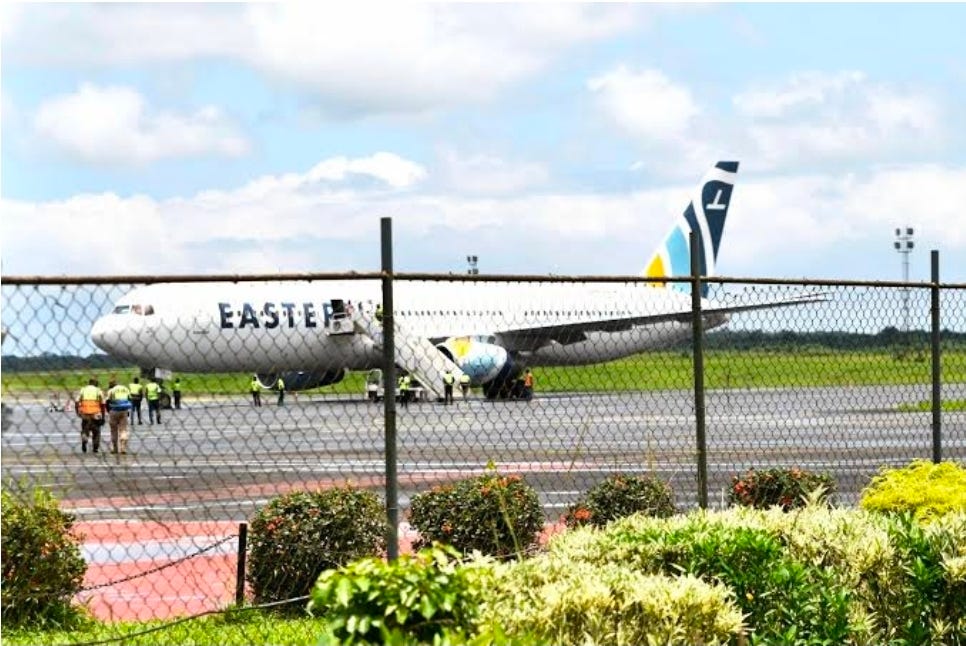
Carlos was among the people swept into that new arrangement. Liberia’s first group arrived on August 20, and reporting on Carlos’s case identified him among the deportees sent from the United States. The government of Liberia has described the arrangement as humanitarian and said transferred migrants may seek asylum there. It has also said they can receive support while determining what comes next. Those assurances begin only after a person has already been removed from the country where their family, employment and established life may exist.
For Carlos, the destination was not the product of an existing connection to Liberia. He told CBS News that he learned he was being sent there only hours before the flight and said he had never heard of the country before then. He described spending roughly 15 hours crossing the Atlantic in handcuffs. After arriving, he said he was placed in a hotel in a remote area more than an hour from Monrovia alongside deportees from several other countries and was left trying to understand what future was available to him.
The removal also occurred while Carlos had been challenging his detention. Reporting compiled by the Human Impact Project and Venezuelan outlets said he had an active habeas corpus petition before a federal court in South Texas seeking relief from his continued confinement. His relatives described him as the family’s primary provider and questioned why he remained detained despite having no criminal record. The existence of that litigation did not prevent ICE from placing him on the Liberia flight.
DHS defended its actions. In a statement to CBS News, the department said Carlos had previously been deported from the United States, later crossed the southern border again in 2021 and was subsequently released before his December 2025 detention. DHS also said Carlos had declined several opportunities to be removed to Mexico and maintained that when a person cannot be returned to their home country, the government may seek another country willing to receive them. The department characterized Liberia as a safe third-country destination.
Those claims establish the government’s position, but they do not eliminate the public-interest question raised by the result. Carlos had a court-recognized protection preventing his return to Venezuela, a family living in Texas and an infant son born while he was in ICE detention. The government nevertheless possessed another enforcement pathway: it could identify a third country willing to receive him and carry out the deportation there.
Reuters reported that the United States has increasingly used third-country arrangements involving people who cannot be returned to their countries of origin because immigration judges found they could face torture, persecution, or other abuse there. Liberia’s agreement is among the largest announced arrangements of its kind, and similar deals have been pursued with other African nations. Immigration attorneys and rights organizations have raised concerns about the opacity of these agreements and about what meaningful protection remains when a person barred from being sent home can instead be transferred to an unrelated country.
The Liberia arrangement illustrates how quickly that policy can move from diplomatic language to an individual family’s life. The Liberian government’s announcement speaks of the “transfer” of third-country nationals, migration-system support and the ability to seek protection after arrival. In Carlos’s case, those administrative terms translate into a father who went to an immigration appointment in Texas, spent eight months in detention, missed the birth and early infancy of his youngest son, and then found himself on another continent.
It also exposes the limited practical reach of withholding of removal. Carlos obtained a ruling recognizing that Venezuela was not a permissible destination for his deportation, and the government did not send him there. Yet that protection did not shield his family from prolonged detention or separation, and it did not require the government to leave him in the United States when Liberia became available. The protection remained in force, but it did not prevent the government from using Liberia as an alternative destination.
That is why Carlos’s case matters beyond the technical question of where the United States is legally permitted to send someone. Third-country deportation can turn protection from return to danger into a much narrower promise: the government will not send a person to one prohibited destination, but it may still search for another country willing to receive them. For families already separated by immigration detention, that distinction can determine whether reunification remains physically possible or whether enforcement turns months apart into thousands of miles.
Carlos told CBS that he had no clear plan for what would happen next in Liberia. His wife and infant son remain in the United States, tied to a life from which he has now been physically removed. His son’s first months unfolded while Carlos was behind the walls of immigration detention; the next chapter is beginning with his father across an ocean, in a country that was never part of the family’s life before ICE made it the destination.
Upgrade to a paid subscription. Carlos Tellez Sanchez is nearly 6,000 miles from his wife and infant son after ICE deported him to Liberia. Your support helps fund Americans Against ICE reporting and direct support for Carlos and other families harmed by immigration detention and deportation.
You can start a fundraiser here using our rail to help families harmed by ICE. Let me know when it’s set up, or just drop a 🖤 ↓
http://fundrazr.com/campaigns/72lbof/register
Is Carlos' family still in Dallas area? If so, I'd like to learn how I could help. Please send me a private email to my Substack email.