

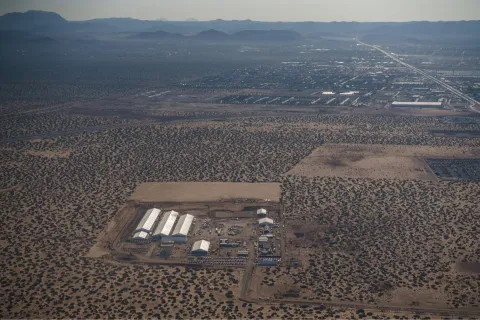
Reports from inside one of the largest Immigration and Customs Enforcement detention facilities in the United States have triggered outrage after a former detainee alleged that guards were placing bets on which detainee would die next. The accusation centers on Camp East Montana, a large immigration detention complex located at Fort Bliss near El Paso, Texas. The facility has already faced scrutiny over deaths, emergency incidents, and deteriorating conditions inside the camp.
The allegation comes from Owen Ramsingh, a former detainee who was held at Camp East Montana before being deported. Ramsingh said he overheard a conversation among guards describing a betting pool connected to detainee deaths. According to his account, a guard stated that he had put $500 into the pool where staff were allegedly wagering on which detainee might die by suicide next.
The remark, Ramsingh said, came during a period when many people held at the facility were already experiencing severe psychological strain. For migrants being detained for months while awaiting immigration hearings, uncertainty about their future can create a constant sense of fear and instability. Mental health advocates say prolonged detention conditions can intensify trauma, particularly for migrants who have already endured dangerous journeys, violence, or family separation.
Camp East Montana has drawn national attention after investigations revealed repeated emergency calls from inside the facility. Records reviewed by journalists documented numerous incidents, including suicide attempts, medical crises, and violent altercations. Emergency responders were reportedly called frequently during several months of operation as those inside the facility struggled with both physical and psychological stress.
🎥 Video: Reports and testimony from former detainees have raised concerns about conditions inside ICE detention facilities.
Former detainees have described food shortages that led to fights, inadequate medical attention, and long delays in receiving care. Some individuals reported losing significant weight during their detention due to insufficient meals. Others said mental health support was limited despite clear signs that many people inside were experiencing severe emotional distress.
Camp East Montana is part of a network of detention sites used by the federal government to hold migrants while their immigration cases move through the court system. Many individuals remain in custody for extended periods because immigration courts across the United States face significant backlogs. Advocates argue that lengthy detention without clear timelines can worsen mental health crises inside facilities.
Deaths inside ICE custody have intensified scrutiny of detention practices. Earlier this year, a Cuban detainee held at the Fort Bliss detention complex died while in custody. The death initially raised questions about whether it was a suicide, but the El Paso County medical examiner later ruled the death a homicide caused by asphyxia, prompting further concern about safety and oversight within the facility.
Advocates say the allegation that guards may have joked or placed bets about detainee deaths reflects a deeper crisis within the immigration detention system. Critics argue that prolonged detention, combined with overcrowding and limited mental health resources, creates conditions where desperation and trauma can escalate.
Officials from the Department of Homeland Security have denied the allegation that guards were betting on detainee deaths. However, questions remain about oversight and accountability within privately operated detention facilities contracted by the federal government. Camp East Montana itself operates under a federal contract reportedly worth up to $1.3 billion, further intensifying demands for transparency about conditions inside the camp.
For critics of the immigration detention system, the report underscores a larger concern: detention centers operate largely out of public view while housing thousands of people awaiting immigration proceedings. When allegations emerge from inside these facilities, advocates argue that they deserve independent review and full transparency.
As investigations continue, the allegations are likely to intensify scrutiny of immigration detention facilities and the oversight mechanisms meant to protect those held inside them.
Journalism that refuses to let abuse disappear.
⚖️ A LIFELINE
Many detainees in ICE custody are cut off from family with nothing but the clothes they arrived in. No cash. Limited access to communication. In many facilities, detainees must pay for their own outgoing phone calls, and without money in their accounts they cannot call loved ones, buy basic necessities, or help pay for legal support.
My readers and I practice a kind of journalism that refuses to let people disappear.
For the next payout cycle, 50% of this publication’s subscription revenue will be sent directly to ICE detainees’ commissary accounts, helping people inside purchase essentials and stay in contact with their families.
Subscriptions are currently 25% off.
What in the F*CK? These ICE people are Barbarians
🤢🤢🤢🤢🤢🤢🤢🤢