

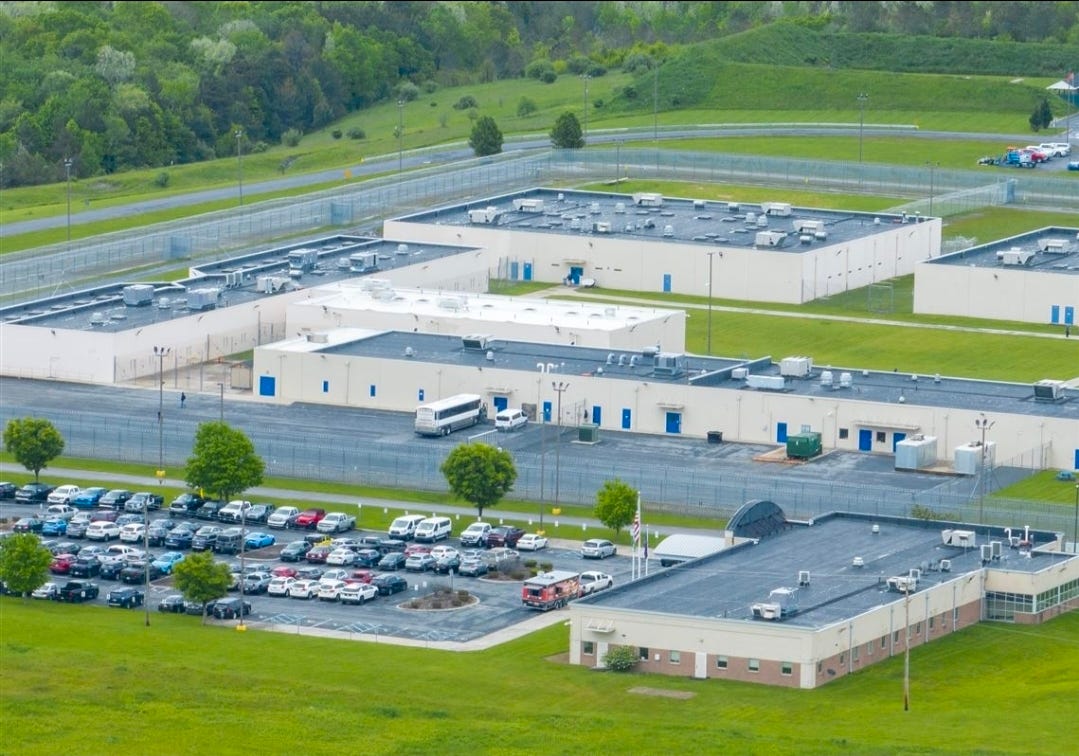
A.D. was 16 years old when Suffolk County police transferred him into the custody of Immigration and Customs Enforcement in May. By the time a federal judge ordered ICE to remove him from an adult detention center and place him with the federal agency responsible for children, he had turned 17 and spent nearly two months confined at Moshannon Valley Processing Center in Pennsylvania.
The documentary record identifying A.D. as a child was extensive. His passport and Guinean birth certificate listed his birth date in May 2009. New York Family Court records treated him as a minor. Records maintained by the Department of Health and Human Services showed that the federal government had previously accepted the same birth date when A.D. entered the United States in 2023 and was placed in the custody of the Office of Refugee Resettlement as a 14-year-old child. His relatives provided testimony supporting that history, and his involvement with New York City’s child-welfare and foster-care systems also reflected his status as a minor.
ICE nevertheless classified A.D. as an adult and sent him to Moshannon Valley, a facility used to detain adults in federal immigration custody. His attorneys challenged that classification immediately. On the day of his arrest, they filed a petition for a writ of habeas corpus arguing that his detention in an adult facility violated federal protections and endangered his physical and psychological well-being. ICE had already transported him out of New York and refused to release him while continuing to dispute records identifying him as a child.
The agency’s position relied heavily on a secondary-school entrance examination document from Guinea that listed A.D.’s birth year as 2000. His attorneys said the date was an error. That record conflicted with his passport, birth certificate, Family Court history, HHS files and family testimony, yet it became the basis for federal paperwork treating him as a 26-year-old adult.
The consequence was not merely administrative. Age classification determines which federal custody system applies to an unaccompanied young person. Children are generally transferred to the Office of Refugee Resettlement, which operates shelters and programs intended for minors. Adults may be placed in secure immigration detention under ICE. By refusing to recognize A.D.’s documented age, ICE denied him access to the child-custody system and subjected him to the restrictions, discipline and psychological pressures of adult incarceration.
That harm continued after ICE had been placed on formal notice of the evidence supporting his age. His attorneys submitted the relevant documents in federal court and argued that continued detention at Moshannon exposed him to irreparable injury. Rather than transferring A.D. into child custody while the conflict was reviewed, ICE maintained its adult classification and defended his continued confinement.
ICE also relied on dental X-rays to support its adult-age claim, but that claim remained contradicted by the broader documentary record. The government had previously recorded A.D. as a child. State courts and child-welfare institutions had treated him as a minor. His passport and birth certificate identified the same 2009 birth date.
Federal Judge Marilyn J. Horan initially ordered ICE to separate A.D. from the general adult population while his age was reviewed. That order did not restore the protections available through the Office of Refugee Resettlement. Instead, ICE moved him into a medical unit at Moshannon Valley, where court filings described increasingly restrictive conditions resembling solitary confinement.
The effects of the detention were documented in facility records and statements from A.D.’s attorneys. They reported that his mental health deteriorated during the weeks he remained in adult custody. Incident reports from June described him confined in what facility staff called a “suicide cell.” During one episode, he covered a security camera with feces, broke the device and threw it across the cell. Staff later suspended his access to telephones and tablets for two weeks.
Those reports documented a child in severe distress, but the institutional response remained disciplinary. The record described damaged property and sanctions while also preserving A.D.’s explanation of the conditions producing his behavior. “They are locking me in here for no reason,” he told an officer. “They are treating me like an animal.”
A.D.’s condition at Moshannon cannot be separated from the history that preceded his detention. According to court filings, he fled Guinea after local police entered his family’s home and threatened to burn it because of the family’s Fulani heritage. When he arrived in the United States in December 2023, federal officials placed him with the Office of Refugee Resettlement and determined that he was 14 based on his passport and other travel records.
He was later released to an adult brother in Queens, where his attorneys said he endured months of abuse before escaping after a violent assault. A.D. reached a nearby school, was taken to a hospital and then to a children’s shelter in Manhattan, but soon found himself moving through New York City without money, a telephone or stable adult protection. He later entered adult migrant shelters despite being a child. Advocates eventually learned that an unaccompanied minor was moving through systems designed for adults and helped secure his placement in foster care through the Administration for Children’s Services.
That placement did not prevent Suffolk County police from transferring him to ICE after his arrest in May. Police contacted federal immigration authorities, and ICE took custody of A.D. within hours. His attorneys said they immediately informed the agency that he was a child, yet he was transported to Pennsylvania before a court could intervene.
The allegations connected to A.D.’s arrests did not resolve his age and did not eliminate federal responsibilities toward children. Whether a young person has been accused of an offense is legally distinct from whether the government may classify that person as an adult for immigration detention. A child does not lose his age because he has entered the criminal legal system, and an arrest record does not authorize ICE to disregard official documents establishing minor status.
The government’s handling of A.D.’s immigration case reflected another institutional failure. His attorneys said child-welfare personnel did not allow him to attend an immigration hearing remotely because he was expected to be in school. An immigration judge then ordered him removed in his absence. His current attorneys are seeking to reopen that proceeding. The same systems responsible for supervising and protecting him contributed to a missed hearing that later intensified his legal vulnerability.
By the time Judge Horan issued the transfer order, the court had before it a record showing that A.D. had previously entered federal child custody, had been treated as a minor by state courts and child-welfare authorities, possessed identification documents listing a 2009 birth date and had remained in adult detention while his psychological condition deteriorated.
Judge Horan ordered ICE to transfer A.D. to HHS custody and directed the agency to reconsider its age determination using the totality of the circumstances. That instruction required ICE to account for the full evidentiary record, including Family Court records and testimony from relatives, rather than continue relying on the isolated school document. The order removed A.D. from the adult detention setting while the reassessment proceeded.
The decision did not restore the time he spent inside Moshannon Valley. It did not undo the isolation, the loss of child-specific protections or the psychological damage documented during his confinement. It also did not explain why a federal judge had to intervene before the government acted on records that had been available from the beginning.
The evidence identifying A.D. as a child was not created after his detention. HHS had recorded his age when he arrived in the country. His passport and birth certificate existed before Suffolk County police transferred him to ICE. Family Court and foster-care records were part of his established history in New York. His attorneys raised the issue immediately and sought emergency judicial relief on the day of his arrest.
ICE’s continued detention of A.D. cannot be reduced to an initial data-entry problem. Even after the agency was confronted with extensive contradictory evidence, it maintained the adult classification, confined him in an adult facility and required his lawyers to pursue federal litigation to secure his transfer. ICE treated its own disputed record as more authoritative than the accumulated evidence of a child’s life.
The documentary record identified A.D. as a child entitled to protection, while ICE continued treating him as an adult. He remained in adult detention through his seventeenth birthday, lost access to child-specific safeguards and experienced worsening psychological distress before a federal court ordered his transfer.
The record shows that ICE continued treating A.D. as an adult after receiving extensive evidence identifying him as a child, and that federal court intervention was required before he was transferred into the custody system intended for minors.
A.D. spent nearly two months inside an adult ICE detention center despite a documentary record identifying him as a child.
Share this report to preserve the public record and hold ICE, Suffolk County authorities and every institution involved accountable for the detention and harm imposed on him.
Pigs. What do you expect. I’m surprised they aren’t dying.