

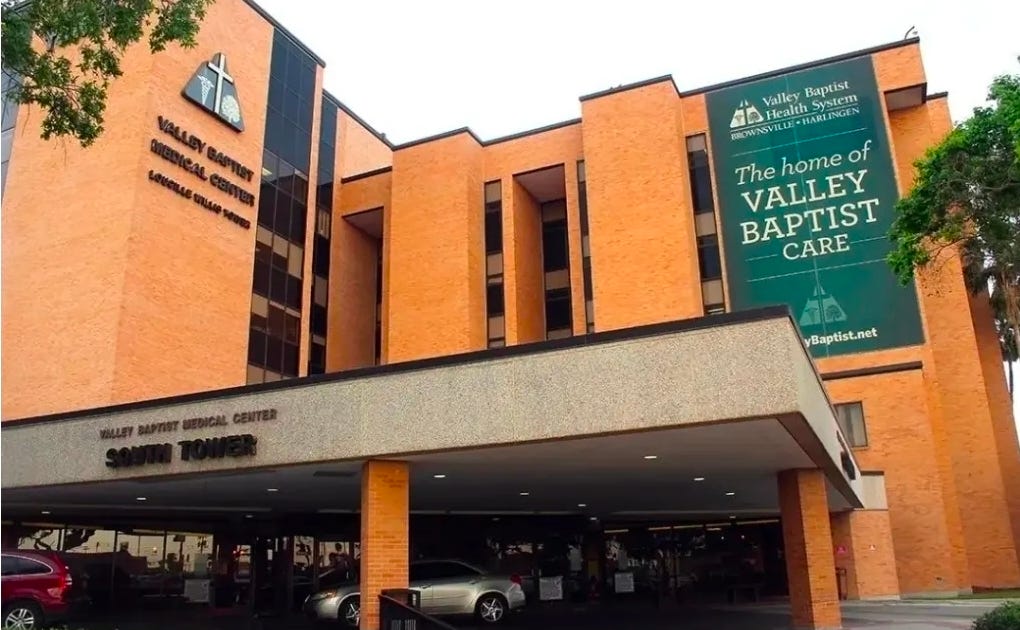
Adrian Andreas Florian was 85 years old when he died in ICE custody at Valley Baptist Medical Center in Harlingen, Texas.
He did not die inside a standard detention center. He died in a hospital. But the hospital did not remove the agency from the story. The custody-death notice still places him under federal immigration custody when his life ended. That is the center of this case: ICE custody does not stop at the detention center door. If the agency still controls the person, custody continues inside the hospital, the assisted living center, the rehabilitation unit, and the medical room.
Florian was a German national. According to the custody-death notice the agency released, he applied for admission to the United States at the Colombia Solidarity Bridge port of entry in Laredo on August 28, 2025. ICE took him into custody the next day. By October 1, he had been placed in a rehabilitation and assisted living center. On November 4, he was transferred to Valley Baptist Medical Center for dementia concerns, on top of a reported history of high blood pressure, cognitive impairment, and ulcers.
He remained hospitalized until June 24, 2026, when a physician pronounced him dead at 4:30 in the morning. The agency listed the cause of death as pending an autopsy.
Even the agency’s own record places an 85-year-old man under its control for roughly the last ten months of his life. Those months moved across custody settings: port of entry, federal immigration custody, assisted living, rehabilitation care, hospital transfer, long-term hospitalization, death notice. The locations changed while federal control remained.
The hospital changed the setting. It did not end the custody.
Medical custody is still custody when federal immigration authorities control the person’s legal status, movement, release, and confinement conditions. Treatment inside a hospital does not make detention voluntary. Assisted living or rehabilitation care may look less like detention to the public, but those settings do not make a person free while federal authorities still control whether they can leave.
That is why Florian’s death matters beyond the death count. The public often understands immigration detention through visible facilities: detention centers, bed numbers, contractors, inspections, local jails, population snapshots, and deaths reported inside named custody sites. Florian’s case exposes another layer. A person can remain in custody while sitting inside a medical institution, and the public may have no clear way to see how many people are being held that way.
Florian’s age cannot be treated as background. He was 85. The agency’s own notice described dementia concerns, cognitive impairment, high blood pressure, and ulcers. An elderly man with serious medical vulnerabilities spent the end of his life under an immigration detention system built around confinement, removal, and control.
The death count is still part of the record. Florian was reported as the 21st person to die in ICE custody in 2026. His death came five days after Felix Alcorta-Rodriguez died at Webb County Detention Center. Those numbers show the pace of death, but Florian’s case points to a harder question: how many people are in federal immigration custody outside the places the public usually recognizes as detention?
People in hospitals, assisted living centers, rehabilitation units, and long-term medical placements can disappear from ordinary detention visibility. They may not appear to the public the same way people inside detention-center beds appear. The agency still controls the person’s confinement. The person is still detained. But the body has been moved into a setting the public does not usually imagine as part of immigration detention, which makes the custody harder to see until a death notice appears.
Florian’s death belongs inside the larger pattern of custody deaths and medical vulnerability. Geraldo Lunas Campos reportedly asked for mental-health care before dying after a violent struggle with guards at Camp East Montana. Oscar Rascon Duarte reportedly spent months in long-term care with late-stage Alzheimer’s disease and cancer before dying in custody. Felix Alcorta-Rodriguez died only days before Florian. These cases are not identical, and they should not overtake Florian’s story, but they raise the same accountability question: what happens to medically vulnerable people once federal detention follows them into medical care?
The answer cannot come from the agency responsible for the custody. ICE death notices are hostile institutional records released by the same system that held the person. They can show what the agency admits: name, age, nationality, date, location, custody status, transfer timeline, listed medical conditions, and death notice. They cannot be treated as full accountability.
Even when the agency’s own version says someone was hospitalized, the public still needs to know what was controlled, what was delayed, what was not disclosed, who reviewed medical vulnerability, who decided an 85-year-old man should remain under custody, who had authority to release him, and how many other people are being held in medical settings away from normal detention visibility.
Florian’s case also raises a harder question about who receives sustained medical placement and who is ignored. The point is not to claim Florian received too much care. The point is that the medical-custody system is opaque enough that the public cannot see who gets moved into long-term medical care, who remains inside detention facilities without adequate treatment, and how age, race, nationality, disability, and perceived vulnerability shape those decisions.
Adrian Andreas Florian did not stop being in ICE custody because he died in a hospital. The hospital changed the setting. It did not remove agency control. An 85-year-old man spent his final months moving through detention, assisted living, and hospital care while federal immigration authority still controlled his confinement. His death exposes a system where medical custody can hide people from public view until the agency releases a death notice after they are gone.
Medical custody can hide ICE control from public view.
Americans Against ICE documents detention deaths, medical neglect, hidden custody, and the machinery behind public silence.
Support this work so custody deaths are not reduced to agency notices after the harm is already done.
We are terrorists and need a revolution.