

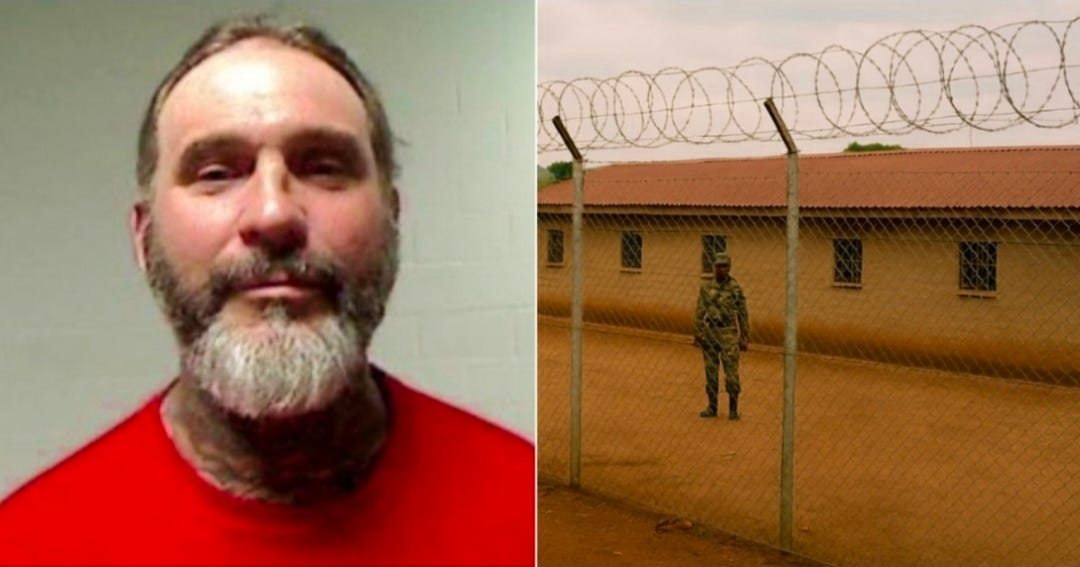
Roberto Mosquera has spent more than a year inside a maximum-security prison in Eswatini, thousands of miles from the wife and four daughters he left behind in the United States. He is not serving an Eswatini criminal sentence, and authorities there have not charged him with committing a crime in the country. His imprisonment followed a decision by the United States to remove him from the country where he had lived since childhood and send him instead to a nation where he had no known ties.
Mosquera came to the United States from Cuba as a child during the 1980 Mariel boatlift. His history in America includes a serious crime: as a young man, he was convicted of attempted murder and served the criminal sentence imposed for that conviction. That record does not need to be minimized to understand what happened decades later. The sentence imposed by the American criminal legal system was completed long before ICE placed Mosquera on a plane bound for Eswatini.
Because repatriation to Cuba was historically difficult for some Cuban nationals, Mosquera remained under immigration supervision after completing his criminal punishment. He continued living in the United States for decades while reporting to immigration authorities as required. During those years, he rebuilt his life, became a longtime plumber and plumbing foreman, married and raised four daughters. The man ICE detained in 2025 was not serving a criminal sentence; he was living under an immigration supervision system that had allowed him to remain with his family and continue working.
That life was severed in June 2025 when Mosquera went to a routine immigration appointment in South Florida and was detained by ICE. Within weeks, the United States moved him through its immigration detention system and prepared to remove him. The destination was not Cuba. On July 16, 2025, Mosquera and four other men were deported to Eswatini, a small southern African country where Mosquera had no known connection and, according to reporting about his case, had never even heard of the country before learning that the United States intended to send him there.
After the transfer, Eswatini authorities confined Mosquera inside Matsapha Correctional Complex, a high-security prison. More than a year later, he remains there without an Eswatini criminal charge and without an Eswatini sentence explaining why he should continue spending his days behind prison walls. The United States carried out the deportation, while Eswatini carried out the imprisonment; those are separate government actions with separate accountability questions. Mosquera’s completed American sentence did not become a new Eswatini sentence merely because ICE transported him across an ocean.
Access to legal counsel has also become part of the struggle surrounding his detention. Amnesty International documented repeated problems obtaining confidential legal access to people transferred to Eswatini under the arrangement. In April 2026, an Eswatini court ordered prison authorities to allow local attorney Sibusiso Nhlabatsi access to the detainees after authorities had blocked or restricted that contact. For Mosquera, the barriers meant that challenging his continued confinement required first overcoming obstacles simply to communicate confidentially with a lawyer.
By October 2025, Mosquera and other detainees were protesting their confinement from inside Matsapha. They began a hunger strike over their continued detention, a protest that continued for weeks. By that point, the five men in the original transfer had already spent months inside a prison despite not being convicted of crimes committed in Eswatini. Recent reporting about Mosquera’s case has also described worsening glaucoma and deterioration in his vision while he remains confined far from his family.
The Department of Homeland Security has emphasized the criminal histories of people placed into third-country deportation arrangements, but its public description of Mosquera created another accountability problem. DHS characterized him as a murderer, while court-record reporting identified his conviction as attempted murder. His actual conviction was serious without changing what the record says. More importantly, neither description answers the question created by his current imprisonment: what sentence is Mosquera serving in Eswatini when no Eswatini court has convicted or sentenced him?
Mosquera’s transfer was part of a broader U.S.–Eswatini arrangement rather than an isolated decision. Reuters reported that the agreement could involve as many as 160 third-country deportees and $5.1 million in U.S. funding. The arrangement raised legal and constitutional questions inside Eswatini, including challenges concerning the government’s authority to accept people removed from the United States and the legal basis for their continued detention after arrival.
The system continued expanding after Mosquera and the four men transported with him entered Matsapha. By July 2026, Amnesty International reported that at least 30 people had been sent to Eswatini through the third-country deportation program. That expansion exposes what can disappear behind the administrative language of “removal” and “deportation”: people can be taken from communities in the United States, transported to countries where they have no meaningful connection, confined far beyond the reach of their families and then forced to fight for access to lawyers capable of challenging what happened to them.
For Mosquera, none of those consequences are abstract. His wife and four daughters remain in the United States, along with the plumbing career and family life he built during the decades after completing his criminal sentence. ICE detained him during a routine encounter with the immigration system and sent him thousands of miles away, where Eswatini authorities have now kept him inside a maximum-security prison for more than a year.
Mosquera’s attempted-murder conviction remains part of his history, and the sentence imposed for that crime was served. What requires accountability now is how that completed American punishment was followed decades later by deportation to a third country and more than a year of imprisonment there without an Eswatini criminal charge or sentence. Roberto Mosquera is still inside Matsapha, separated from his family and confined under a sentence that does not exist.
Roberto Mosquera served his sentence decades ago. ICE still tore him away from his wife and four daughters, sent him to a country where he had no known ties, and left him inside a maximum-security prison with no Eswatini criminal charge and no sentence to serve.
Americans Against ICE documents cases like Roberto’s because third-country deportation can push people thousands of miles from their families and out of public view while the system that put them there keeps moving.
Upgrade to support this work.
Third-country deportations to a hellhole like Eswatini is unconscionable and inhumane. 🤬
Stephen Miller is evil