

Immigrants who stopped eating to protest conditions inside ICE detention faced physical restraint and invasive medical procedures imposed against their will. During 2025 and 2026, the Department of Homeland Security sought federal court authority to force treatment on at least 10 detained hunger strikers. Three people underwent involuntary procedures, two more were probably subjected to them, and five ended their hunger strikes as forced treatment approached.
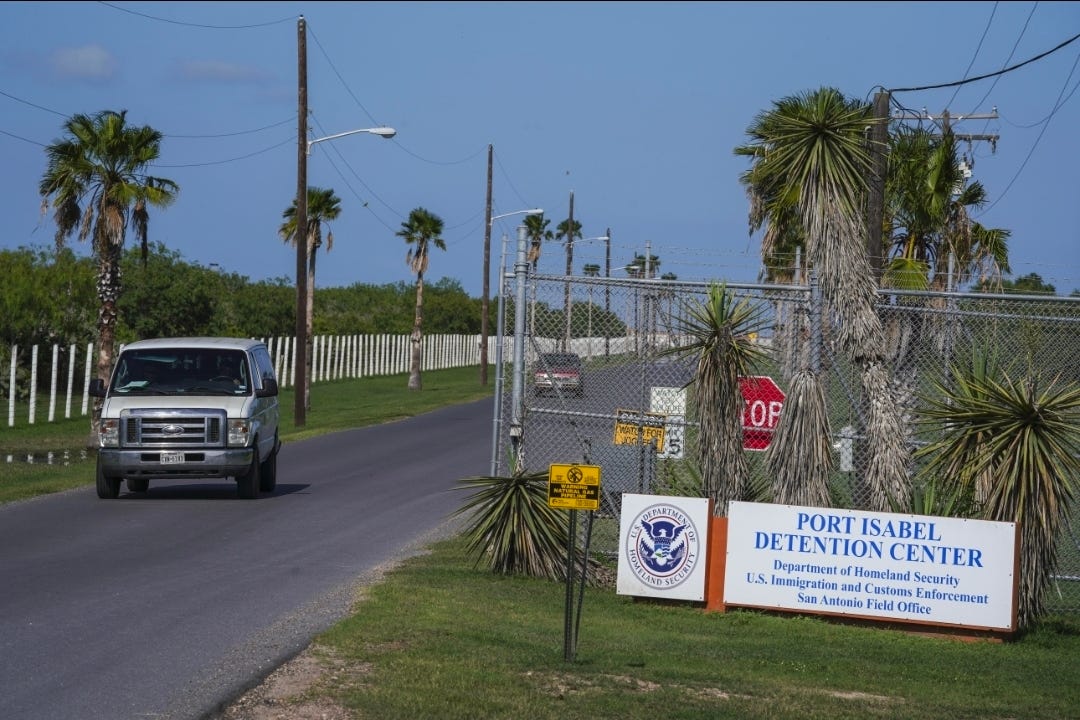
One Kurdish asylum seeker held at the Port Isabel Service Processing Center in Los Fresnos, Texas, endured the longest documented period of force-feeding: nearly eight months beginning in May 2025 and ending only when the government deported him. Another hunger striker at Port Isabel was subjected to involuntary treatment, including force-feeding, for nearly six months between September 2025 and March 2026. At the Krome North Service Processing Center in Miami, a third detained person underwent forced procedures for nearly three months.
The other reviewed cases show how widely the threat extended. Court filings involving the Northwest ICE Processing Center in Washington and the Montgomery Processing Center near Houston indicate that two additional hunger strikers were probably subjected to forced treatment. Five more detained people ended their hunger strikes immediately before the government was expected to begin involuntary procedures.
The procedures included nasal-tube feeding, forced intravenous hydration, involuntary blood draws and urine collection. Force-feeding requires medical personnel to push a tube through a person’s nose and down the throat before pumping liquid nutrition into the stomach. The procedure can cause significant harm to the nose, esophagus and internal organs, along with lasting physical and psychological trauma.
These people had stopped eating to protest detention conditions and demand movement in unresolved immigration cases. They could not leave the facilities, choose independent doctors, control transfers or compel ICE to answer their complaints. Refusing food became one of the few remaining ways to force attention toward what was happening to them inside detention.
DHS answered by asking federal judges to authorize physical restraint and involuntary treatment. ICE officers and detention medical staff prepared declarations about the hunger strikers’ physical conditions, and federal prosecutors used those declarations to seek emergency orders. By the time DHS moved against them, some detainees were already weak, exhausted, losing weight and facing medical problems caused by prolonged food refusal.
In six reviewed proceedings, the detained immigrants had no legal representation while the government sought authority to impose treatment on them. Some also faced limited English proficiency and little familiarity with the federal court system. They confronted prosecutors, medical declarations and detention records without lawyers able to challenge ICE’s account, explain the conditions driving their protest or seek independent medical review.
The documented emergency process allowed federal judges to grant government requests before detained immigrants could object in court. Once an order was signed, detention officers could restrain them while medical workers performed procedures they had rejected. Judicial authorization gave DHS and ICE the power to enforce treatment; it did not create consent.
The Kurdish asylum seeker at Port Isabel remained trapped inside that process for nearly eight months. ICE controlled his confinement and medical access throughout the documented period in which he was subjected to force-feeding. His ordeal ended not because the conditions he protested were resolved, but because the government deported him.
Five other hunger strikers stopped refusing food as the same machinery closed in around them. They faced the prospect of guards holding them down while medical personnel inserted tubes, needles or catheters. Their protests ended under the immediate threat of physical overpowering inside facilities they could not leave.
DHS filings showed that detention control drove the government’s response. Officials warned that continuing hunger strikes could lower staff morale, generate resistance and disrupt facility operations. ICE treated detained immigrants’ refusal of food as a threat to institutional order and used federal courts to obtain the force needed to end that resistance.
Medical personnel were part of that enforcement chain. Doctors working inside ICE detention submitted declarations supporting involuntary procedures, while other medical workers performed or prepared to perform them under guard restraint. The hunger strikers’ bodies became the site where detention authority, federal prosecution and medical power converged.
United Nations special rapporteurs have condemned the forced feeding of hunger strikers as cruel and inhuman. Medical ethicist Dr. Matthew Wynia said that forcing treatment on a mentally competent person who refuses it violates medical ethics and bodily autonomy. Their conclusions describe the harm imposed on detained people whose refusal was overridden by the same government controlling their confinement.
DHS used forced treatment against hunger strikers before Trump returned to office, including during the Biden administration. Under Trump, the practice continued as immigration arrests and detention expanded, exposing more people to facilities where prolonged confinement and unresolved cases can drive detainees to hunger strikes.
For the detained immigrants, the underlying conditions remained unanswered. One man endured nearly eight months of force-feeding before deportation. Another lived under involuntary procedures for almost six months. Others entered court without lawyers or stopped protesting as guards and medical personnel prepared to restrain them. ICE never resolved the confinement conditions or legal uncertainty that drove their hunger strikes. It used court orders and medical force to silence the protest their bodies were carrying.
ICE detention strips immigrants of movement, medical autonomy, legal access, and even the right to protest what is being done to them. Americans Against ICE keeps those people at the center of the public record and exposes the agencies, courts, contractors, and medical personnel responsible for the harm.
Upgrade to a paid subscription to support reporting that documents ICE abuse and refuses to let detained immigrants disappear behind sealed records and government force.
Tell us how this makes America great?
This is so horrific yet it is happening today right now and in our backyards. For how long!
“If you choose to do nothing during times of protest you have chosen the side of the oppressor”