


ICE took Minerva Terrones Dominguez away from her family in June and locked her in detention. Her 21-year-old son, Samuel Gonzalez Terrones, had recently begun treatment for depression and schizophrenia, and his family says Minerva was the person who stayed with him, calmed him, and helped carry him through his worst moments. Once ICE removed her from their Rialto home, that support disappeared from Samuel’s daily life.
Samuel was more than the crisis that would follow. He was the second youngest of seven siblings, quick to laugh, generous with the people around him, and loved video games and chocolate conchas. His family said he dreamed of becoming a graphic designer. On better days, he spent time with his siblings, went with his father on landscaping jobs, and carried a lighter side that survived alongside years of mental-health struggles.

Minerva was on her way to a grocery store in San Bernardino when federal immigration agents stopped her. Her federal petition says agents told her she “looked like someone” they were searching for, searched through her belongings, mocked her after finding her EBT card, and arrested her. Minerva had lived in the United States for 33 years, and her lawyer said she had never been arrested, convicted of a crime, or placed in removal proceedings before ICE took her.
Samuel was at home with his sister Sari when the family learned what had happened. Sari said an ICE agent called and gave her an hour to retrieve Minerva’s belongings and say goodbye before ICE moved her to a detention center. Samuel broke down. His sister said she had never seen him cry that way before.
ICE’s detention of Minerva then began consuming the rest of the family. Samuel’s siblings and father picked up additional work to cover immigration-lawyer bills, while Samuel, whose condition made steady employment difficult, spent increasingly long stretches alone at home. His family says he became more withdrawn and stopped spending as much time with his siblings.
On Sundays, Samuel and his sisters traveled to the Adelanto ICE Processing Center to see Minerva. The family would arrive hours early to wait for a visit. Sari said Samuel was visibly happy on the drive to see his mother, but that everyone would leave crying afterward. The person who had helped Samuel through his crises was now someone he could reach only through a detention visit.
🎥 Minerva Terrones Dominguez speaks about Samuel and the impact of ICE taking her away.
Two months after ICE took Minerva, Samuel died by suicide. San Bernardino police responded to the railroad crossing at 360 N. Rancho Avenue at approximately 3:55 a.m. on August 12, where the 21-year-old was pronounced dead at the scene. In the note he left behind, Samuel directly addressed the ICE agent who took his mother.
He wrote that losing his mother to ICE made him feel as though he had hit “one last wall.” Then he addressed the agent who took her: “To the ICE agent who took away my mother: I hope it was worth it.”
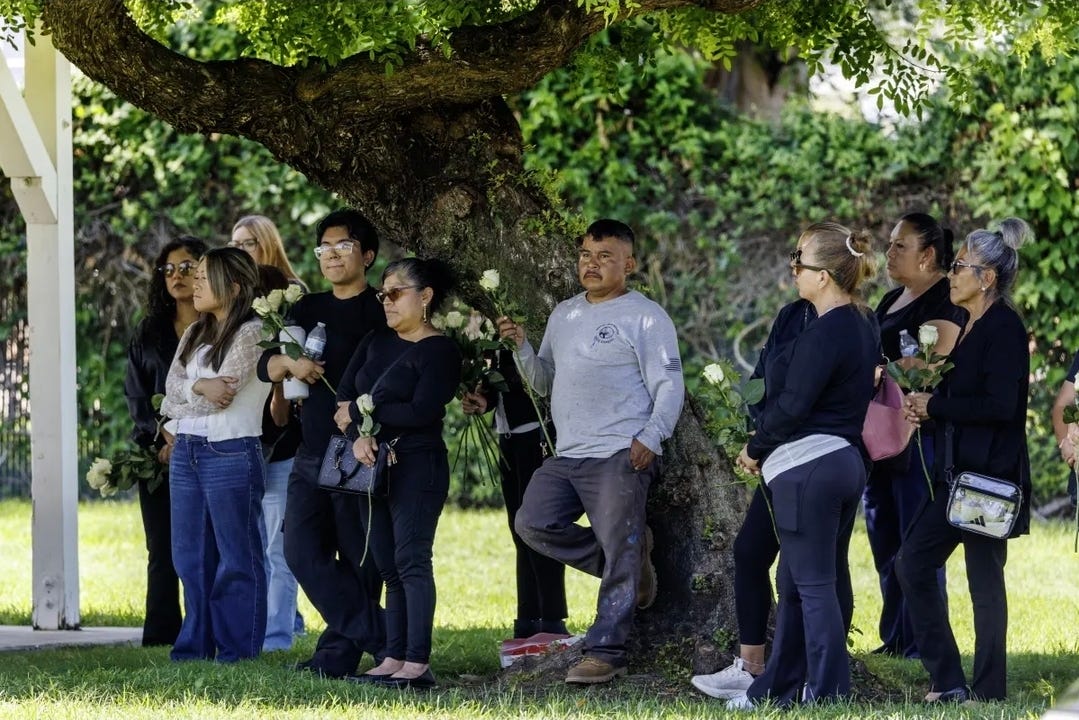
Samuel’s mother was still locked inside ICE custody when her family had to tell her that her son was dead. Sari said she waited until an upcoming court hearing had passed, then was given about 10 minutes inside a visitation room to deliver the news. While Minerva cried, Sari said officers would not allow her to hug or touch her mother.
Three days later, on August 31, a federal judge ordered Minerva immediately released on reasonable conditions. Court records show her habeas petition was granted and that she was released the same day. The court found that DHS had held her illegally “based solely on DHS’s mistake.”
By the time DHS’s mistake was corrected, the damage had already spread through the family. Minerva had been arrested without a warrant, and no immigration judge had determined that she posed a danger or flight risk. When government lawyers argued that she could remain locked up until she qualified for a bond hearing months later, the judge called that prospect “beyond cruel.”
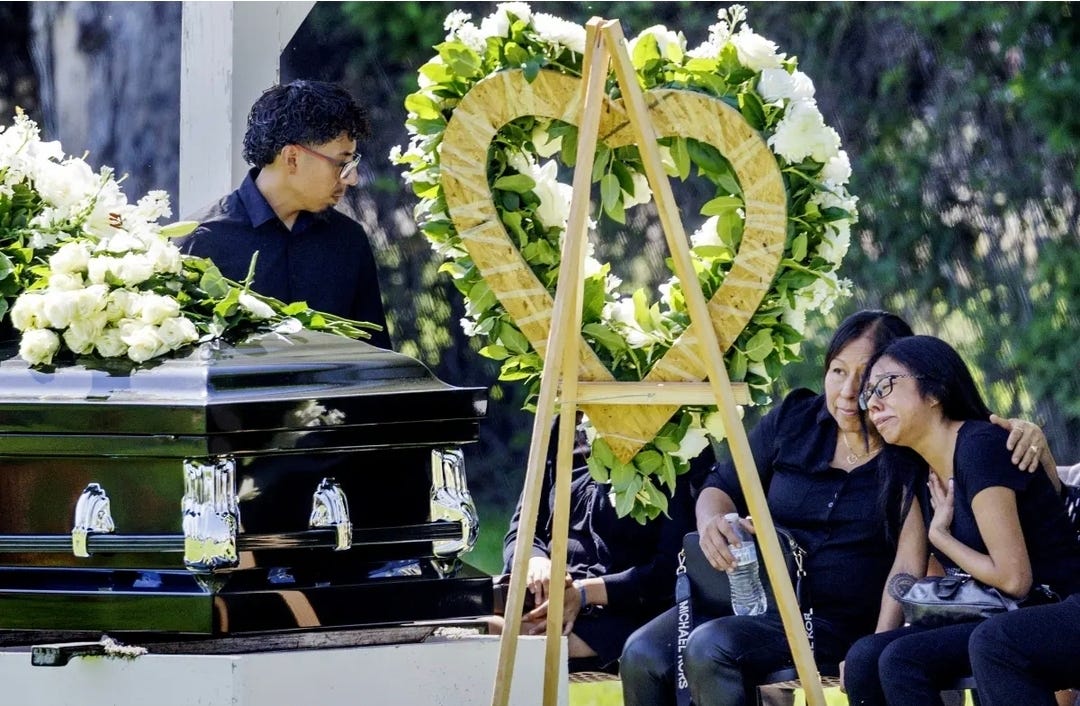
ICE’s detention also left another wound behind. Minerva’s lawyers had been preparing a cancellation-of-removal case built around the extreme hardship her deportation would cause Samuel, her U.S.-citizen son. They never got to file it. After Samuel died, the legal pathway they had been building around his need for his mother disappeared, while Minerva remained in deportation proceedings.
By the time Minerva stood beside her son’s grave in September, a federal court had already ruled that DHS should not have kept her locked up the way it did. But the release order could not return the two months Samuel spent without the mother his family says helped keep him stable, undo the deterioration they watched unfold, or erase the final note in which he named the ICE agent who took her. The government corrected its detention mistake only after Samuel was gone.
The court ruling did not end Minerva’s case, and the damage to this family did not end with her release.
Upgrade to a paid subscription to Americans Against ICE to help sustain independent reporting that follows Minerva’s deportation case, the detention record, and the broader pattern of families harmed by ICE enforcement.