

U.S. Immigration and Customs Enforcement reportedly hired and deployed David Brouillette only months after a Maine judge rejected a material claim he made in court as not credible. Brouillette’s former wife and daughter have identified him as the officer who fatally shot Johan Sebastián Durán Guerrero during a July 13 immigration operation in Biddeford, Maine. Multiple people have also identified Brouillette from footage recorded after the shooting, although the Department of Homeland Security has not publicly confirmed his identity as the shooter.
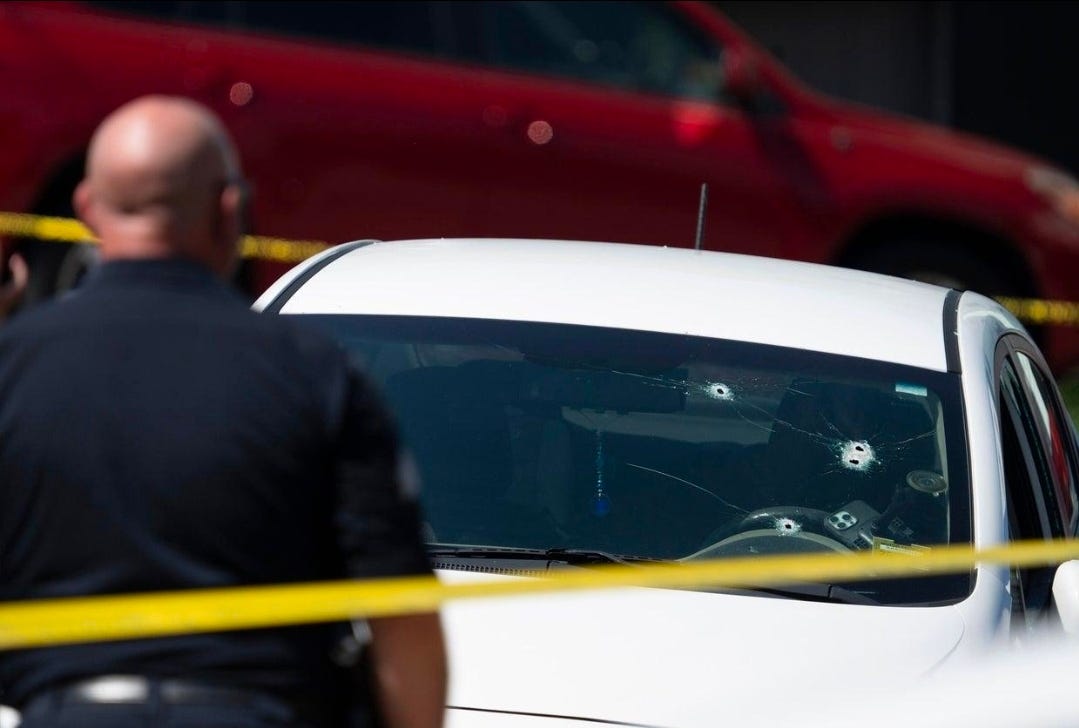
Durán was a 25-year-old Colombian immigrant, father of a 3-year-old daughter and holder of a valid federal work permit. He was driving to work in a white Kia when ICE officers attempted to stop him after he left a Biddeford address under surveillance. An ICE officer opened fire and killed him. DHS later told Sen. Angus King’s office that Durán was not the target of the enforcement operation.
DHS has said its officers were surveilling a location associated with someone believed to have a final order of removal. The agency claimed the driver attempted to flee and that the officer fired because he feared for public safety. Immigration court records cited in reporting showed that Durán did not have a final removal order and was awaiting an initial hearing. King’s office said DHS first identified Durán as the target of the operation and later reversed itself.
ICE’s shifting explanation raises another unanswered question: what did the agency know about Brouillette before giving him federal authority and a firearm?
During an October 2025 child-support proceeding, Brouillette told Maine District Court Judge Amy Dieterich that health issues and the revocation of his driver’s license had limited his ability to earn money. In a written order the following month, Dieterich found his claim about the license not credible, rejected his request to terminate his support obligation and concluded that he was voluntarily underemployed.
Maine’s Bureau of Motor Vehicles later said it found no record of a recent license suspension or revocation connected to unpaid child support. The agency identified only a brief suspension in 2008 after Brouillette failed to provide proof of insurance following an accident.
A separate employment representation was also contradicted. A 2019 divorce settlement described Brouillette as working for the Hallowell Police Department. Police Chief Zachary Kindelan said Brouillette had applied to the department but had never been hired.
Those records matter because Brouillette reportedly joined ICE during an aggressive federal recruitment expansion. His former wife said he told her around November 2025 that ICE had hired him and that he expected to begin work within months, placing the reported hiring period close to the court order rejecting his license claim.
ICE and DHS have not publicly explained when Brouillette was hired, what background investigation was conducted, whether the judicial finding or disputed employment history was reviewed, or how the agency assessed his fitness for armed enforcement.
The public-interest issue is whether ICE examined readily discoverable information bearing on Brouillette’s credibility before sending him into an immigrant community with the power to stop vehicles, detain people and use lethal force.
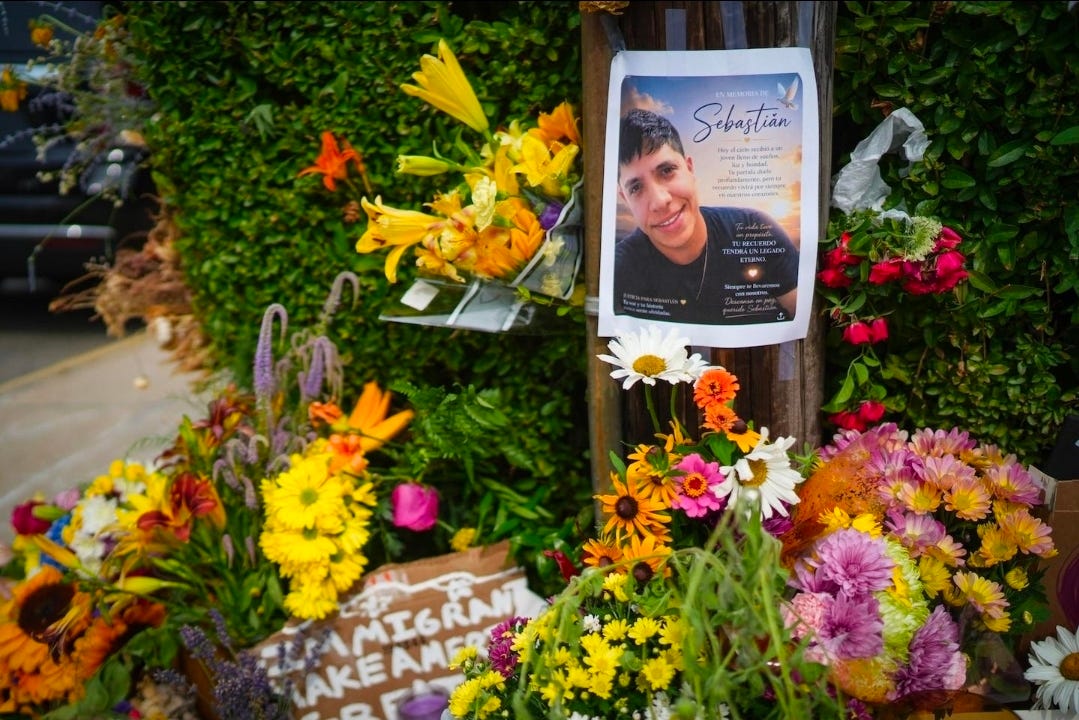
Durán’s life and death remain at the center of that inquiry. He worked, supported his family and was leaving for his job when ICE transformed an operation directed at someone else into a fatal encounter. His partner, Karolina, and their young daughter arrived near the scene after the gunfire. They are now seeking answers from the federal agency whose officer killed him and whose initial explanation remains disputed.
The white Kia Durán was driving belonged to his friend Jonathan Ramirez. Ramirez said he also had no final removal order and did not believe he was the person ICE claimed to be seeking. ICE has not clearly established whose removal order justified intercepting the vehicle Durán was driving.
The evidentiary gap makes the agency’s vetting decisions even more consequential. The ICE officers involved were not recording the encounter with body cameras, and no publicly available bystander or surveillance footage has emerged showing the exact moment the shots were fired. A home-security camera captured the sound of five gunshots but not the shooting itself. The investigation may therefore depend heavily on witness testimony, physical evidence and the account given by the officer who fired.
Without footage of the gunfire, the officer’s account may carry unusual investigative weight. That makes the recent judicial credibility finding directly relevant to whether ICE adequately assessed Brouillette’s fitness for armed enforcement.
That responsibility belongs to ICE and DHS. Rapid recruitment does not suspend the government’s duty to examine whether an applicant is truthful in official proceedings, accurate about prior employment and fit to exercise coercive power. Hiring targets become a public-safety mechanism when the people recruited are sent into communities with guns and federal authority.
The Biddeford killing was the second fatal ICE shooting involving a vehicle in less than a week, following the killing of Lorenzo Salgado Araujo in Houston. ICE suspended most vehicle stops after the Maine and Houston killings. One day later, President Donald Trump directed agents to resume them.
Border czar Tom Homan later announced that ICE vehicle stops would have to be recorded by at least one officer wearing a body camera. That policy change underscored what Durán’s death had already exposed: ICE was conducting dangerous armed encounters without reliably creating an independent visual record.
Thirty-eight Democratic senators, joined by independent Sen. Angus King of Maine, demanded answers about officer identification, body-camera use, vehicle-stop practices and employee vetting. Their inquiry specifically asked whether ICE reviews family-court records containing information relevant to an applicant’s fitness for duty.
DHS responded to scrutiny of Brouillette’s identity by warning that naming ICE officers can place them and their families at risk. That response does not address the agency’s institutional responsibility. It does not explain why Durán was stopped, why DHS changed its account of whether he was the target, what evidence justified the shooting or what screening occurred before the officer was armed.
Officer safety cannot become a shield against accountability after an officer kills someone. ICE cannot publicly rely on its officer’s description of a fatal encounter while withholding the information needed to evaluate how that officer was selected, screened and deployed.
Durán’s family deserves a complete record. The public deserves to know when Brouillette was hired, what ICE examined during his background investigation, whether the court order was discovered, what training he completed, whether he remains employed and armed, and what evidence supports DHS’s account of the killing.
A federal badge does not erase a credibility record. ICE’s recruitment expansion does not excuse weak screening. When an agency sends armed officers into immigrant communities, kills a father whom DHS later acknowledged was not the operation’s target and then controls access to the evidence, its hiring decisions become part of the public record—and part of the harm.
Upgrade to support Americans Against ICE as we continue documenting ICE shootings, officer vetting and the federal systems that place armed agents inside immigrant communities.