

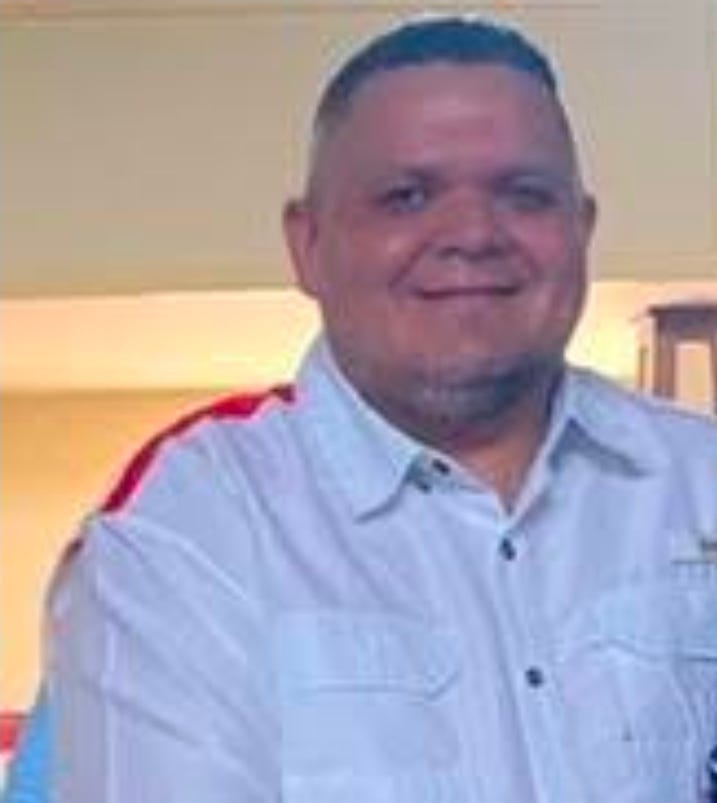
When ICE agents arrested Jesús Manuel Arenas-Silva at his Georgia home, his family immediately warned them that he needed medication for a medical condition. According to his sister and immigrant-rights advocates, agents first ignored the request and then allowed him to take only one medication into custody.
Arenas-Silva later called his sister from detention and told her that officials were still not giving him the medication he needed. Four days after ICE took control of his confinement, treatment, and movement, the 45-year-old Venezuelan man became unresponsive on a transport bus while being moved between two Georgia detention facilities. He was taken to a hospital and pronounced dead.

His family had identified the medical danger before his death, and ICE controlled every decision that followed. Arenas-Silva was arrested during what the agency described as a targeted enforcement action, taken to the privately operated Irwin County Detention Center, and later placed on a bus bound for the Folkston ICE Processing Center. Somewhere inside that chain of federal custody, a man whose family had warned that he needed medication deteriorated until he stopped responding.
ICE has said the suspected cause of death was cardiac arrest and that Arenas-Silva received medical care and was seen by medical professionals. Neither statement resolves the allegation at the center of his death. Cardiac arrest describes the heart stopping; it does not explain the underlying cause, whether missed medication contributed to his decline, or whether the death could have been prevented. A statement that medical personnel saw him does not establish that he received the specific treatment required to manage his condition.
Once ICE prevented Arenas-Silva from managing his own care, the agency became responsible for maintaining continuity of treatment. It controlled which medications entered detention with him, what was recorded during intake, whether prescriptions were verified, when doses were administered, and whether his condition was stable enough for transport. The agency must now explain what medications his family identified, what agents permitted him to bring, what clinicians documented, what treatment he received, and whether any doses were missed.
Those questions cannot be answered by repeating that care was provided. His family alleges that the treatment he needed was withheld, and his sister says she is certain he did not receive proper care. Her statement is not only an expression of grief after the fact. It reflects a warning issued at the time of arrest and repeated by Arenas-Silva himself while he remained alive in ICE custody.
ICE had notice of his reported medical need and controlled every custody decision that followed. The agency had been told that his family was trying to protect his access to medication, knew agents had controlled what he could bring into custody, and knew he was dependent on a detention system that had removed his ability to seek care independently. It nevertheless placed him into transport without publicly showing that his medical need had been addressed.
Transfer is often described as routine administration, but for detained people it is another period of total physical control. A person may be restrained, separated from clinicians, removed from an established treatment routine, and placed inside a vehicle where deterioration can go unnoticed until it becomes an emergency. ICE must disclose who approved Arenas-Silva for transport, what medical records accompanied him, whether he had received all prescribed medication, what monitoring occurred on the bus, and how much time passed between his last responsive contact and the emergency call.
Arenas-Silva remained inside one federal custody system throughout that movement. ICE may contract with private prison operators, outside medical vendors, and transportation companies, but those layers do not divide the government’s responsibility for the person it confined. Federal officials chose the detention site, authorized the transfer, and retained control over the records that now determine whether the public will learn where the chain failed.
Private detention often creates a structure in which each actor can point toward another. Facility staff can blame medical vendors, medical vendors can cite incomplete intake records, transport contractors can claim they followed instructions, and ICE can issue broad statements about care while withholding the evidence necessary to test them. Arenas-Silva did not die between unrelated institutions. He died while every part of his custody remained authorized by ICE.
The facility where he was first held carries its own record of alleged medical abuse. The federal government ended its contract with the Irwin County Detention Center in 2021 after whistleblower disclosures and public scrutiny over the treatment of detained women. A Senate investigation later found that women appeared to have undergone excessive, invasive, and often unnecessary gynecological procedures.
ICE began detaining immigrants at Irwin County again as the federal detention system expanded. That decision requires an accounting of what changed in the facility’s medical safeguards, staffing, contractor oversight, and accountability before people were returned to a site associated with such serious allegations. Arenas-Silva’s death makes that question immediate because a medically vulnerable man entered the facility, reportedly said he was not receiving necessary medication, and died before reaching the next detention center.
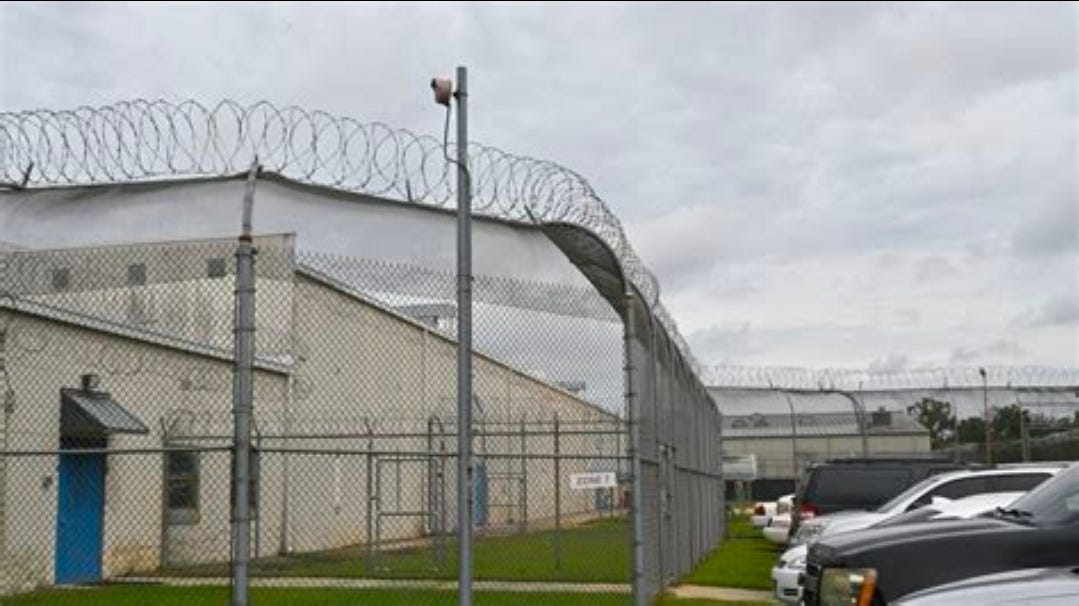
His death also belongs within the broader expansion of immigration confinement under the second Trump administration. More detention capacity enables more arrests and transfers, deepens reliance on private operators, and forces more medically vulnerable people through institutions designed to process human beings at scale. Expansion is not merely an increase in capacity. It increases the number of people whose medication, mobility, and survival are placed under institutional control.
Arenas-Silva has been reported as the 22nd person to die in ICE custody this year. That number shows the scale of the crisis, but it cannot replace the facts of his life and death. He was 45 years old. His family tried to protect him. He told his sister that he was not receiving what he needed. He was alive when ICE arrived at his home and dead four days later after confinement and transport under federal control.
The count matters because repeated deaths expose a system pattern, but each case requires its own record. Arenas-Silva’s death concerns medication continuity, medical clearance, detention conditions, and transport. It must remain distinct from shootings by ICE officers, deaths during enforcement operations, or other forms of immigration-related violence, even as all of them reveal the wider human cost of Trump’s enforcement machinery.
His family is demanding an independent investigation, and that demand must include preservation of the complete record. Arrest footage, intake screening, medication reconciliation forms, prescription and administration logs, clinician notes, medical requests, phone records, transfer orders, transport clearances, bus manifests, staff rosters, vehicle surveillance, emergency calls, hospital records, autopsy findings, toxicology results, internal death reviews, and contractor communications must all be secured.
Those records must establish when Arenas-Silva last received each medication, who approved his transfer, whether warning signs were documented before he boarded the bus, what the transport crew knew about his condition, when staff realized he was unresponsive, and how quickly emergency assistance was requested. An agency accused of failing to provide necessary medication cannot be the only institution controlling the evidence needed to determine whether it did so.
ICE’s public account begins with Arenas-Silva becoming unresponsive, but the relevant timeline began when his family warned agents at the door. It continued when he reportedly told his sister that he was not receiving his medication and through every intake decision, medication decision, clinical interaction, and transfer approval before his collapse.
Jesús Manuel Arenas-Silva’s family did what families are told to do when someone with a medical condition is taken into custody. They informed the agents, tried to send medication with him, remained in contact, and listened when he said the treatment was not being provided. ICE had notice of his reported medical need and controlled every custody decision that followed.
His death cannot be reduced to suspected cardiac arrest, an annual count, or another press release written by the agency that confined him. ICE must release the complete medical and transportation record, submit to an independent investigation, and explain why a man whose family repeatedly warned of a medical need was placed into transfer without that need being addressed.
Jesús Manuel Arenas-Silva was alive when ICE took custody of him. Four days later, he was dead after his family’s warnings, his reported medication deprivation, his confinement at Irwin County, and his transfer toward Folkston. The public record must now establish what ICE did, what it failed to do, and whether a preventable death was hidden behind the language of routine detention.
Americans Against ICE documents the raids, public seizures, detention abuse, custody deaths, family separation, and community resistance that Trump’s immigration machinery depends on the public forgetting. This work keeps the people targeted by ICE visible, connects individual acts of cruelty to the system producing them, and preserves the record when government agencies refuse to explain what their officers have done.
Subscribe to Americans Against ICE and help keep every seizure, every act of cruelty, and every life lost under federal control in the public record.
This so-called “government” does not care. The FELON in the WH does not care. He only cares that humans occupy these facilities so he gets his “kickback”.
DO SOMETHING