

The people held inside ICE detention are living inside a system that expanded faster than the government planned for it. Since January 2025, Immigration and Customs Enforcement has pushed detention capacity upward at extraordinary speed, while federal investigators have documented wasted money, abandoned projects, missing safeguards, medical gaps, unsanitary conditions, and facilities opened before basic detention standards were met. The U.S. Government Accountability Office (GAO) now says ICE pursued six major expansion initiatives involving billions of dollars without the analysis and strategic planning needed to manage them responsibly.
Congress gave ICE about $45 billion specifically for detention capacity through fiscal year 2029, part of roughly $75 billion provided to the agency under the 2025 reconciliation law. As that money began moving, ICE’s average daily detained population climbed from 39,314 people on January 20, 2025, to 67,204 by April 1, 2026 — a 71 percent increase. The number of authorized detention facilities rose from 134 to 239 over the same period.
That expansion was not accompanied by a comprehensive strategic plan. GAO found that ICE had not established consistent goals for how much detention space it actually needed, what types of facilities should make up the system, how long-term costs should be assessed, or how the agency should weigh expensive new facilities against cheaper alternatives already available within its detention network. GAO concluded that this lack of planning had already produced millions of dollars in waste.
One of the clearest examples is ICE’s warehouse-buying program. Beginning in late 2025, the agency moved to purchase and renovate warehouses around the country as detention centers, with plans at one point to open 24 of them. Between January and April 2026, ICE purchased 11 warehouses for about $1.07 billion. By June, officials said they were working to sell seven.
Those abandoned plans were not cost-free. ICE reported spending $7.7 million in nonrecoverable purchasing costs on the seven warehouses it planned to sell, including zoning assessments and title insurance. By August, another $12.8 million had gone toward utilities, security, and other services at those properties. Together, that pushed unrecoverable spending beyond $20 million before any additional loss that could come from selling the buildings below the $707 million ICE paid for them.
GAO’s findings show that the waste was not isolated to warehouses. The detention expansion reached military installations, temporary facilities, federal prisons, state-run sites, and other arrangements as ICE searched for more beds. At Guantánamo Bay, millions were spent preparing infrastructure for immigration detention, including tents that were later dismantled after DHS determined they did not meet ICE detention standards. The spending continued even as the number of people actually held there remained far below the enormous capacity publicly discussed for the site.
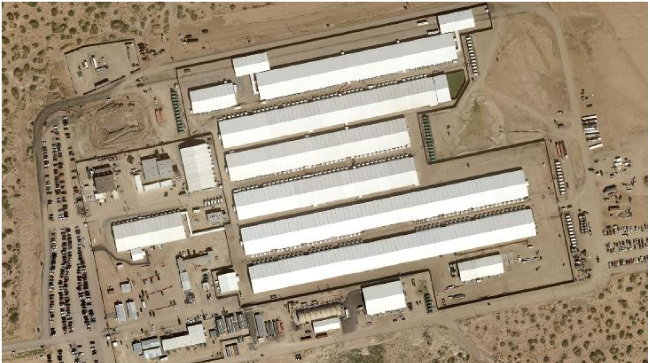
But the financial waste tells only part of the story. The most direct human consequences appear at Camp East Montana, the detention complex at Fort Bliss in El Paso that became ICE’s largest facility.
GAO found that the Army and ICE rushed the facility into operation under an expedited schedule. The $1.3 billion contract was awarded through an acquisition approach officials had not previously used for detention services, and the selected contractor lacked prior detention-service experience. The facility opened in August 2025.
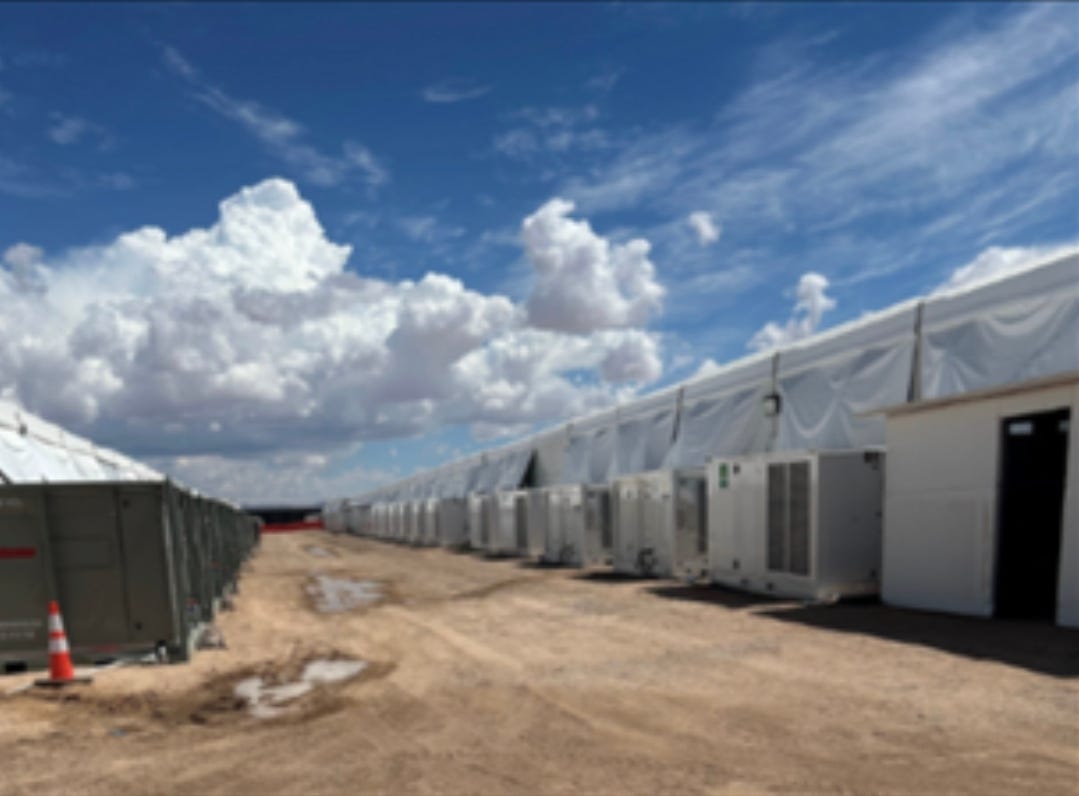
People were housed there before ICE had completed the inspection required by its own policy. GAO found that the facility initially lacked perimeter security cameras, outdoor recreation space, and adequate areas for attorney and family visits. After Camp East Montana opened, ICE itself reported additional problems, including gaps in medical services, unsanitary conditions, and the loss of a loaded firearm. GAO said the failures created serious risks for both detained people and staff.
At the same time, ICE was paying for services it did not need. The original Camp East Montana contract required payment for meals and operational services at levels that did not properly adjust when the detained population fell far below the facility’s 5,000-person capacity. GAO found that the government paid full costs for meals and services during periods when there were no detained people at the facility, and ICE continued paying for unnecessary meals even after changing contractors. GAO estimated that better pricing controls could save tens of millions of dollars.
That is the central contradiction running through ICE’s detention expansion. The government had billions available to acquire buildings, construct facilities, buy services, and increase bed space, yet people were still being confined inside a system where federal investigators found missing recreation, inadequate visitation space, medical-service gaps, unsanitary conditions, security failures, and weak oversight.
The spending reveals where capacity was directed: toward acquiring buildings, expanding bed space, and accelerating confinement even as basic detention standards remained unmet.
GAO’s Homeland Security and Justice director Heather MacLeod said the investigation found a broader planning failure, describing “a real lack of planning overall.” GAO recommended that ICE create a comprehensive strategic plan covering its goals, activities, and resource needs. DHS agreed with the recommendation, but ICE does not expect to complete that plan until August 31, 2027. GAO said more timely action may be warranted because of the scale of the funding and the risk of continued waste.
The political response has focused heavily on that waste. Sen. Dick Durbin described the findings as evidence of “incompetence and waste” at ICE and called for DHS and ICE to be held responsible. DHS, meanwhile, defended the pace of expansion, saying ICE was moving rapidly on what the department described as cost-effective ways to carry out the administration’s mass-deportation agenda.
Neither response changes what the federal audits documented: ICE expanded detention rapidly, spent billions, bought facilities it later decided it did not want, absorbed millions in unrecoverable costs, and entered contracts that produced unnecessary spending while people were being held in a facility the government’s own watchdog found had opened without meeting key detention standards.
The accountability question is therefore larger than whether ICE can recover money from seven warehouses or rewrite future contracts to save on meals. It is why a detention system holding tens of thousands of people was expanded with such urgency before the government had established the planning, oversight, and safeguards needed to operate that expansion responsibly.
For the people inside ICE detention, failed planning is not an accounting abstraction. It can mean medical services that are not fully available, family and attorney visits without adequate space, unsanitary living conditions, missing security measures, and confinement inside facilities opened before required inspections were completed.
ICE was given extraordinary resources to build more detention capacity. The federal record now shows that expanding confinement moved faster than the planning and safeguards needed to protect the people placed inside it.
ICE’s detention expansion is still growing, and the federal audits leave major questions about where billions went, what facilities were built, and what conditions people are being held inside.
Upgrade to a paid subscription to Americans Against ICE to help sustain independent reporting that follows detention expansion, spending, conditions, and accountability beyond the first headline.
It's amazing how much damage this ICE and mass deportation program has done. Every city they go to loses hundreds of millions, every concentration camp is a boondoggle.
Trump districts are costing the United States more than they have ever been worth.
Like everything else this fascist regime does, it's cronyism and greed at their finest, built on human suffering and cruelty. For-profit, congress-approved human trafficking being carried out by masked men in unmarked cars disappearing people off the street. All monies should be ripped out of the hands of everyone complicit in the record profits being made from human suffering and given back to the people whose tax dollars have being stolen. The cost to humanity and the damage done to our country and the world can never be made whole.