

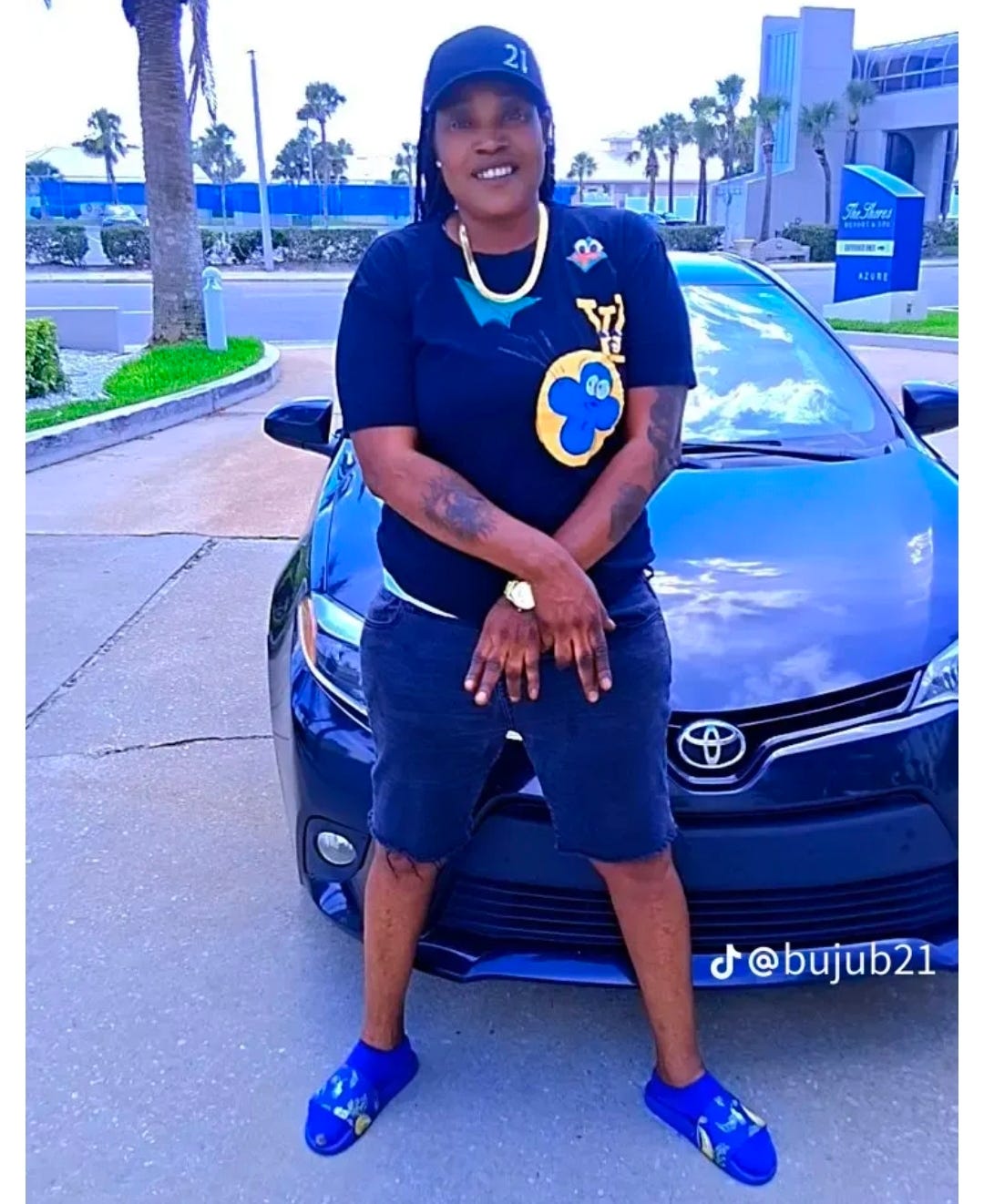
Latoya “Buju” Bulgin was shot and killed by Jamaican police in Granville, St. James. Renee Nicole Good was shot and killed by ICE in Minneapolis. Their deaths happened in different countries, under different agencies, and inside different legal systems, but the structure around them is not separate. It is the same governing posture wearing different uniforms.
The state wants these deaths treated as isolated. Jamaica over there. America over here. Police over there. ICE over here. Security over there. Immigration enforcement over here. That separation protects the machinery. It keeps the public from seeing the pattern clearly: armed agents move into civilian life, mark a person or vehicle as a threat, fire into the moment, control the body or scene afterward, and then let official language do the cleanup.
This is not just about two deaths that resemble each other. The data matters because the data shows escalation. Jamaica’s security-force killings are rising. ICE violence and immigration-enforcement shootings have been rising under the Trump crackdown. Latoya Bulgin and Renee Nicole Good sit inside two systems that were already becoming more violent before their names entered the public record.
The Data Makes the Mirror Harder to Dismiss
In Jamaica, the rise is visible in the numbers. The Gleaner reported that by April 27, 2026, 112 people had already been killed by state agents, with 36 people killed in April alone — the highest monthly tally for fatal security-force shootings in more than three years. That is not a normal public-safety measure. That is a state-violence pattern moving through communities under the language of security.
Latoya Bulgin was killed weeks after that warning sign was already flashing. She was not shot inside a vacuum. She was killed inside a country where state agents had already taken more than 100 lives before the end of April, where April alone had become the deadliest month for security-force shootings in over three years, and where the public was already being asked to accept armed state death as the price of order.
In the United States, the ICE pattern is also not isolated. The Marshall Project reported on the day Renee Nicole Good was killed that federal officers had fatally shot at least three other people in the previous five months, based on news reports it reviewed. The same reporting placed Renee’s killing inside a wider pattern of federal immigration agents using deadly force during enforcement operations.
The pattern widened again in Minnesota. On May 18, Hennepin County prosecutors charged ICE officer Christian Castro with second-degree assault and falsely reporting a crime over the January 14 shooting of Julio Cesar Sosa-Celis during Operation Metro Surge. Prosecutors said Castro fired through a door and hit Sosa-Celis in the leg even though Sosa-Celis posed no threat, and AP reported that the county was also investigating several cases from the same operation, including two deaths of U.S. citizens allegedly involving federal officers.
Jamaica’s Police Killings Are Rising Under “Security” Language
Jamaica’s state does not call this violence by its plain name. It calls it security. It calls it crime control. It calls it order. Those words are doing political work. They make state killing sound like a necessary response before the public gets a full accounting of who was killed, why force was used, whether the dead were actually a threat, and why the same communities keep absorbing the bullets.
That is why the 2026 numbers matter. When more than 100 people are killed by state agents before May, the issue is not one officer, one scene, or one “confrontation.” The issue is a system that has made fatal force part of governance. It is a state posture that treats poor Black communities as zones where armed agents can move with deadly authority and then make the public wait for official language.
Latoya Bulgin’s killing entered that landscape. Public video shows the aftermath of her shooting: her body dragged from the vehicle and thrown into the back of a police pickup while people screamed. That image matters because the violence did not end with the shot. The state controlled the body after the bullet. It controlled the scene. It controlled the first official vocabulary. It tried to turn a woman’s death into something procedural.
That is not care. That is not aid. That is not public safety. That is armed state power treating a woman’s body like evidence to be removed after its own violence had already done the damage.
ICE Violence Is Escalating Under “Enforcement” Language
America uses different words, but the function is familiar. ICE does not call itself a domestic state-violence machine. It calls itself immigration enforcement. It talks about public safety, national security, officer safety, and federal authority. But those words become weapons when they are used after a killing to protect the agency before the public has the full truth.
Renee Nicole Good was shot and killed by ICE agent Jonathan Ross in Minneapolis during Operation Metro Surge. She was a civilian woman in a vehicle. Federal language moved fast to make the vehicle the center of the story. The institution needed the SUV to become the threat because that framing protects the officer, protects the agency, and pushes the woman killed into the background.

The same pattern appeared again with Julio Cesar Sosa-Celis. Prosecutors say ICE officer Christian Castro fired and then falsely reported the circumstances. The alleged lie matters because state violence does not rely only on guns. It relies on paperwork, statements, charging decisions, press language, and institutional defense. The shot is one part of the violence. The official story after the shot is another.
This is the American version of the same machinery. Armed agents enter everyday life under the banner of enforcement. The public is told there is danger. Force is used. Then the state asks everyone to accept its first explanation as neutral fact.
The Vehicle Becomes the Excuse
The vehicle is central in both stories because vehicles give armed agents a ready-made script. A car can be called a weapon. Movement can be called aggression. Confusion can be called threat. A woman trying to leave, survive, react, or escape the chaos of armed force can be turned into the danger that supposedly justified the gun.
That is how the victim gets displaced. The woman killed becomes secondary to the officer’s fear. The person inside the vehicle becomes less important than the state’s claim about what the vehicle might have done. The public is pushed to debate angles, speed, proximity, commands, and officer perception instead of staying with the first moral fact: armed state agents fired into civilian life, and a woman ended up dead.
This is not accidental. It is a familiar state script. When the person killed is framed as a threat, the institution gets room to defend itself. When the vehicle becomes the weapon, the shooter becomes the protected narrator. When official language arrives first, the body has to fight its way back into the story.
Latoya Bulgin and Renee Nicole Good expose that structure from two places at once. Jamaica’s police power and America’s ICE power both rely on the same reversal. The dead woman becomes the danger. The armed agent becomes the threatened party. The state gets to speak first.
Body Control Becomes Narrative Control
Latoya Bulgin’s body being dragged from the vehicle and thrown into the back of a police pickup is not a side detail. It is the state’s power made visible after the shot. A woman was killed, and then her body was handled by the same armed system that had already fired. That handling told the public something before any formal statement did: the state believed it had the right not only to use force, but to control what happened to her body afterward.
Body control is narrative control. Whoever controls the body controls the scene. Whoever controls the scene controls the evidence. Whoever controls the evidence gets the first chance to shape what the public is told happened. That is why these moments matter. They are not just aftermath. They are part of the machinery.
In Renee Nicole Good’s case, the body-control frame moved through federal narrative instead of the same visible public handling. ICE needed the SUV to stand in for danger. It needed the official story to organize public perception before grief, outrage, witness accounts, video analysis, and independent scrutiny could break through. That is still control. It is the control of meaning after death.
The state does not only kill with bullets. It kills again when it reduces a person to a threat narrative, a case number, a press statement, a procedural review, or an agency defense.
Security and Enforcement Are Doing the Same Work
Jamaica calls it security. America calls it ICE enforcement. Those words are not identical, but they are doing the same work when they turn state violence into public necessity. They ask people to see armed force as order. They ask people to see targeted communities as danger zones. They ask people to see the dead through the institution’s fear before seeing the life that was taken.
That is why Latoya Bulgin and Renee Nicole Good belong in the same analysis. The point is not that Jamaica’s police and ICE are the same agency. The point is that both systems use state language to make violence look inevitable. Both protect the shooter’s version first. Both rely on public confusion. Both need the dead to be turned into a threat before the public can fully name the violence.
This is also why the older Americans Against ICE article matters. It warned that Jamaica and America were moving through the same state-force logic before Latoya Bulgin was killed. The architecture was already there: security in one country, immigration enforcement in another, both building public permission for armed power to move downward.
Latoya Bulgin should be alive. Renee Nicole Good should be alive. Julio Cesar Sosa-Celis should never have been shot. The people killed by Jamaican state agents should not be reduced to monthly totals. The people shot, killed, detained, or terrorized by immigration agents should not be buried under the language of enforcement.
The machinery is the story. The deaths are not isolated. The language is not neutral. The state should not get to shoot first, control the body, control the first story, and then demand that the public call it security or immigration enforcement.
Read more context ↓
This article documented the same state-force pattern before Latoya Bulgin was killed: Jamaica calls it security, America calls it ICE enforcement, but the machinery is the same.

Support independent documentation, investigation, and accountability work that refuses to let state violence disappear into official language.
Americans Against ICE exists because the machinery that killed Renee Nicole Good does not stop at one agency, one border, or one uniform. It expands through language, fear, force, and public silence.
Subscribe to Americans Against ICE ↓
Upgrade to a paid subscription to support the reporting behind Latoya Bulgin’s story — and the work of documenting how state violence gets renamed, excused, and cleaned up after the killing.🔻
https://americansagainstice.substack.com/subscribe