

A landlord doesn’t need a court order to scare someone out of their home. They need a threat that lands where tenants have the least room to negotiate: immigration enforcement. That threat doesn’t belong in housing disputes, but it keeps showing up anyway—quietly, casually, and with the intention to make someone disappear before a judge ever sees the file.
Complaints shared with City Council members describe a pattern: landlords and building staff allegedly invoking ICE to force tenants out fast, extract more money, or shut down basic housing rights. The common thread isn’t confusion. It’s leverage—using fear as enforcement, and counting on tenants to stay too isolated to fight back.
In Bushwick last November, a landlord allegedly threatened to call U.S. Immigration and Customs Enforcement unless a tenant left within 10 days—despite the fact that no formal eviction case had been filed. In Queens in December, another landlord allegedly used the same threat to pressure a tenant to pay an additional $1,000 per month. In Brooklyn in February, an employee for a landlord allegedly raised immigration enforcement during a dispute with an elderly tenant over whether the apartment was rent-stabilized.
This is landlord impunity powered by ICE threats: skip due process, trigger panic, force silence.
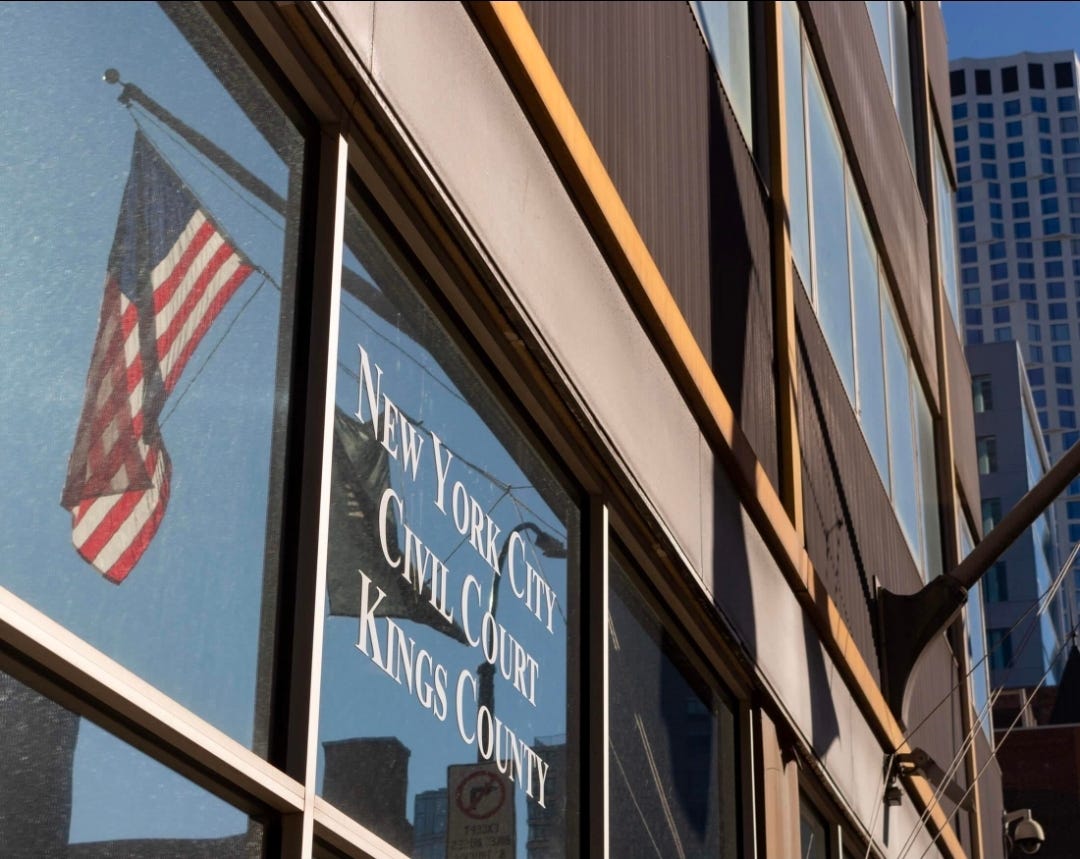
On Monday, Make the Road New York brought complaints like these to City Council members at a hearing on landlord harassment, including incidents where landlords allegedly used perceived or actual immigration status as leverage. The organization said it has received seven such complaints since November—enough that its housing attorneys, representing tenants in Brooklyn and Queens, created a tracker specifically to log threats tied to immigration enforcement.
That tracker matters because it signals repetition. People don’t build a tracking system when something happens once. They build one when a pattern starts surfacing across neighborhoods, across landlords, and across cases that never look identical but feel the same to the tenant living through them. It also signals undercounting. Threats that “work” don’t become hearings. They become move-outs, hush money rent increases, and tenants who stop asking for repairs because the cost of conflict feels too high.
The Threat Is the Tactic
ICE threats aren’t “reporting.” They’re intimidation designed to produce instant compliance. They are meant to collapse a tenant’s options in the space of a text message, a hallway conversation, or a “10 days” ultimatum—before anyone can get counsel, organize documents, or reach a court date.
Housing court is slow, public, and governed by procedure. It forces landlords to file paperwork, put claims on the record, and accept scrutiny. Harassment is faster. It thrives in private, often in fragments—unreturned calls, pressure campaigns, sudden “deadlines,” retaliatory notices, and off-the-record warnings. The goal is not a legal victory. The goal is surrender.
An immigration threat supercharges that coercion because it doesn’t need to be legally coherent to do damage. It doesn’t need to result in an actual call. It only needs to make a tenant believe the system can be turned against them for trying to enforce their rights. It’s a pressure point designed to make self-protection look like silence.
That’s why “perceived status” is enough. A landlord doesn’t need proof to weaponize suspicion. They need a tenant to feel cornered—and to believe that pushing back could trigger consequences bigger than the housing dispute itself.
“An Additional Layer of Vulnerability”
At the hearing, housing attorney Ibrahim Ramoul told council members he has seen a “worrying uptick” in landlord harassment and threats related to perceived or actual immigration status over the past year. In an interview after the hearing, he described what housing lawyers see constantly—service shutoffs, hostile communications, retaliatory conduct, and other forms of harassment—and then named what makes ICE threats distinct.
They target vulnerability that tenants can’t neutralize quickly. Even when a tenant has lawful status, uncertainty becomes part of the weapon. The threat functions by making tenants feel that seeking help will expose them, that insisting on rights will escalate risk, and that “keeping your head down” is safer than going on the record.
That’s how rights get hollowed out in practice: not always by changing the law, but by making the enforcement of the law feel unsafe. When fear becomes part of the transaction, the most basic protections—habitability, rent stabilization, due process—start to look optional. The landlord’s power becomes the reality, and the tenant’s rights become theoretical.
Why Tenants Don’t Go on the Record
Housing attorneys also testified that there is little to deter landlord harassment—and that many tenants avoid going on the record in housing court because retaliation is a rational fear. The people most likely to be targeted by these tactics are often the people with the least margin for risk: tenants already living under unstable conditions, tenants with limited resources, tenants facing language barriers, elderly tenants, and tenants whose households include mixed immigration statuses.
Retaliation doesn’t always arrive as one dramatic event. It often arrives as grinding punishment: repairs that never happen, heat that becomes unreliable, pests that persist, construction that never ends, pressure that never stops. Over time, “voluntary” move-outs stop being voluntary. They become surrender under stress, engineered over weeks or months until leaving feels like the only way to survive the building.
A 2011 report by the Community Service Society found that 16% of low-income, first-generation immigrant New Yorkers lived in apartments with poor conditions—multiple issues such as pests, water leaks, inadequate heating, or cracks and holes in walls. That baseline matters. When living conditions are already unstable, tenants have less room to gamble on a prolonged fight. Fear becomes easier to monetize, and coercion becomes easier to hide.
Complaint-driven enforcement collapses when the people most targeted are also the most afraid to file complaints. ICE threats are designed to exploit that structural gap.
The Business Model of Impunity
These threats persist for one simple reason: they work. A threat is cheap. It takes seconds to send. It leaves landlords with plausible deniability, and it puts tenants under immediate stress. It can produce instant outcomes that landlords want—without court oversight and without a paper trail.
It can push a tenant out without a filed case. It can force a tenant to accept an illegal rent hike. It can make a tenant stop demanding repairs. It can pressure someone to drop a rent-stabilization dispute. It can isolate a household until they decide the safest path is to disappear quietly.
And when it “works,” it rarely becomes a public complaint. The tenant leaves. The building moves on. The threat evaporates into a private memory. That is precisely why it is a scandal: immigration enforcement becomes a shadow tool in the housing market, and due process gets replaced by fear.
This is not “hard negotiating.” It is coercion—turning immigration terror into a private landlord weapon.
City Council’s Leverage: Make Harassment Expensive
At the hearing, attorneys and advocates urged the City Council to strengthen deterrents, including support for a City Council bill that would make permanent a pilot program launched in 2018 aimed at discouraging landlord harassment.
That program ties certain construction approvals to a certification process based on interviews with current and former tenants. Owners of certain buildings seeking approvals for construction work must first obtain certification that the landlord and building staff have not harassed tenants. The point is not only to collect complaints. The point is to attach consequences to landlord conduct at a point of leverage—permits, timelines, approvals, and profit.
This approach matters because it hits what landlords care about. It doesn’t require tenants to carry the full burden of enforcement while still living under a landlord’s power. It creates a checkpoint where tenant experience becomes consequential, and where harassment can delay or block what a landlord wants next.
In a city where harassment can be profitable, deterrence has to land on profit.
What Real Deterrence Looks Like
New York City cannot “raise awareness” its way out of this. A threat built to silence people does not get defeated by telling people to speak up. The response has to change the incentive structure that makes coercion a rational business move.
That means treating immigration-related threats in housing disputes as serious harassment, not as “heated communication.” It means building enforcement pathways that don’t force tenants to gamble their safety to be believed. It means tying penalties to permits and approvals where landlords cannot shrug them off as a cost of doing business. It means making patterns public so landlords understand the rules have changed.
The goal is not only to punish a handful of landlords. The goal is to break the system that makes coercion profitable and keeps tenants isolated.
The Paper Trail Is the Point
Make the Road New York’s tracker is not just administrative housekeeping. It is the beginning of a public record: dates, locations, language used, who said what, what happened next. That’s how “one case” becomes “a pattern.” Patterns can be legislated against. Patterns can be enforced. Patterns can be prosecuted.
The tracker also signals what housing lawyers already know: most threats never reach a hearing because most threats are designed to succeed quietly. The incidents that surface are often the ones where a tenant found counsel, found allies, or refused to be isolated. The threats that never surface are the ones that produced the outcome the landlord wanted.
That’s the hinge. Isolation is the tactic. Documentation breaks it.
Bottom Line
The scandal isn’t that tenants feel afraid. The scandal is that fear is being used as a business tool. When landlords can invoke ICE to force illegal outcomes—unfiled evictions, arbitrary deadlines, rent extortion, silence in the face of unsafe conditions—tenant protections exist on paper while coercion runs the building.
A city where ICE threats can function as a private eviction weapon is a city where rights become conditional. And conditional rights are not rights.
Landlords reach for ICE threats because they expect tenants to feel isolated and powerless—and because too often, that expectation gets rewarded. New York City has the leverage to change that reward structure. The question is whether it will.
This pattern must be documented, tracked, and forced into consequences. Upgrade to a paid subscription so this reporting can keep building the public record landlords are counting on never existing.