

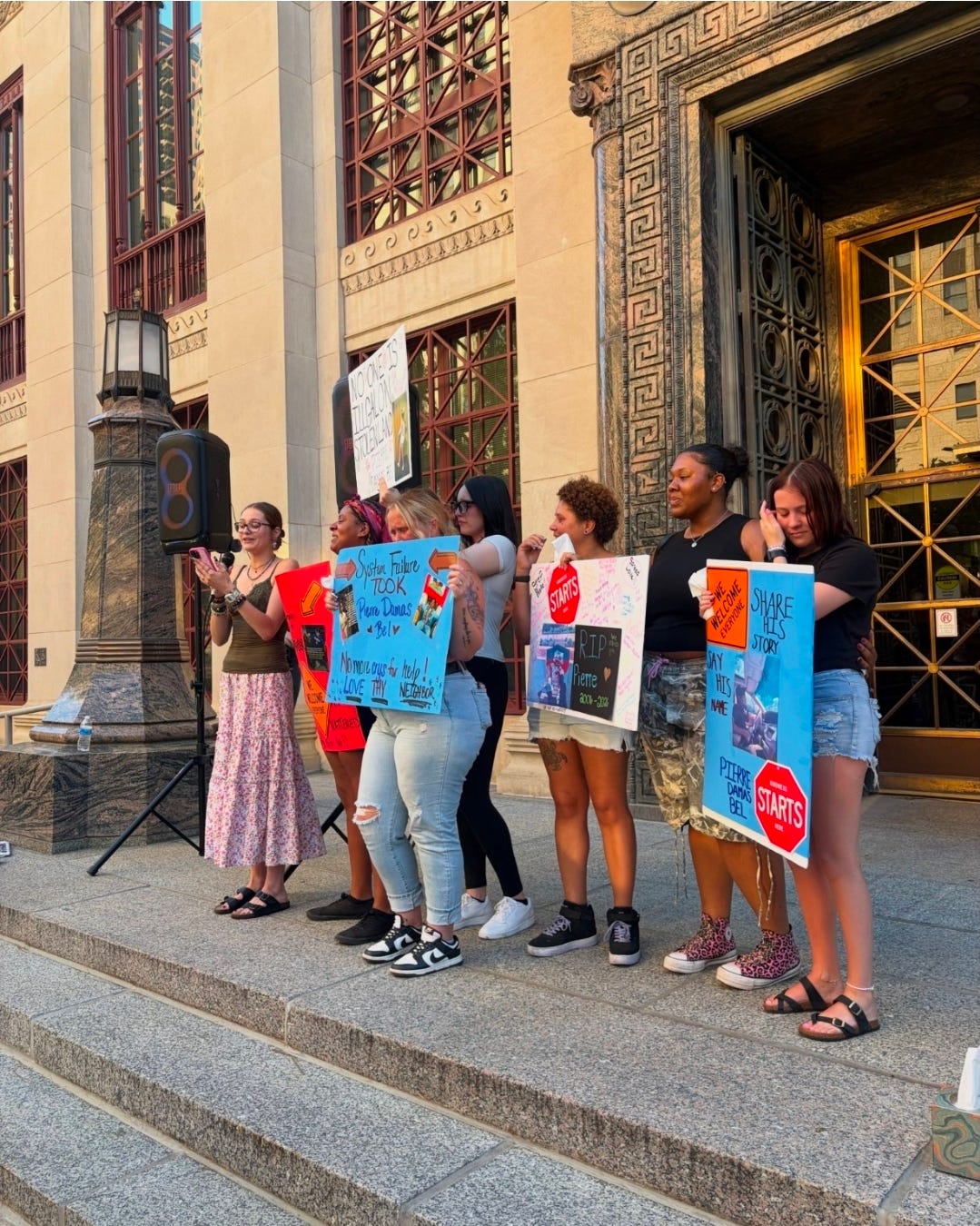
Friends and classmates of Pierre Damas Bel stood outside the Clark County Courthouse carrying his photographs and memorial boards while demanding an end to ICE ankle monitoring. Their action centered the young man they knew and the government tracking device Pierre had said brought shame and humiliation into the life he was trying to build.
Pierre was 20 years old. He had graduated with honors from Springfield High School, played soccer, participated in Junior ROTC and entered Wright State University with plans for his future. He had come to the United States pursuing an education, and his family and community described a student whose life in Ohio was still taking shape.
On July 29, Immigration and Customs Enforcement fitted Pierre with a GPS ankle monitor while his immigration proceedings continued. ICE has confirmed that he entered the United States with government permission in 2024 through the CBP One process. The agency’s surveillance was physically attached to Pierre’s body as he moved through college and daily life.
Pierre documented the effect himself. He wrote publicly about the shame of wearing the monitor and emphasized that he had come to the United States to study, not to commit crimes. His father, Pierre Ronal Bel, later said Pierre was embarrassed to wear the device around classmates and sought to have it removed.
His family says the damage deepened. Pierre’s father said his son felt degraded by the monitor and became increasingly distressed. Family members and advocates said it interfered with activities that mattered to him, including soccer, while his father said Pierre was also being bullied because he wore it.
🎥 Friends and community members speak for Pierre Damas Bel at the courthouse gathering.
Pierre’s experience unfolded inside a wider expansion of electronic monitoring in Springfield’s Haitian community. Ohio public-media reporting found that hundreds of Haitian immigrants in the city had been ordered to wear GPS devices as their immigration protections changed. Pierre’s friend Yola Lamarre publicly condemned the practice as dehumanizing and called for the program to end.
On August 31, Pierre called his father in distress. His father said Pierre told him he was struggling mentally because of the bullying and was urged to come home so they could talk. Pierre later stopped along Interstate 70, entered traffic and was struck by a tractor-trailer. The Ohio State Highway Patrol said he died at the scene and that the death remained under investigation. His family has described his death as suicide.
Pierre’s family has connected his deterioration to what happened after ICE placed the monitor on him. His father said Pierre felt as though he was being treated “like an animal” and believes the despair surrounding the device contributed to his death. That causal judgment remains the family’s account, while the record establishes that ICE imposed the monitor, Pierre publicly described its effect on him, and his father said Pierre was seeking relief before he died.
At the courthouse, Pierre’s friends and classmates made that history impossible to bury inside immigration paperwork. They carried his photographs, demanded justice in his name and called for the ankle-monitor program to end. Their protest confronted the same system Pierre had described as degrading while he was still alive.
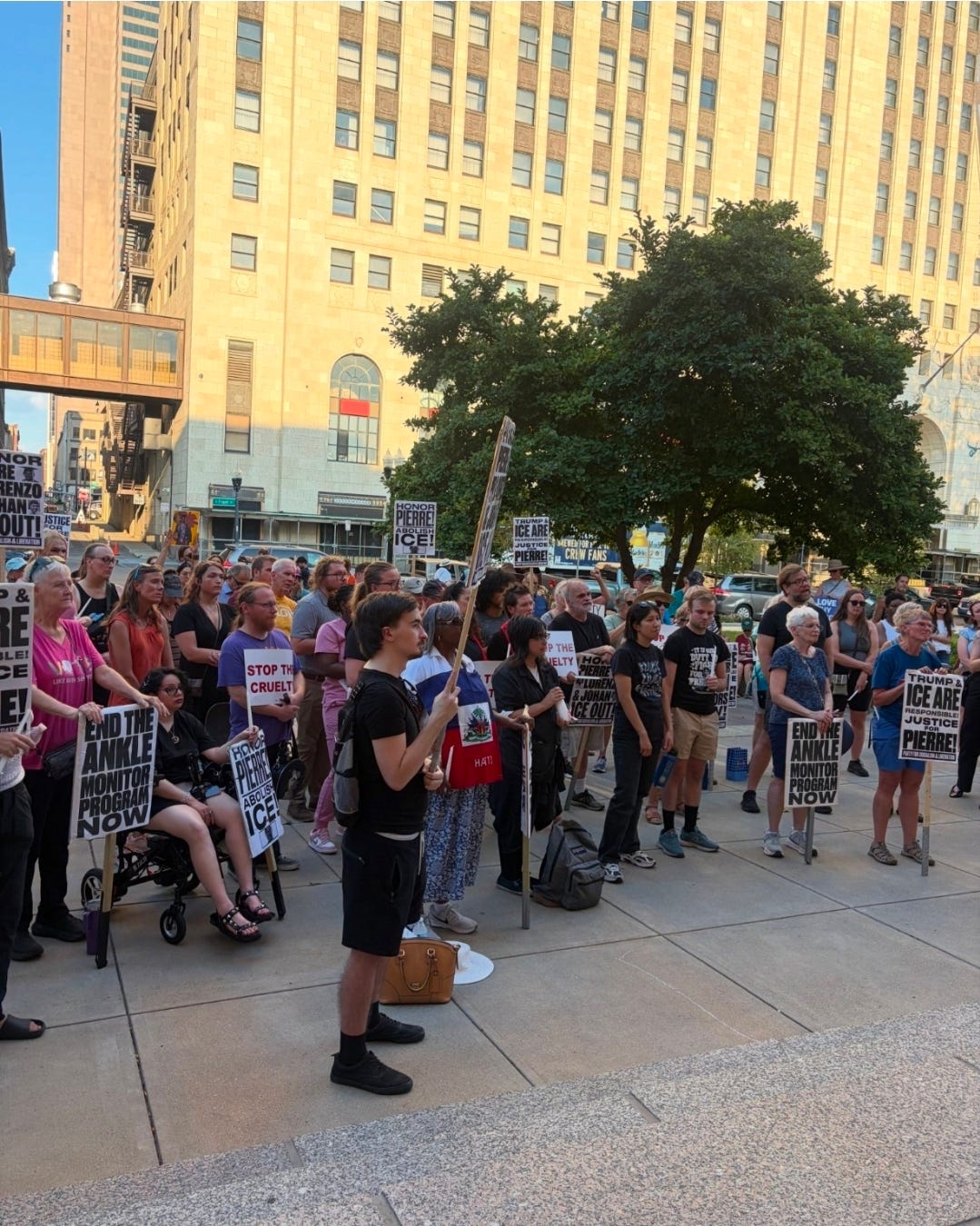
ICE has rejected responsibility for Pierre’s death while confirming that it placed him under electronic monitoring during his immigration case. The agency’s denial does not alter Pierre’s own documented account of living with the device or his family’s description of what happened to him while he wore it.
The accountability question now extends beyond the decision to monitor one student. Pierre’s case shows what happens when immigration surveillance is attached to a person’s body and carried into school, athletics, friendships and every other part of ordinary life. His friends and classmates are demanding an end to a system that can publicly mark immigrants with a device associated with criminal punishment even when they have not been convicted of a crime.
Pierre came to the United States to pursue an education and a future. His friends are now standing outside a courthouse holding photographs of the young man who should have been continuing that life, and they are demanding that another person not be forced to carry the same burden he described before his death.
Americans Against ICE documents ICE harm, provides funds and resources to people and families directly impacted by immigration enforcement, and keeps cases like Pierre’s in the public record after the headlines move on. Upgrade to a paid subscription to help sustain that work.