

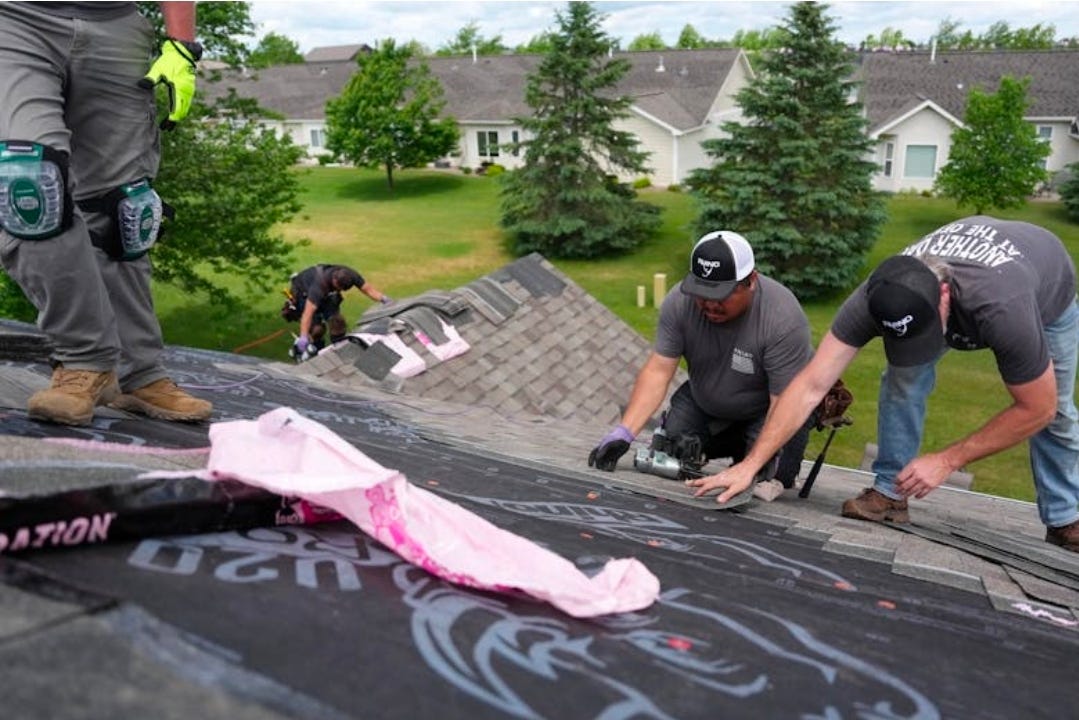
A roof-repair job in Bemidji became a scene of fear when federal immigration agents surrounded a housing development where immigrant workers were repairing storm-damaged homes, sending roofers running from rooftops and into nearby woods as residents watched from their windows and yards.
The workers had been repairing roofs at the Villas at Vista North, a subdivision of 127 townhouses, after last summer’s derecho ripped through the area with winds reported at 120 miles per hour, destroying millions of trees and damaging homes. The work was part of a long recovery process for homeowners who had gone through insurance claims and waited for repairs. Instead, residents saw federal agents swarm the site, workers scatter, and a neighborhood repair project turn into an immigration raid.
Ryan Lamusga, owner of the veteran-owned Rhino Roofing and Siding, said he had assembled a crew of about 30 men for the Bemidji work. After the raid, he said his crew was reduced to seven. Lamusga said more than 20 workers were in custody and that workers jumped from roofs and ran when agents arrived, but the neighborhood had been surrounded.
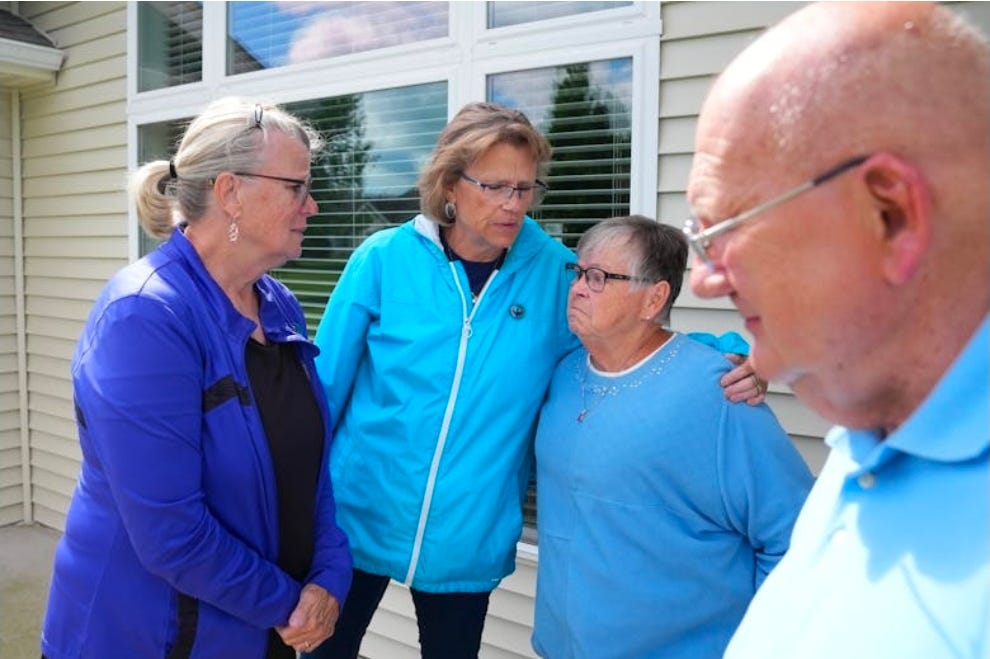
The harm was not abstract for the people who witnessed it. Patty Eichstadt, 79, said she saw a young man jump from her roof and run. She described crying and yelling at ICE to leave, saying the workers were “just kids” and “just working.” Eichstadt said she had spoken with workers in Spanish while they were working on her roof and remembered them singing as they worked. What shook her was not only that agents came, but that the workers she had seen as happy and working were suddenly being chased, detained, and removed.
Eichstadt said one worker told agents he had papers, but was taken anyway. Her account matters because it cuts directly against the clean official language that often follows immigration raids. The public is told these actions are targeted, precise, and limited. Residents described something far more chaotic: men running, agents moving through a residential neighborhood, and workers pleading that they had documentation while still being taken into custody.
Other residents described the same sense of shock. Sisters and retired teachers Jean Weyer and Betty Novotney said they were stunned to see masked agents moving through the neighborhood. Novotney said the scene was not what the country should be doing, saying people should be working together rather than being ripped apart. Weyer said the roofers had been working since early morning and were rarely off the roof before she suddenly saw several of them running past her window with ICE agents behind them.
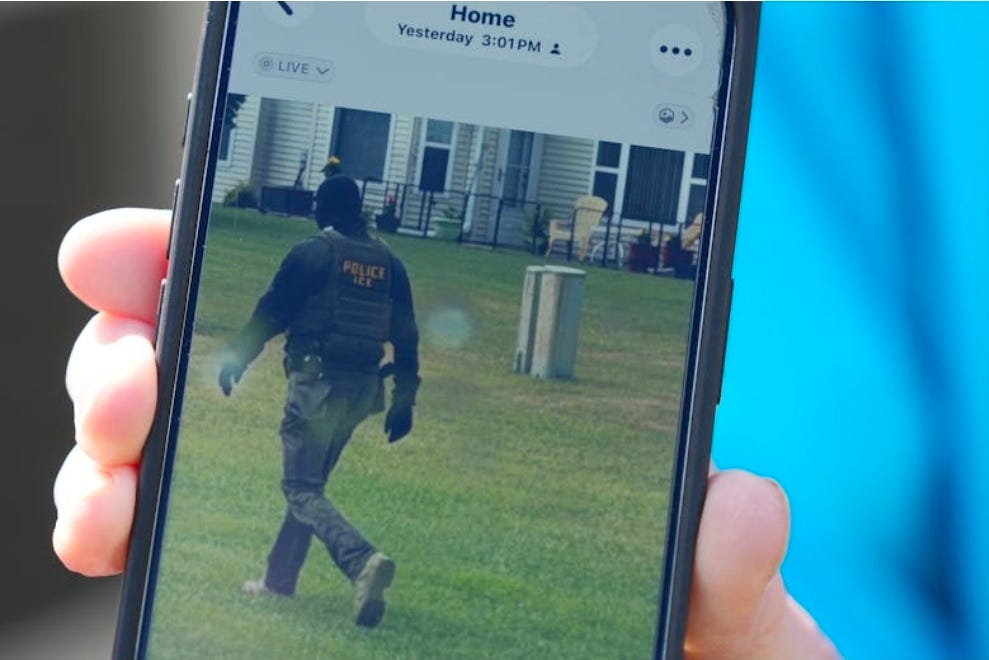
Weyer said she heard some workers yelling that they had cards and papers, but that they were still taken. Her account does not prove every person detained had lawful status, and it should not be stretched beyond what witnesses reported. But it does show the central accountability problem: residents saw a raid that appeared broader and more frightening than the official framing of a narrow enforcement action.
The detention trail also matters. Lamusga said he received an updated list from a federal agent showing that 11 men from Mexico were transferred to the Crow Wing County jail and 11 were transferred to the Kandiyohi County jail. Both counties are among the Minnesota counties that contract with ICE to hold detainees. Lamusga said he was still trying to locate other workers and bond people out while a much smaller crew continued the roofing work.
A raid does not end when agents leave the neighborhood. It continues in jail transfers, bond efforts, missing information, frightened families, interrupted jobs, and communities trying to figure out where people were taken. For the workers, the raid meant detention. For the neighborhood, it meant watching men flee from rooftops. For the employer, it meant trying to locate people in a detention system that can quickly scatter workers across county jails.
Bemidji city officials said local police did not coordinate with or participate in the federal operation. Mayor Jorge Prince said no requests were made of the Bemidji Police Department, and that because the action was a federal immigration operation, the city had not been given additional information. The city also confirmed a separate ICE traffic stop early Friday where an unknown number of people were detained.
ICE did not respond to a request for comment about the raid. State Rep. Bidal Duran, a Republican from Bemidji, said he spoke with ICE officials who described the action as focused on specific people with prior removal orders or other immigration violations. He said ICE told him no additional operations were planned in the Bemidji area and called it a precise, intelligence-driven effort rather than a broad sweep.
That official framing belongs in the record, but it cannot be allowed to erase what residents and the employer described. Lamusga said federal agents were detaining people and then letting some go after checking whether they were legal, which he said meant workers were being stopped based on how they looked. Witnesses saw roofers running past windows. Neighbors reported people hiding in their yards. Those are not minor details around the edges of a clean operation. They are the lived reality of how the raid landed on a neighborhood.
The raid also exposes a labor pattern underneath the enforcement scene. These workers were not hiding from work. They were doing it in public, on roofs, in a town still repairing storm damage from a destructive derecho. Construction, roofing, agriculture, cleaning, food service, and disaster recovery all rely heavily on immigrant labor, while the same workers remain visible targets for immigration enforcement. The economy uses their labor, then enforcement systems turn that visibility into vulnerability.
Lamusga said the roofing industry relies on immigrant workers and acknowledged that undocumented workers are part of the industry. His statement reflects a broader contradiction within immigration enforcement: immigrant labor is treated as necessary when homes need repair, food needs harvesting, buildings need cleaning, and disaster damage needs rebuilding, but the workers themselves can be criminalized and removed in public displays of federal power.
That contradiction is why the Bemidji raid is not just a local story about one job site. It is a worker story, a community story, and an immigration enforcement story. It shows what happens when federal agents bring detention power into a residential neighborhood where people are repairing homes, singing on rooftops, talking with residents, and trying to earn a living.
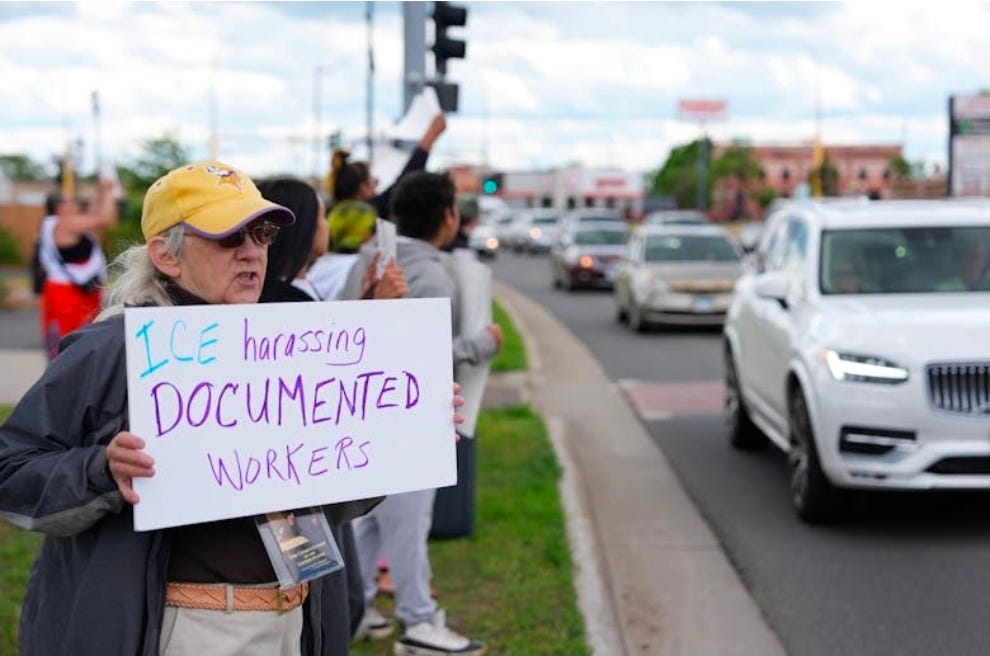
The protest that followed made clear that some Bemidji residents understood the harm as more than paperwork. People gathered near the Paul Bunyan and Babe statues with signs and chants saying immigrants were welcome. One resident held a sign that read “ICE harassing documented workers.” Another described the raid as “malarkey” and pointed to the country’s own immigrant history. The public record may not confirm every claim made in protest, but the community response showed that residents did not experience the raid as distant federal procedure. They experienced it as something that entered their neighborhood and hurt people they had just watched working.
For Americans Against ICE, the public record here is not only that federal agents detained workers. It is that a repair job became a detention scene, residents saw men run from rooftops, neighbors cried and tried to help, and the official language of a targeted operation now sits beside witness accounts of fear, confusion, and workers saying they had papers.
That is the record that should not be softened. ICE did not simply appear in a file or a press statement. ICE arrived in a neighborhood where people were repairing storm damage. Workers ran. Residents cried. Men were taken to county jails that contract with ICE. And a community that thought this kind of enforcement might happen somewhere else watched it unfold outside its own homes.
This kind of reporting matters because ICE raids are not only federal actions on paper. They land in neighborhoods, on job sites, on families, on workers, and on communities forced to watch fear unfold in real time.
Americans Against ICE documents the harm behind immigration enforcement — the raids, detention systems, county jail contracts, labor targeting, family separation, and public trauma that official statements often flatten or erase.
Support this work by upgrading to a paid subscription.
It is a two sided sword. First of all who knows the specific requirements when workers are permitted to come to do work in the US—is it to be assumed that the companies who requested these men should also secure there paperwork in an office so as to bypass this seemingly uncomplicated procedure.
But the ironic thing, is seeing all those seniors terrified at the process of criminalizing honest hardworking people ‘working’.
They should be compensated for pain and suffering. They do have some kind of disability that would qualify them for immense pain and suffering.
Treating them like cattle lassoing rhrm binding hands and feet and on and on and on it goes. A witch has landed on the shores and it’s not those workers. They were doing no harm to no soul. Just happy to earn wages for their families as we all do.
What angers me, besides the horrendous actions of ICE, is the fact that millions of Americans voted for deporting immigrants and actually cheer these actions. They are fine with this obscene ethnic cleansing and concentration camps. I'm not sure if this country can ever heal the division between those of us who hate what is happening, and those who approve of it.