

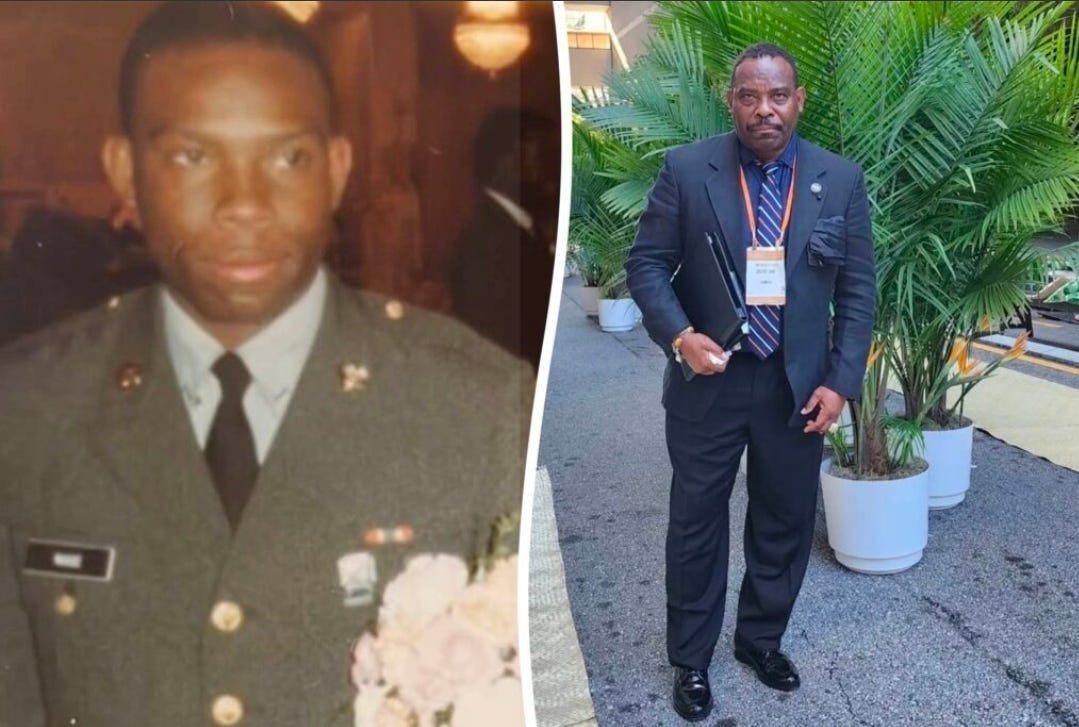
Godfrey Wade served in the U.S. Army, lived in the United States for more than 50 years, and built a family here. His children and grandchildren made their lives in this country. Then ICE deported him to Jamaica after a traffic stop while his family and attorney were still fighting for a hearing.
That is not just one immigration case. It is a betrayal story. Wade gave service to the United States, spent most of his life here, and still reached a point where ICE could reduce him to a removal file. The country accepted his labor, his years, his military service, and his roots, then discarded him once the deportation machine reached his name.
The public is often told to treat these cases as technical disputes. There was a traffic stop. There was an old removal order. There were old legal issues. There was paperwork. But that framing is how the harm gets cleaned up. Wade’s case matters because it exposes what the system can do to a person after decades of life in America. It can take a veteran, narrow the record to the parts that justify removal, and send him away from the family and country he had lived in for half a century.
Wade’s attorney said an appeal was pending when he was deported. His family was still fighting for a hearing. That detail matters because ICE did not wait for the family’s fight to reach a clean public resolution. ICE moved first. The hearing, the appeal, the family’s objections, and the public pressure all became things trying to catch up after the government had already removed him.

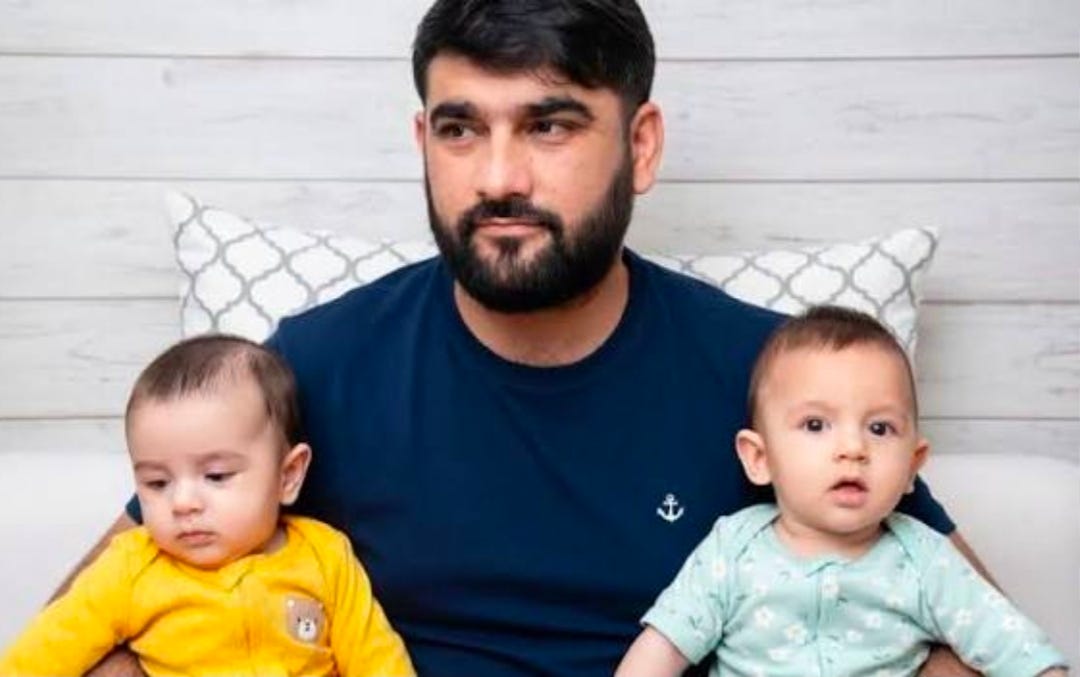
The pattern does not stop with Wade. Mohommad Nazeer Paktyawal shows another side of the same abandonment. Paktyawal was an Afghan father of six who had worked with U.S. Army Special Forces. He was part of the human network the United States relied on overseas, one of the people whose labor and risk helped U.S. forces operate in Afghanistan. After the U.S. withdrawal, he came to the United States with his wife and children.
In March, ICE detained him in Texas while he was taking his children to school. Less than 24 hours later, he was dead in ICE custody.
That sequence is devastating because it compresses the betrayal into one day. A father who helped U.S. forces was walking his children to school. ICE took him. His family lost him before a full day passed. Whatever official language is used around detention, processing, medical collapse, or custody review, the public record still shows the same core truth: he was tied to U.S. military service, ICE detained him, and he died almost immediately afterward.
Paktyawal’s death should not be treated as a footnote in immigration enforcement. It belongs inside the same pattern as Wade because both cases expose what happens when the country’s promises collapse at the point of ICE custody. One man served in the U.S. Army and was deported after more than 50 years in America. Another helped U.S. forces overseas and died in ICE custody less than 24 hours after detention. These are not the same facts, but they are the same moral structure: the United States used service, trust, and sacrifice, then abandoned the people connected to that service when they became vulnerable to immigration enforcement.
The data shows these cases are not isolated. Federal data released by Sen. Elizabeth Warren and Rep. Delia Ramirez says ICE arrested 125 veterans in the first year of Trump’s second administration, placed 34 former military members into deportation proceedings, and attempted to deport 282 veterans and immediate family members overall. Those numbers matter because they move the story from individual outrage into documented pattern.
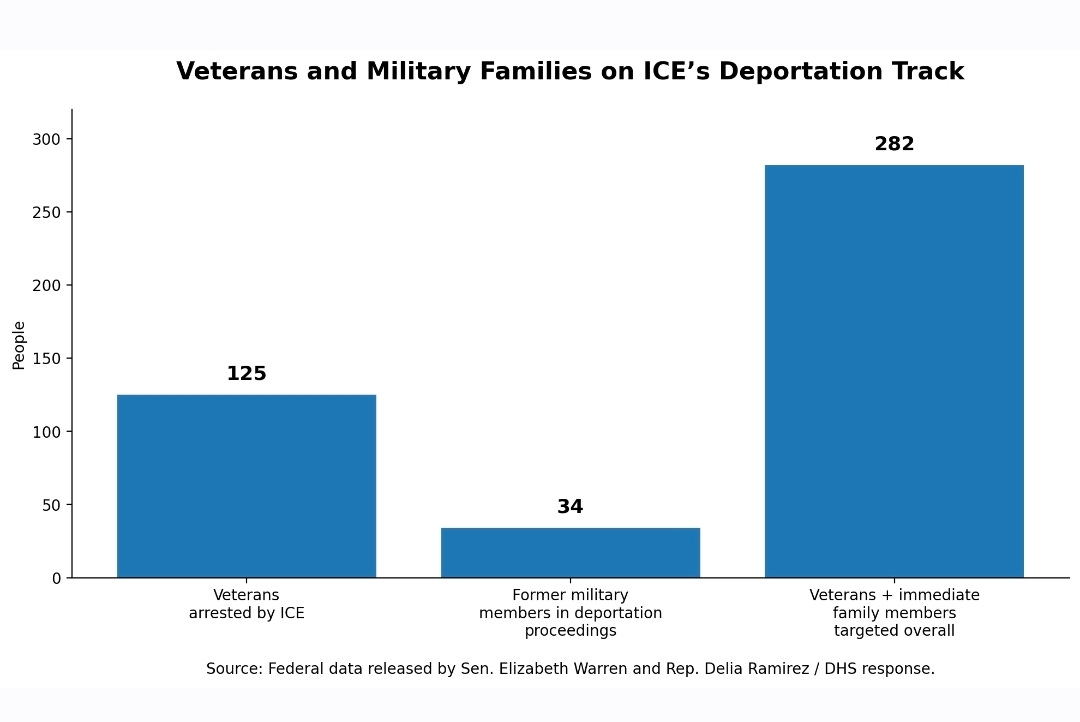
This chart should come after Wade and Paktyawal because the people have to come before the numbers. Wade shows what deportation looks like when it reaches a veteran with decades in America. Paktyawal shows what ICE custody can mean for a U.S. military ally and his children. The data then shows that these cases are part of a larger track already moving through veterans and their families.
The family layer makes the pattern harder to ignore. Annie Ramos, the wife of U.S. Army Staff Sgt. Matthew Blank, was detained by ICE after trying to register as a military spouse at Fort Polk in Louisiana. She reportedly had no criminal record and had been brought to the United States as a child. The moment that should have connected her to the formal military-family system became the moment ICE took her.
That case cuts through another promise. Military families are constantly used in public language as symbols of sacrifice, duty, and national loyalty. But Ramos’s detention showed how quickly that language collapses when immigration enforcement enters the room. Marriage to a service member did not create safety. A military base did not create safety. The process of registering as a spouse did not create safety. The same government that depends on military families for public honor allowed ICE to turn that family into another immigration case.
[INSERT OPTIONAL PHOTO HERE: Annie Ramos / Matthew Blank if sourced cleanly.]
The pattern is not that every case has identical facts. The pattern is that military service, military-family status, long-term residence, family roots, and documented sacrifice do not stop ICE once the deportation machine starts moving. That is the deeper betrayal. The country asks people to serve, to assist, to sacrifice, to build families, to trust its promises, and to believe that service means belonging. Then, when ICE enters the case, those promises can become irrelevant.
This is why the article cannot be reduced to Wade alone. Wade is the doorway. His deportation shows what the system can do to a veteran who spent more than five decades in the United States. Paktyawal’s death shows what can happen to a military ally once ICE has custody. Ramos’s detention shows how military spouses and families are also vulnerable. The Warren and Ramirez data shows the machinery is already reaching beyond single headlines.
Now ICE has more capacity to move.
The expansion of ICE funding matters because a documented deportation track becomes more dangerous when the agency running it receives more money, more detention capacity, and more enforcement power. The Brennan Center has reported that ICE’s budget boom is reshaping immigration detention, with major new funding expanding the agency’s reach and detention infrastructure. That means the pattern documented in the veteran and military-family data is not happening inside a shrinking system. It is happening inside a growing one.
That is the warning. The known numbers are already large. The machinery is being expanded around them. More money, more beds, more facilities, and more enforcement capacity mean more cases can be moved before families can force the public to look. The danger is not only what has already happened to Wade, Paktyawal, Ramos, and others. The danger is that the system is being built to make more of these cases possible.
The Trump administration keeps selling its deportation campaign through the language of public safety. But veteran and military-family cases break that frame. Wade was not a stranger to this country. Paktyawal was not disconnected from U.S. military service. Ramos was not outside the military-family structure. These are people whose lives were tied directly to the United States, its military, its promises, and its idea of service.
That is what makes the abandonment so severe.
A country cannot claim service as sacred while allowing ICE to deport veterans after decades of residence. It cannot celebrate military allies while letting one die in immigration custody less than 24 hours after detention. It cannot praise military families while detaining spouses as they try to register inside the military system. It cannot wrap itself in the language of loyalty while treating the people connected to that loyalty as disposable once immigration paperwork becomes useful against them.
Wade’s case should be read as a warning about long-term residence. More than 50 years in the United States did not protect him. His Army service did not stop ICE from removing him. His children and grandchildren did not keep the government from sending him away. His attorney’s fight did not stop the deportation from happening first.
Paktyawal’s death should be read as a warning about military alliance. Working with U.S. forces did not protect him from detention. Being a father did not protect him from being taken while his children were going to school. The debt the United States owed him did not stop him from dying in ICE custody.
Ramos’s detention should be read as a warning about military-family status. The connection to a U.S. service member did not prevent ICE from taking her. The military setting did not shield her. The act of trying to formalize her place as a spouse became part of the path into detention.
Together, these cases show a system that can absorb service and erase obligation. It can take what it needs from people, then abandon them when they are no longer politically useful. It can honor uniforms in speeches while deporting veterans in practice. It can praise military families while detaining them. It can depend on foreign allies in war, then leave them exposed in custody.
This is not a contradiction inside Trump’s deportation machine. It is part of how the machine works. It narrows people to the record that helps justify removal. It separates them from the service, sacrifice, family, and history that would make the public hesitate. It turns veterans into cases, spouses into detainees, allies into custody files, and children into collateral damage.
That is why the public record has to hold these cases together. If Wade is treated as one old deportation case, the pattern weakens. If Paktyawal is treated only as one custody death, the pattern weakens. If Ramos is treated as one spouse’s detention, the pattern weakens. But together, with the federal data, they show a developing track: veterans, former service members, military allies, spouses, and relatives are already being pulled into ICE’s system.
The country cannot keep calling these cases isolated while the numbers are sitting in the record. ICE arrested veterans. ICE placed former military members into deportation proceedings. ICE targeted veterans and immediate family members. Those are not rumors. Those are federal data points released by lawmakers. The named cases show what the numbers mean when they reach a family.
Godfrey Wade should be home with his family. Mohommad Nazeer Paktyawal should be alive with his wife and children. Military spouses should not be detained while trying to register through the system their families serve. Veterans and their relatives should not be converted into deportation statistics by the same government that invokes military service whenever it wants public applause.
The record is already clear enough to name the pattern. Service did not protect them from ICE. Neither did family, time, loyalty, sacrifice, or the promises this country made when it needed them.
And with ICE expanding, that pattern cannot be left buried inside scattered reports.
Keep This Pattern in the Record
Americans Against ICE exists to document what ICE does after the slogan disappears: the veterans it removes, the military families it breaks, the allies it betrays, the people it cages, and the deaths it tries to bury inside custody paperwork.
Godfrey Wade’s deportation, Mohommad Nazeer Paktyawal’s death, Annie Ramos’s detention, and the federal data on veterans and military families all point to the same truth: this is not a clean enforcement system. It is a deportation machine expanding through people the country once claimed to honor.
Support the documentation, investigation, and public-pressure work that keeps these cases from disappearing into files.
Subscribe to Americans Against ICE ↓
Sources:
1/ Sen. Elizabeth Warren / Rep. Delia Ramirez — DHS veteran and military-family deportation data. 2/ Brennan Center — ICE budget expansion.
Related RESIST | FIGHT reporting
Mohommad Nazeer Paktyawal.

I cannot say it enough - fuck ICE 🤬🤬🤬🤬🤬🤬
When I open an article from your newsletter to my email, when I try to share it on Substack it says I’m not signed in. (I am) I have to go to your page and find it in order to share it.
While that happens with some Substack accounts, yours didn’t used to do that.
Did you change a setting or something?