

Federal personnel were reportedly told that the FBI would stop investigating killings involving ICE agents, shifting that work toward Homeland Security Investigations. HSI is an investigative component inside ICE, meaning the agency whose officers use fatal force could move closer to controlling the evidence, interviews, scene reconstruction, agent statements, and investigative record used to test its own account.
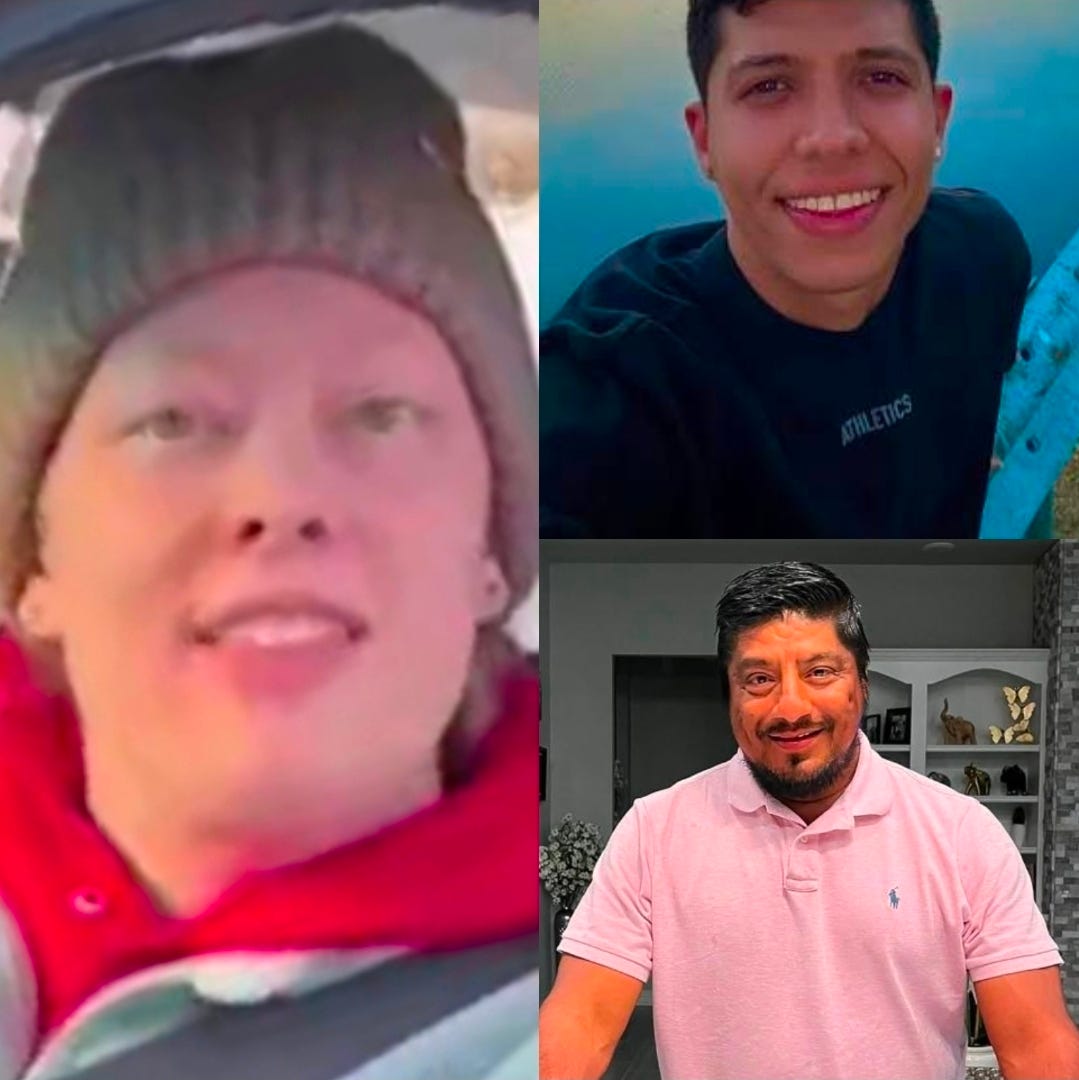
This is not an abstract dispute over which federal acronym receives a case. Fatal ICE encounters often begin with the agency issuing an immediate public claim that an officer faced a deadly threat. When the incident involves a vehicle, ICE can describe that vehicle as a weapon and identify the person its agents killed as the aggressor before witnesses, local investigators, forensic evidence, or independent footage are available. Renee Good’s killing showed what that power can cost, while the fatal shootings of Lorenzo Salgado Araujo and Johan Sebastián Durán Guerrero show why removing another layer of scrutiny now is so dangerous.
Renee Good Showed What Evidence Control Costs
After an ICE agent killed Renee Good, federal authorities controlled central evidence while Minnesota investigators were denied timely access. Her damaged SUV, recordings, witness statements, hard drives, and other materials remained under federal control for months. Minnesota ultimately sued federal agencies seeking access before prosecutors finally received substantial portions of the evidence in July.
That delay mattered because ICE’s justification depended on the claim that Renee used her vehicle against an agent. The vehicle itself was evidence. The position of the agent, the condition and movement of the SUV, recordings from the scene, witness accounts, and the agent’s statements could either support or undermine the official narrative. Yet the authorities advancing that narrative also controlled much of the material needed to test it.
Minnesota prosecutors now possess the SUV and previously withheld investigative records, allowing their review to continue. That transfer does not erase the months in which state investigators were forced to work without evidence held by the federal government. It confirms why possession matters: whoever controls the physical record controls how quickly another authority can challenge the agency’s version of a killing.
Renee’s case established the warning before the reported policy change arrived. ICE cast the woman its agent killed as the threat. Federal authorities retained the evidence. State investigators were kept outside. Federal civil-rights accountability did not move forward with the urgency demanded by a fatal shooting. By the time evidence reached Minnesota, the government’s story had already occupied the public record for months.
The Vehicle-as-a-Weapon Story Keeps Repeating
ICE later relied on closely related vehicle-threat claims after its agents killed Lorenzo Salgado Araujo in Houston and Johan Sebastián Durán Guerrero in Maine.
The three killings are not identical, and they should not be flattened into one set of facts. The repeating mechanism is the speed and consistency with which ICE portrays a vehicle as an immediate deadly weapon, followed by disputes over what agents actually faced and limited independent evidence available to the public.
That pattern matters because an agency statement can define the dead person before an investigation begins. Someone driving to work becomes a person who allegedly tried to run over an officer. Someone attempting to leave a surrounded vehicle becomes the author of the threat. The agent’s decision to fire is placed inside a self-defense frame before the public knows where each person stood, how the vehicles moved, what warnings were given, or whether officers created the danger they later invoked.
Lorenzo Salgado Araujo Was Not the Target
Lorenzo Salgado Araujo was a construction worker, father, and longtime Houston resident who was driving a crew to a job site when an ICE agent shot him on July 7. He was not the target of the enforcement operation. ICE said he attempted to ram an agency vehicle and drive toward an officer, but witnesses disputed whether agents were positioned as the agency claimed.
The difference between those accounts is not minor. It determines whether an agent fired to escape an unavoidable threat or whether officers surrounded a vehicle, escalated the encounter, and then used the resulting movement to justify lethal force.
No officer body-camera footage recorded Lorenzo’s shooting. Video from other sources and witness testimony therefore carry even greater importance, as does immediate access for investigators outside ICE. Houston officials and prosecutors have sought an independent accounting while witnesses central to the case remained exposed to the same immigration system whose agents were involved in the killing.
Lorenzo cannot be reduced to another name supporting a policy argument. His family lost a father who was heading to work. His coworkers became witnesses to a fatal federal shooting. His death demonstrates the human consequence when ICE supplies the accusation and families must fight for anyone outside the agency to test it.
Johan Sebastián Durán Guerrero Was Not the Target
Days later, ICE agents killed Johan Sebastián Durán Guerrero in Biddeford, Maine. He was a young Colombian father with federal work authorization and was not the person agents were seeking. ICE again described a vehicle as the threat, while witnesses and reporting raised questions about how agents surrounded and confronted him before shots were fired.
Johan’s three-year-old daughter was inside the nearby home and, according to reporting, witnessed the shooting. No officer body-camera footage captured what happened. The agency’s public description therefore entered the record without the most direct evidence its own officers could have created.
The absence of body-camera footage in both July shootings makes independent control more essential. When agents do not record their own use of force, outside investigators must be able to secure vehicles, surveillance video, firearms, communications, forensic evidence, witness testimony, and unfiltered agent statements before the agency’s narrative hardens into the official conclusion.
HSI Is ICE
Homeland Security Investigations is an investigative component of ICE, not an outside agency reviewing ICE conduct.
That fact removes the bureaucratic camouflage from the reported change. Responsibility is not merely moving between federal offices. It is reportedly moving away from the FBI and toward an investigative branch housed inside the agency whose personnel may be implicated.
The danger is control. HSI could be positioned near the beginning of the evidence chain, determining what is collected, how witnesses are approached, which agent accounts are preserved, what material is shared, and which questions define the investigation. Even when evidence is eventually transferred elsewhere, those first decisions shape what remains available. ICE should not control investigations into killings or possible crimes committed by ICE agents, and an internal component cannot replace outside civil-rights scrutiny merely because it carries an investigative title.
What Disappears When the FBI Is Removed
Renee Good’s case does not justify treating the FBI as a reliable hero. Federal handling of her killing already demonstrated delay, exclusion, and resistance to state scrutiny.
But removing the FBI does not correct those failures. It eliminates even the formal federal route with jurisdiction to examine possible civil-rights violations by federal agents. An investigative component inside ICE cannot replace an outside authority capable of asking whether the agency’s own personnel violated the rights of the person they shot.
Evidence gathered after a fatal killing can reveal whether officers escalated the encounter, whether force was necessary, whether the person was attempting to escape rather than attack, whether an agent fired after the threat had passed, or whether the public account was false.
Removing the FBI layer narrows the investigation before the evidence is fully examined. The inquiry can remain centered on ICE’s accusation against the person killed instead of what ICE did to that person.
ICE Could Control the Story and the Evidence
ICE’s first statement after a shooting is not a neutral record. It is the agency’s defense of its officers.
If HSI then controls the investigative process, the public statement and the evidence review exist under the same institutional roof. The same agency that names the dead person as the aggressor could shape how that accusation is examined and what evidence reaches state prosecutors, families, journalists, and the public.
Renee Good’s family and Minnesota prosecutors already lived through the consequences of delayed access. Lorenzo’s family is demanding an independent investigation while witness accounts contest ICE’s justification. Johan’s family faces the same fundamental question without officer body-camera footage: who will test ICE’s story when ICE is positioned to investigate ICE?
The Public Denial Does Not Restore Oversight
DOJ and DHS publicly said their investigative relationship had not changed and that the FBI would continue investigating under agency policy. Their statement did not release the reported written instructions, identify a binding process governing the next fatal ICE killing, or guarantee independent FBI and civil-rights scrutiny when an ICE agent kills someone.
That public assurance does not replace a process that places evidence outside the agency involved, grants state authorities immediate access, preserves civil-rights jurisdiction, and prevents ICE from controlling both the accusation and the inquiry.
The Next ICE Killing Could Be Investigated by ICE
After the next fatal ICE shooting, someone must secure the scene, collect the weapons, obtain surveillance footage, preserve vehicle data, interview the agents separately, identify witnesses, examine communications, test the agency’s use-of-force claim, and decide whether evidence supports criminal or civil-rights scrutiny.
Someone must also tell the family what happened and ensure local prosecutors are not forced to wait months for evidence.
If HSI controls those decisions, ICE will be positioned to investigate a killing ICE has already defended publicly. The same institution could name the dead person as the aggressor and determine how that accusation is examined.
Renee Good’s killing showed what federal evidence control already cost: months without state access and an official narrative built around the woman an ICE agent killed. Lorenzo Salgado Araujo and Johan Sebastián Durán Guerrero were then killed under disputed vehicle-threat claims while no officer body cameras recorded what happened.
Removing the FBI does not repair that system. It places the next investigation closer to the agency whose agents pulled the trigger. When ICE controls the accusation, the evidence, and the inquiry, oversight has not been transferred. It has been eliminated.
Families should not have to fight the agency that killed someone they love for access to the evidence.
Support Americans Against ICE’s work documenting fatal force, blocked investigations, withheld records, and the systems protecting immigration agents from accountability.