

Reports say ICE agent Jonathan Ross, who shot and killed Renee Good, is back on active duty in another state while the FBI probe remains stalled.
That sentence should stop the country cold.
Renee Good is dead. Jonathan Ross is working again. There are no criminal charges. There was no public accountability. There was no visible consequence that matched the taking of a human life. Instead, the agent who shot and killed an unarmed mother during a Minneapolis ICE operation was reportedly relocated, returned to duty, and placed back inside the same federal machinery that has spent months avoiding a full reckoning.
This is not an accountability delay. This is protection.
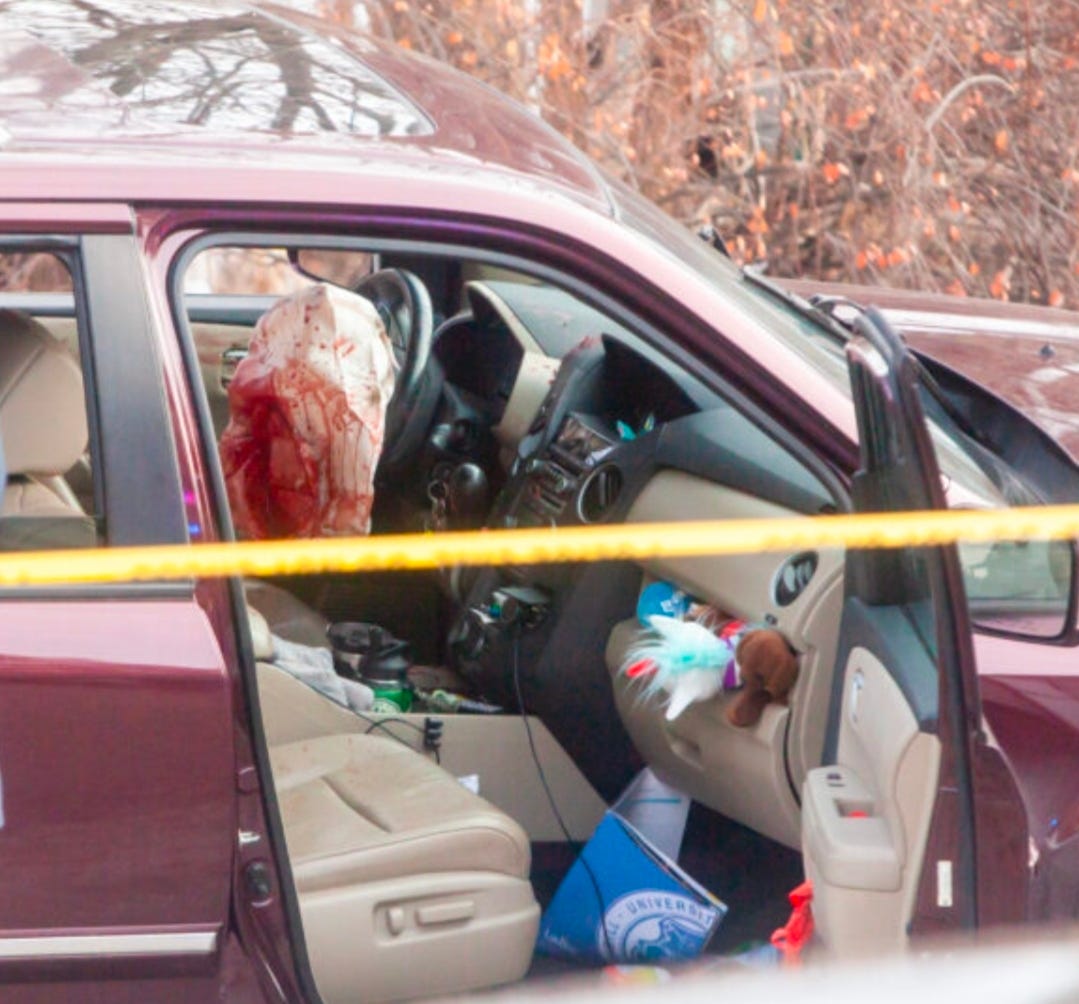
Good, a 37-year-old mother, was shot on January 7 during an ICE operation in Minneapolis. Ross fired into her vehicle as she tried to drive away. She was struck in the arm, breast, and head. Her car crashed into a parked vehicle with her dying inside. The killing ignited outrage because the basic facts were impossible to soften: a federal immigration agent shot an unarmed woman, and the system immediately began moving around the consequences.
Now the new reporting makes the scandal sharper. Ross reportedly received only three days of administrative leave, faced no criminal charges, was quietly moved out of Minnesota, and returned to active duty in another state while the investigation remains unresolved. That is not what accountability looks like. That is what institutional preservation looks like.
The public is supposed to accept a familiar script. A federal agent kills someone. The agency asks for patience. The investigation stretches on. Officials refuse to answer direct questions because the matter is “active.” Internal review waits on another agency. The victim’s family is told to wait. The public is told to wait. Meanwhile, the agent keeps a job, keeps protection, and keeps moving through the system.
That script is the problem.
Renee Good’s family does not have the luxury of an open-ended process. They do not get to pause the grief while the FBI decides when to finish. They do not get to relocate the loss to another state. They do not get to quietly return to normal. Renee Good remains dead while Jonathan Ross reportedly remains employed, active, and protected by the delay.
That is the accountability gap this article is about.
The question people keep asking is simple: why is the agent who shot and killed Renee Good back on duty instead of facing charges or full public accountability? The answer is not one missing document or one slow investigation. The answer is a chain of institutional protection. The FBI probe is stalled. ICE’s internal review is frozen because it cannot fully move until the FBI process concludes. Minnesota investigators were blocked from full access. Federal officials controlled the process from the beginning. The result is a dead woman, a shielded agent, and a public forced to watch the machinery protect itself.
That chain matters because it explains how accountability disappears without anyone having to say they are killing it.
First, the FBI investigation stalls. Then ICE says its own internal affairs process cannot move. Then state investigators are cut out or weakened. Then agency leaders refuse public answers because the investigation is still active. Then months pass. Then the agent returns to work. Then the family is still waiting, the public is still waiting, and the institution has bought itself time.
Time is not neutral here.
Delay protects the agent. Delay protects ICE. Delay protects DHS. Delay protects the Trump administration from the full force of public accountability. Delay lets the story cool, the outrage scatter, the family exhaust itself, and the machinery continue operating while the person killed by that machinery is reduced to a pending matter.
That is why “stalled investigation” is not a soft phrase. It is a weapon when the system uses delay to avoid consequence.
The reported details around the probe make that even more disturbing. According to reporting, senior DHS officials described the FBI investigation as hanging unresolved while ICE’s own review remains effectively frozen. One senior ICE official reportedly said the FBI needs to “shit or get off the pot.” That bluntness matters because it exposes what the public already suspects: the process is not moving with the urgency a killing should demand.
The FBI probe has also been clouded by misconduct allegations. Reporting says FBI supervisor Tracee Mergen resigned from the Minneapolis field office after saying she was pressured to reclassify her civil rights inquiry into Ross as an investigation of an alleged assault on a federal officer by Good herself. Whistleblowers also told Senators Sheldon Whitehouse and Dick Durbin that FBI Director Kash Patel personally directed agents to reframe warrant language to portray Good as a suspect rather than a victim.
That is not a procedural detail. That is the heart of the cover pattern.
A woman is shot and killed by an ICE agent, and the investigative frame allegedly gets pushed toward treating the dead woman as the suspect. That is how the machinery protects itself. It does not only delay accountability. It tries to reshape the story. It shifts suspicion onto the person who can no longer speak. It turns a victim into an alleged threat. It changes the language around the dead so the living agent can be shielded by uncertainty.
That is not justice.
That is narrative control.
The Trump administration has relied on that tactic across ICE enforcement: rename the violence, blur the victim, elevate the agent, and hide behind procedure. A shooting becomes an “incident.” A killing becomes an “active investigation.” A dead mother becomes part of an alleged assault narrative. A demand for accountability becomes interference with law enforcement. The language is designed to drain the blood from what happened.
Renee Good was not a public relations problem. She was a human being. She was a mother. She was alive before ICE came through Minneapolis, and she was dead after Jonathan Ross fired into her vehicle.
That is where the article has to stay anchored.
The system wants the public to focus on process instead of consequence. It wants people to debate the pace of investigations instead of the fact that the agent is reportedly back on duty. It wants the family to wait while institutions decide how much truth they are willing to release. It wants outrage to become fatigue. It wants the public to move on before anyone with power has to answer.
But the question remains: why has Jonathan Ross not faced charges? Why was he reportedly given only three days of administrative leave? Why was he quietly relocated? Why is he back on active duty? Why is ICE’s internal review frozen? Why has the FBI probe stalled? Why were Minnesota investigators reportedly blocked from the crime scene and evidence? Why does every layer of this process appear to protect the institution before it protects the victim’s family?
Those questions are not rhetorical decoration. They are the structure of the scandal.
The answer emerging from the record is brutal: accountability has been subordinated to institutional control. ICE protects ICE. DHS protects the administration’s enforcement agenda. The FBI controls the pace of the probe. State investigators are kept at a distance. Public officials hide behind the phrase “active investigation.” The agent returns to work. The victim’s family is left outside the room where decisions are being made about the death of someone they loved.
That is not a justice process functioning slowly.
That is a justice process being contained.
The exclusion of Minnesota investigators is especially important. When local or state investigators are blocked from evidence after a federal agent kills someone, the public is being asked to trust the same federal power structure whose agent pulled the trigger. That creates a credibility crisis immediately. A joint federal-state review could have produced more public trust. Instead, reporting says the process was controlled from above, with Minnesota investigators frozen out from the crime scene and key evidence.
That matters because federal agents cannot be allowed to kill people in a state and then have the federal government alone decide what the public gets to know. That is not accountability. That is federal immunity by procedure.
The resignation of outgoing ICE Director Todd Lyons adds another layer. When Lyons was asked directly by a House subcommittee whether he would apologize to Good’s family for how she was publicly characterized, he refused to comment publicly, saying he would speak to the family privately and citing the active investigation. Hours later, he announced his resignation. That sequence does not answer the family’s questions. It deepens them.
The institution keeps choosing silence where accountability should be.
Silence after a killing is not neutral. Silence protects the person with power. Silence tells the family that their grief must wait for agency convenience. Silence tells the public that the machinery can take a life, control the investigation, delay the review, and still keep the agent moving.
That is why Ross returning to duty is such a hard line.
It tells the public what the system values before any official statement does. If a federal agent can shoot and kill an unarmed mother, face no charges, receive minimal leave, be relocated, and return to active duty while the investigation remains stalled, then the accountability process is not protecting the public. It is protecting the agent and the agency.
This is bigger than one personnel decision. It is a message to every family harmed by federal immigration enforcement: the government can kill, delay, relocate, and wait you out.
That is the machinery.
ICE kills. The FBI stalls. DHS freezes accountability. Federal officials control the evidence. State investigators are weakened. The agent returns to work. Renee Good remains dead.
That pattern cannot be treated as normal.
It is not enough for officials to say the investigation is ongoing. Ongoing for whom? Ongoing to what end? Ongoing while Ross works? Ongoing while Good’s family waits? Ongoing while ICE continues operations under the same culture that produced the killing? Ongoing while public memory is allowed to fade?
An active investigation should not become a holding pattern for impunity.
The public deserves to know who made the decision to return Jonathan Ross to duty. The public deserves to know why he was reportedly relocated. The public deserves to know why he was not kept off duty while the investigation continued. The public deserves to know why the FBI probe has stalled. The public deserves to know why Minnesota investigators were not allowed full access. The public deserves to know whether federal officials tried to reframe Renee Good as a suspect after she was killed.
Most of all, Renee Good’s family deserves answers that do not arrive filtered through agency protection.
This is what accountability in action would require: Jonathan Ross removed from active duty while the investigation continues, the FBI probe completed or independently reviewed, ICE’s internal review unfrozen, Minnesota investigators given access to the evidence, the whistleblower allegations investigated publicly, and the family given a full explanation of how Renee Good was killed and why the agent who killed her was allowed back to work.
Anything less is not accountability.
It is containment.
The Trump administration’s immigration machinery has already shown how quickly it can move when it wants to raid, detain, deport, and terrorize communities. It moves fast when it wants bodies in custody. It moves fast when it wants fear. It moves fast when it wants public spectacle. But when the question is whether one of its agents should face consequences for killing a woman, suddenly the process becomes slow, careful, frozen, and unresolved.
That contrast is the truth.
The system moves with force against the vulnerable and with caution around its own.
Renee Good’s death cannot be allowed to disappear into that caution. She cannot become another name buried under “pending investigation.” Her family should not have to compete with agency procedure for the truth. The public should not have to wait while the agent who killed her reportedly resumes federal work in another state.
This is not a story about bureaucracy moving slowly. This is a story about power moving exactly the way it moves when it is protecting itself.
Jonathan Ross shot and killed Renee Good. Reports say he is back on active duty. The FBI probe remains stalled. ICE’s internal review remains frozen. No criminal charges have been brought. Minnesota investigators were blocked from the full process. Whistleblowers allege the investigative frame was pushed toward treating the dead woman as a suspect.
That is the record the public is being asked to swallow.
It should refuse.
Renee Good does not get to come back. Her family does not get back the days, months, and years that were taken. No agency statement can undo the shots fired into her vehicle. No reassignment can hide the fact that a federal immigration agent killed her and then reportedly returned to work.
The only question now is whether accountability will be forced before the machinery succeeds in burying the killing under delay.
That is where public pressure matters.
Not because pressure replaces investigation, but because without pressure, institutions protect themselves. Without pressure, delays become endings. Without pressure, frozen reviews stay frozen. Without pressure, officials hide behind active-investigation language until the public looks away. Without pressure, the agent returns to duty and the victim becomes a footnote.
Renee Good cannot be treated like a footnote.
She was a mother. She was unarmed. She was shot and killed by ICE agent Jonathan Ross. Reports say he is back on active duty while the accountability process remains stalled.
That is not justice.
That is protection for the machinery.
Americans Against ICE exists to document the machinery before it buries the truth, protects the agents, and asks the public to move on.
Renee Good’s family deserves answers. Jonathan Ross should not be back on duty while the investigation remains stalled. ICE, DHS, and the FBI must be forced into public accountability for the killing, the delay, and the institutional protection that followed.
Upgrade to a paid subscription to help fund independent documentation, investigation, and accountability work:
Sources: The Daily Beast, PunchUp, ProPublica, WIRED, Associated Press, CBS News Minnesota, Senate Judiciary Democrats.
That is exactly the sickness of it. The system treats the outcome as inevitable, then asks everyone to accept the cover-up as procedure.
Please, someone, on a State Level, prosecute Jonathan Ross for the vile MURDER of Renee Goode. Let him have his day in court and receive the Due Process he so righteously denies to so many others. Then Please put his ass in Jail for LIFE!