

Los Angeles can look normal again if you do not look too closely.
The restaurants are open. Street vendors are back on corners. Families are gathering for graduations. Music is playing again in neighborhoods that, one year ago, were filled with fear as federal immigration agents swept through workplaces, streets, Home Depot parking lots, garment shops, and immigrant communities.
But normal is not the same as healed.
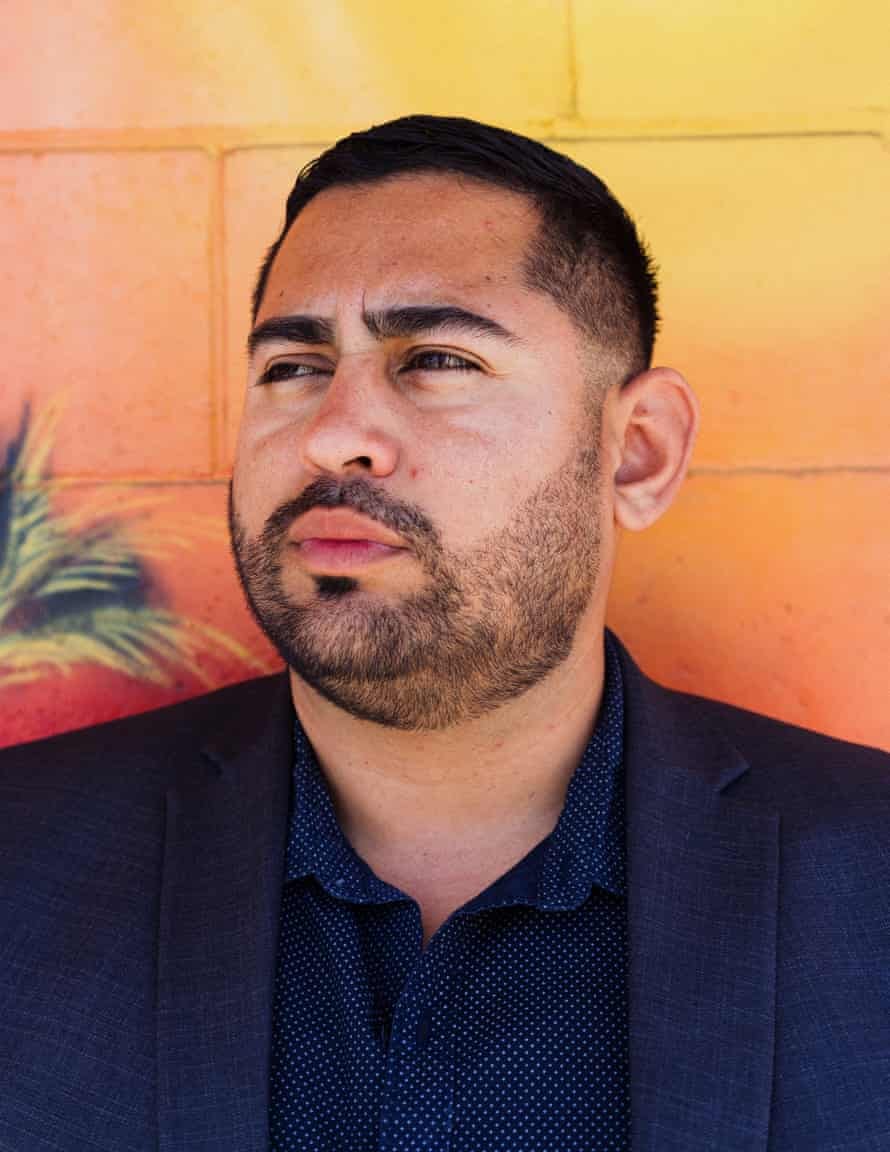
According to Guardian reporting on the one-year aftermath of the raids, Brian Gavidia, a U.S. citizen from East Los Angeles, still remembers federal agents pinning him against a gate and refusing to accept that he was born in the United States. He still notices white vans with tinted windows. He still carries the memory of a city where immigration enforcement suddenly became visible, mobile, and unpredictable.
His story is not only about one mistaken stop or one terrifying day. It is part of a larger public record of what the Los Angeles raids left behind: fear, lost work, separated families, elevated detention numbers, legal challenges, and neighborhoods still adjusting to the reality that federal force can return at any time.
Last June, federal immigration agents descended on Los Angeles in a wave of raids that reshaped the city’s daily life. Guardian reporting described ICE and Border Patrol agents moving through workplaces, car washes, garment warehouses, day-labor sites, churches, and neighborhoods. National Guard troops entered the city. Protests erupted. Attorneys scrambled to locate detained people before they were transferred out of state or removed from the country. Mutual aid networks formed as immigrants became afraid to leave their homes.
The raids were presented as enforcement. For many Angelenos, they became a rupture.
People were not only arrested. Families lost income. Workers disappeared from job sites. Businesses lost customers. Children were told they could not safely visit parents. Spouses were deported. Relatives searched for loved ones in detention systems that moved faster than families and lawyers could respond.
That is why the story of Los Angeles cannot be reduced to the day agents arrived. The more important question is what remained after they moved on.
Gavidia’s life changed after agents came to the car lot where he worked. His account later became part of a class-action lawsuit challenging racial profiling by federal immigration agents in the Los Angeles area. Afterward, the neighborhood no longer felt safe. Business declined. He eventually had to close his used-car refurbishing business and dealership.
For the first time in years, he had to look for a job working for someone else.
That is the kind of damage that rarely appears in official enforcement statements. A raid count can list arrests. A press release can describe targets. A federal agency can claim it is pursuing public safety. But the public record has to include what happens after agents leave: businesses interrupted, families destabilized, children kept away, and citizens and noncitizens alike living with the fear of being mistaken, targeted, or taken.
Los Angeles was not only a site of raids. It became a warning.
After federal agents moved through the city, similar tactics were reported in other cities, with workplace targeting, roving patrols, aggressive arrests, and militarized presence becoming part of a broader immigration enforcement pattern. What happened in Los Angeles was not an isolated enforcement moment. It showed how far the immigration machinery was willing to go in public space.
The damage is visible in neighborhoods like MacArthur Park, where day laborers still gather near Home Depot hoping to find work. Last year, federal agents targeted Home Depot locations across the region. Guardian reporting described masked agents arriving in white vans and arresting nearly two dozen people at one site. Later, despite a federal court order meant to halt indiscriminate raids in the region, agents returned to the same area using a yellow rental truck, according to that reporting.
For workers, the message was clear: even ordinary places to seek work could become enforcement traps.
That fear changes how a city functions. Workers stay home. Families lose wages. Businesses slow down. Customers disappear. People weigh every errand against the possibility of detention. A parking lot becomes a risk. A van becomes a warning. A routine check-in becomes a possible arrest.
In the fashion district, the scars took another form. The district’s fabric shops, garment businesses, warehouses, tailors, and workshops rely heavily on immigrant labor and immigrant customers. When agents raided Ambiance Apparel, dozens of workers were arrested, including members of Indigenous Zapotec families. The raid rippled outward through families, campaigns for release, legal fights, and businesses that suddenly had to operate under fear.
For shop owners, the harm was economic as well as emotional. Orders were canceled. Foot traffic fell. Workers stayed away. Entire business corridors felt the impact of raids that were never confined to the individuals taken into custody.
That is one of the central truths of immigration enforcement: raids are never limited to the people arrested. They strike families, workplaces, customers, tenants, children, neighborhoods, and local economies. They produce fear as a public condition.
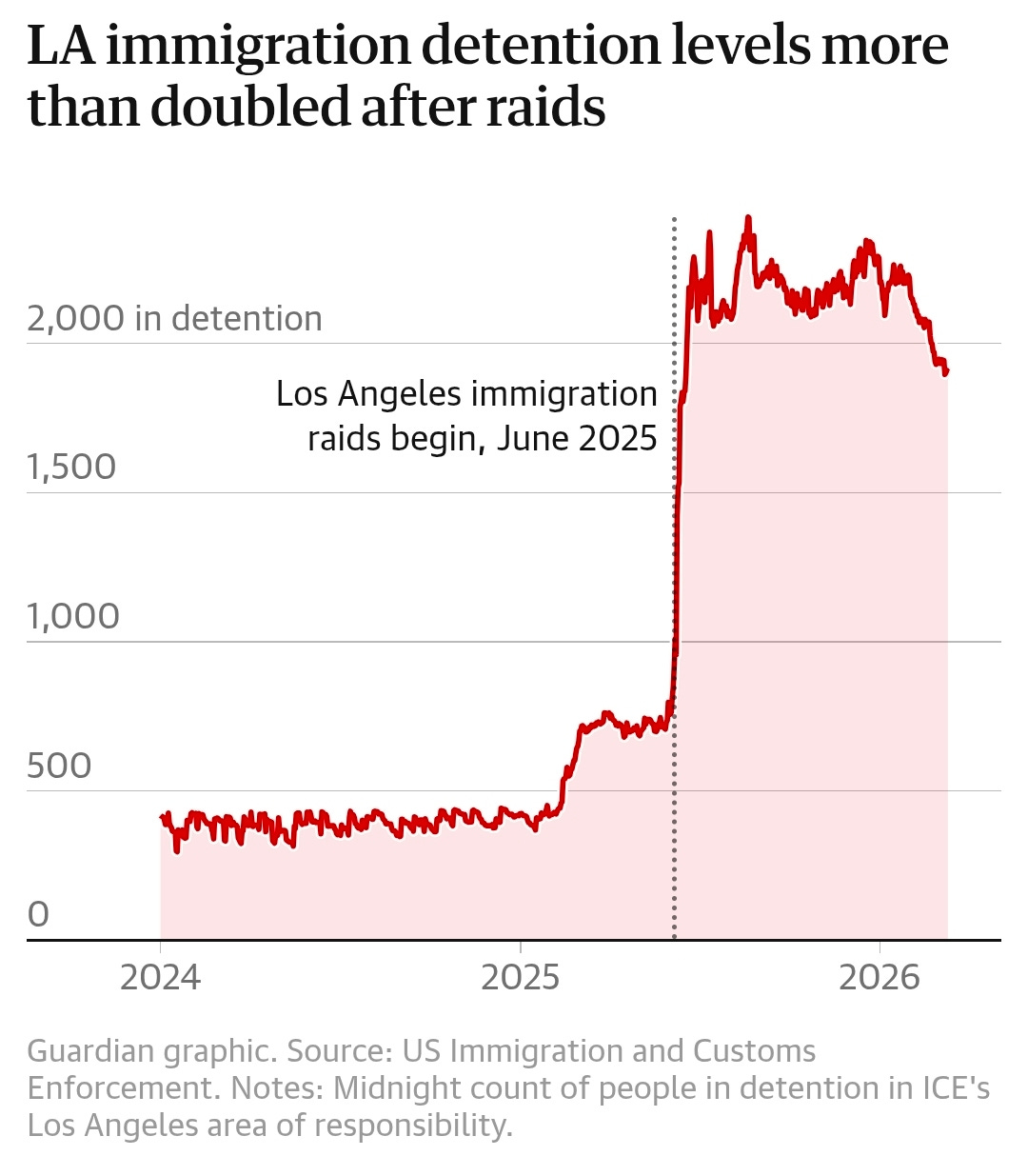
The detention system shows the same pattern. Before last year’s raids, fewer than 1,000 people were detained in ICE’s Los Angeles area of responsibility on a given day, according to data cited by the Guardian. After the raids began, that number more than doubled and remained elevated.
That does not mean every later detention can be traced to one raid. But it does show that the raids marked a turning point. The operation did not disappear into the past. It became part of a broader detention expansion that continued to shape people’s lives long after the first arrests.
Inside detention, the consequences deepened. At the Adelanto detention center, detainees began a hunger strike in May to protest conditions including murky drinking water, moldy food, and lack of medical care, according to advocates cited in the Guardian’s reporting. The Department of Homeland Security has denied there is a hunger strike. Attorneys and immigrant-rights groups have described detention conditions as punitive and coercive, with some detainees feeling pressured to abandon their immigration cases simply to escape confinement.
Bond has become another weapon of pressure. Advocates cited in the reporting said immigration judges have increasingly set bonds far above the minimum, sometimes at $15,000 or $20,000, forcing families and community groups to raise large sums simply to get loved ones released. For people trapped inside detention, the system can become a choice between prolonged confinement, impossible bond amounts, and deportation pressure.
That is the infrastructure behind the raids.
The public may see agents in the street for a day or a week. But the deeper machinery continues in detention centers, bond hearings, transfer systems, court backlogs, deportation orders, and families trying to locate loved ones before it is too late.
The legal fight over the raids is also still alive. A federal court initially ordered agents to stop indiscriminate raids and racial profiling in the region. The Supreme Court later overturned that ruling. Immigrant-rights groups and civil-liberties advocates are continuing to challenge the federal government’s actions, arguing that Angelenos were targeted based on race, language, job site, and appearance.
That fight matters because the raids did not only raise immigration questions. They raised constitutional questions. Who can be stopped? Who can be questioned? Who is presumed deportable because of where they work, what language they speak, what neighborhood they live in, or how they look?
For Americans Against ICE, that is the public record that must not be lost.
The Los Angeles raids were not just a sequence of arrests. They were a demonstration of how immigration enforcement turns cities into zones of suspicion. They showed how quickly workplaces can become targets, how easily families can be separated, how fast people can disappear into detention, and how long the damage can last after the spectacle ends.
A year later, Los Angeles is still living with that damage.
Gavidia is trying to rebuild. Workers are still looking for jobs. Families are still missing people. Advocates are still raising bond money. Attorneys are still fighting racial profiling claims. Detainees are still describing dangerous conditions. Neighborhoods are still carrying the memory of vans, agents, arrests, and fear.
The raids left Los Angeles.
The damage did not.
This reporting matters because immigration raids do not end when agents leave the street. They continue through detention, deportation, debt, business loss, family separation, medical neglect, legal backlogs, and the fear left behind in neighborhoods forced to live under threat.
Americans Against ICE documents the harm behind immigration enforcement — the raids, detention systems, county jail contracts, labor targeting, family separation, and public trauma that official statements often flatten or erase.
Support this work by upgrading to a paid subscription.