

🎥 Al Jazeera’s video report shows Ireland’s Congolese community holding a vigil for Yves Sakila after he died following restraint outside Arnotts in Dublin.
A Black Man Pinned Under Force
The video is the reason this cannot be treated as a distant incident or a soft public controversy. Yves Sakila was 35 years old, Congolese-born, and had grown up in Ireland. He died after being pinned to the ground outside Arnotts in Dublin, and what the public saw in that footage immediately placed his death inside one of the most recognizable patterns of anti-Black violence in modern memory.
The video shows Sakila subdued by several men, with several men kneeling on his body and pinning him to the ground with their combined weight. One man is described as shifting his weight onto his knee and driving it into Sakila’s neck and head region. By the end of the 4-minute-44-second video, Sakila appears motionless.
That description has to remain at the center because every institutional process that follows a death like this has the power to move attention away from what the public saw. The official language may arrive later. Investigators may speak later. Media framing may narrow the story into a familiar script. But before any of that, there is the video: a Black man on the ground, several men over him, knees on his body, force driven into his neck and head region, and his body motionless by the end.
That is not a side detail. It is the starting point. The public record begins with what happened to him before it becomes paperwork, and that matters because paperwork has a long history of making racialized force sound cleaner than it looked when it happened.
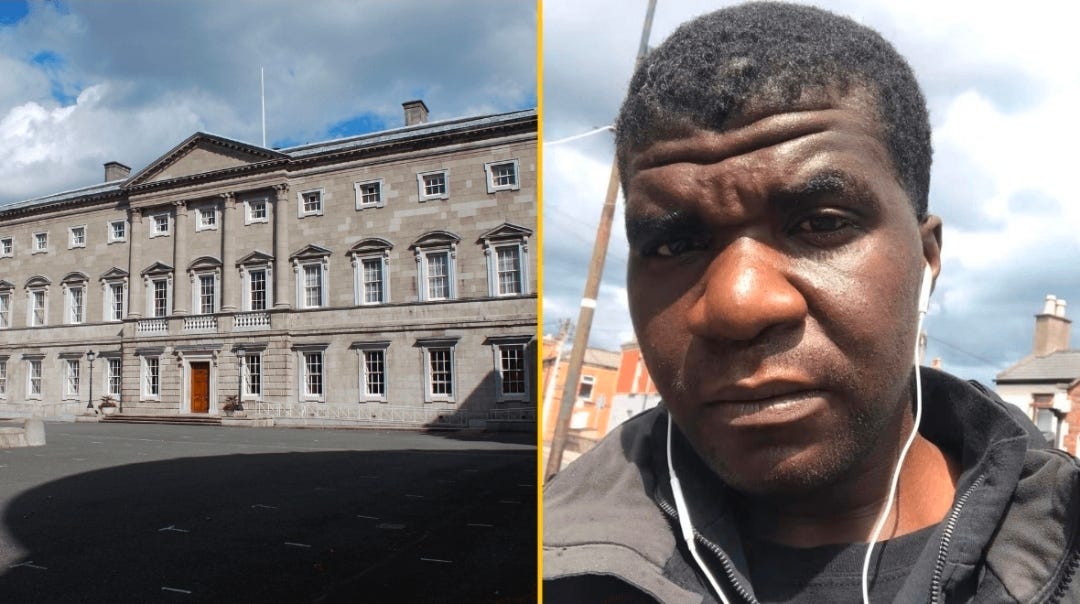
Ireland’s George Floyd Moment
The comparison to George Floyd is not casual, and it should not be treated as rhetorical excess. It is not based on the claim that every institution, every legal system, or every actor is identical. It is based on the visual and moral recognition of a Black man forced to the ground, bodies over him, pressure near the neck, a life gone on video, and a public narrative forming around the dead man afterward.
George Floyd was killed in America in 2020 after a police officer knelt on his neck. Yves Sakila died in Ireland in 2026 after security restrained him outside a department store in a way that witnesses, classmates, organizers, and protesters immediately connected to that same global memory. That connection matters because public memory is not only about the exact uniform worn by the person applying force. It is also about the pattern people recognize when a Black man’s body is treated as controllable, disposable, and explainable after the fact.
The force in Dublin did not need to be carried out by police to become part of that recognition. Private security can still operate inside a broader culture of suspicion. Bystanders can still watch a Black man placed under force. Institutions can still move afterward to frame, delay, contain, and manage the meaning of what happened. The uniform changes, but the public terror remains legible.
That is why people are calling this Ireland’s George Floyd moment. They are not only naming grief. They are naming recognition. They saw an image the world was supposed to have learned from in 2020, and they saw it reappear in another country, under another system, with another Black man dead.
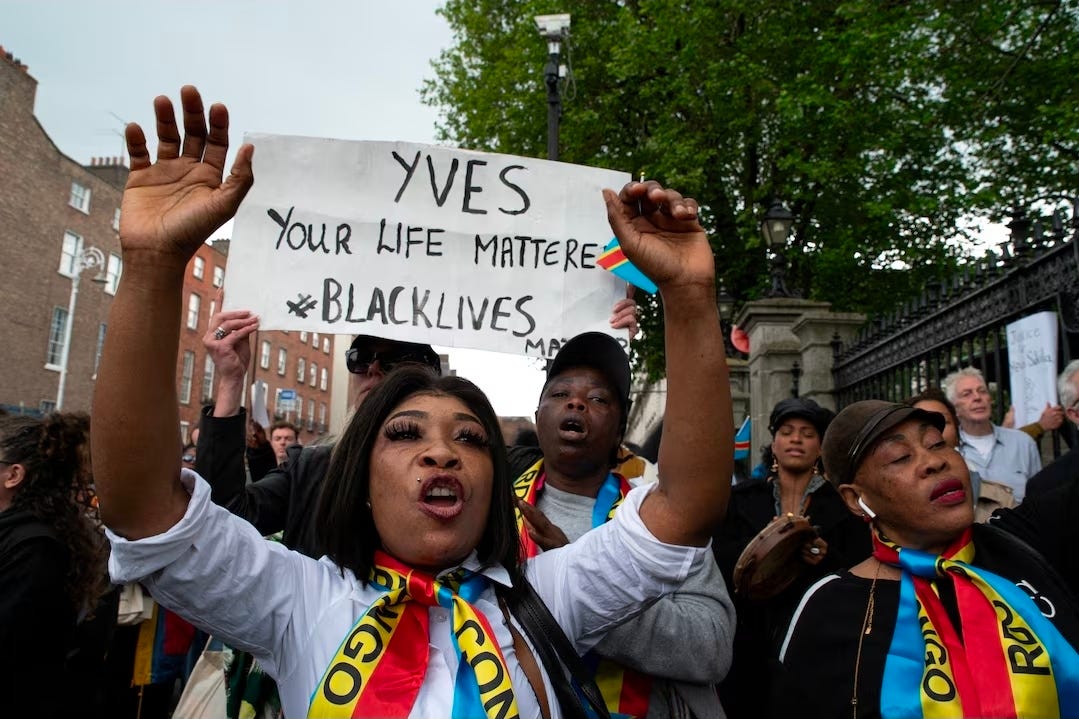
Black, Congolese-Born, and Marked by Suspicion
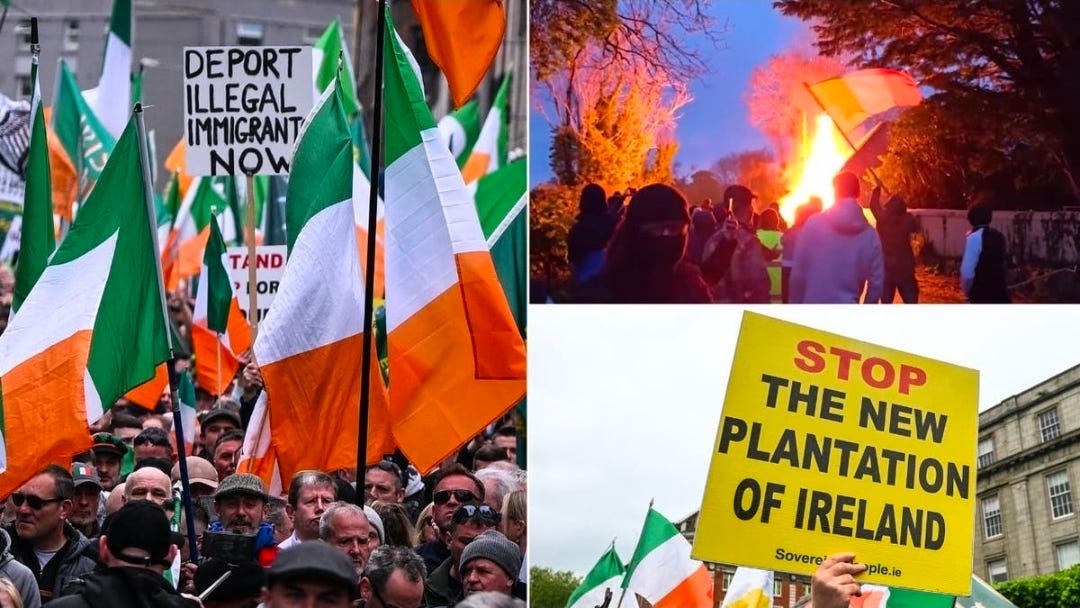
Yves Sakila was not an abstract figure in a public controversy. He was a Congolese-born Black man who grew up in Ireland, and his death happened in a country where anti-immigrant hostility has been rising into public life. That context does not need to turn the article into a broad history lesson, but it cannot be removed from the meaning of what happened. Race and immigration are not background details when a Black immigrant man dies under public restraint and the first instinct of many systems is to turn the conversation toward suspicion.
Racism does not require one uniform to become dangerous. It can move through police power, private security, border systems, political rhetoric, public fear, media framing, street harassment, and institutional silence. It can shape who is seen as threatening before the facts are known. It can shape whose body is treated as a problem to be controlled instead of a person whose life must be protected.
That is why the allegation frame cannot lead this story. Once a Black immigrant is dead, centering the accusation attached to him becomes part of the machinery that makes the public process him through suspicion before grief. It asks people to weigh his life against a story built around him after force was already used. It invites the public to search for justification instead of accountability. It moves attention from the restraint to the narrative, from the person to the file, from the visible harm to the language that can be placed over it later.
The real question is not whether a story can be constructed around Yves Sakila after death. Institutions have always been able to construct stories around the dead. The real question is what kind of society can watch a Black man pinned under several men, see force driven into his neck and head region, and still look for a reason to move away from what was done to him.
Cruelty Changes Labels
Cruelty survives because it learns how to sound administrative. It becomes security when private force is involved. It becomes restraint when a person is held down. It becomes enforcement when the target is an immigrant. It becomes procedure when the public demands answers. It becomes investigation when outrage needs to be slowed. None of those words are automatically false in every context, but they become dangerous when they are used to organize public attention away from harm that has already been made visible.
The body absorbs the force first.
The cleaner vocabulary arrives second.
The public is trained to debate the label instead of the cruelty.
Yves Sakila’s death exposes that order because the video does not begin with procedure. It begins with force. The public does not first encounter a neutral administrative process. The public encounters the sight of a Black man under the weight of several men, restrained on the ground until he appears motionless. Any language that follows has to be judged against that reality, not allowed to replace it.
This is why naming the pattern matters. Without a pattern, each case can be isolated, softened, delayed, or buried inside official phrasing. With a pattern, the public can see how the same logic keeps returning in different forms: the person is marked, harm is made visible, cleaner language moves in afterward, and the explanation arrives wearing the language of order.
From Jamaica to Ireland to America
This is the same structure Americans Against ICE has been documenting across borders and systems: power aimed downward, protected upward, and sold as safety.
Jamaica calls it security.
America calls it enforcement.
Ireland may call this restraint, investigation, or procedure.
The countries are not identical. The legal systems are not identical. The uniforms are not identical. But the structure becomes visible when Black and immigrant communities are placed under force and public attention is moved toward the vocabulary that protects the institution instead of the life that was taken or endangered.
In America, George Floyd’s killing showed the world how anti-Black restraint violence can be defended, delayed, and explained even when video evidence is impossible to ignore. In immigration enforcement, ICE and border systems teach the public to see immigrants as threats before they are seen as human beings. In Jamaica, the language of security has been used to justify outside force over Black life. In Ireland, Yves Sakila’s death is now being seen through that same global architecture because the public recognizes the sequence even when the national setting changes.
This is not about forcing every country into America’s story. It is about refusing to let each country pretend its violence is exceptional, isolated, or immune from the same racialized logic. Anti-Blackness travels. Anti-immigrant suspicion travels. Security language travels. The habit of explaining harm after a person is already motionless also travels.
Yves Sakila’s death belongs inside that global record because it shows how cruelty moves through more than police departments. It can move through private security, state response, media framing, public fear, and older systems that keep telling people cruelty is safety when the target is Black, immigrant, poor, unhoused, or already marked as disposable.
The State Story Comes After the Body
The State story always arrives after the body. It asks the public to wait. It asks the public to trust the process. It asks the public to treat the video as incomplete while treating official language as responsible. That does not mean every investigation is meaningless, but it does mean the public should understand how time, language, and institutional authority can be used to drain urgency from visible harm.
Time can become a weapon.
Language can become a burial.
Public records can be cleaned until the violence becomes abstract.
That order matters. Yves Sakila’s body under force came before the official vocabulary. The video came before the public was told what to argue about. The motionless body came before the clean phrases that always arrive when institutions need time to control meaning. The public saw enough to understand why people were horrified before any agency could reduce the death into managed language.
The accusation frame is not the center. The investigation frame is not the center. The center is what happened to Yves Sakila. That does not erase the need for evidence or process. It places the process where it belongs: after the visible harm, not above it.
When protesters chant “no cover up, no delay,” they are naming a danger that communities know from history. They know that time can become a weapon. They know that language can become a burial. They know public records can be cleaned until violence becomes abstract. They know that once the frame shifts from visible harm to procedure, accountability often becomes something people are told to wait for until the urgency has been made socially inconvenient.
That is why the video cannot be allowed to disappear beneath official phrasing. It is not the whole investigation, but it is part of the record. It is the part that prevents the public from being told to forget what was visible.
The Pattern Is the Point
The pattern is not that every country is the same.
The pattern is that cruelty keeps finding new labels while Black and immigrant communities keep absorbing the consequences. That is why Yves Sakila’s death has moved beyond one incident in Dublin and become part of a wider public recognition. People are not only asking what happened in front of Arnotts. They are asking why the image is so familiar.
Yves Sakila’s death is being called Ireland’s George Floyd moment because people saw a structure. They saw how quickly a Black man can be forced to the ground. They saw how familiar neck-region force looks when a person is pinned. They saw how fast death can be surrounded by narrative control. They saw the same terror under a different national flag, and they understood that the comparison was not a slogan. It was a warning.
The machinery survives by isolating each death. One country says it is not like another. One agency says it was only security. One official says wait for the investigation. One headline repeats suspicion. One public conversation drifts away from what the video made visible.
Each death becomes local.
Each video becomes debatable.
Each victim becomes a file.
But the truth starts with what happened.
Yves Sakila was alive. Then he was pinned under force. Men knelt on his body. Force was driven into his neck and head region. By the end of the video, he appeared motionless. Then the world was handed a story to debate after he was already gone.
That is why this cannot be written as a distant news item. It is a record of how cruelty travels, how systems rename it, and how Black and immigrant communities are forced to recognize the pattern before institutions admit what everyone can see. It is also a record of why public memory matters. George Floyd’s name became global because people refused to let the video be buried under procedure. Yves Sakila’s name now enters that same field of memory because people in Ireland saw the pattern and refused to let it be reduced to an incident.
The pattern does not stop at borders because the logic behind it does not need one passport. It needs suspicion. It needs permission. It needs an audience trained to accept force when the right person is underneath it. It needs language clean enough to make cruelty sound like order.
That is why the record has to stay open.
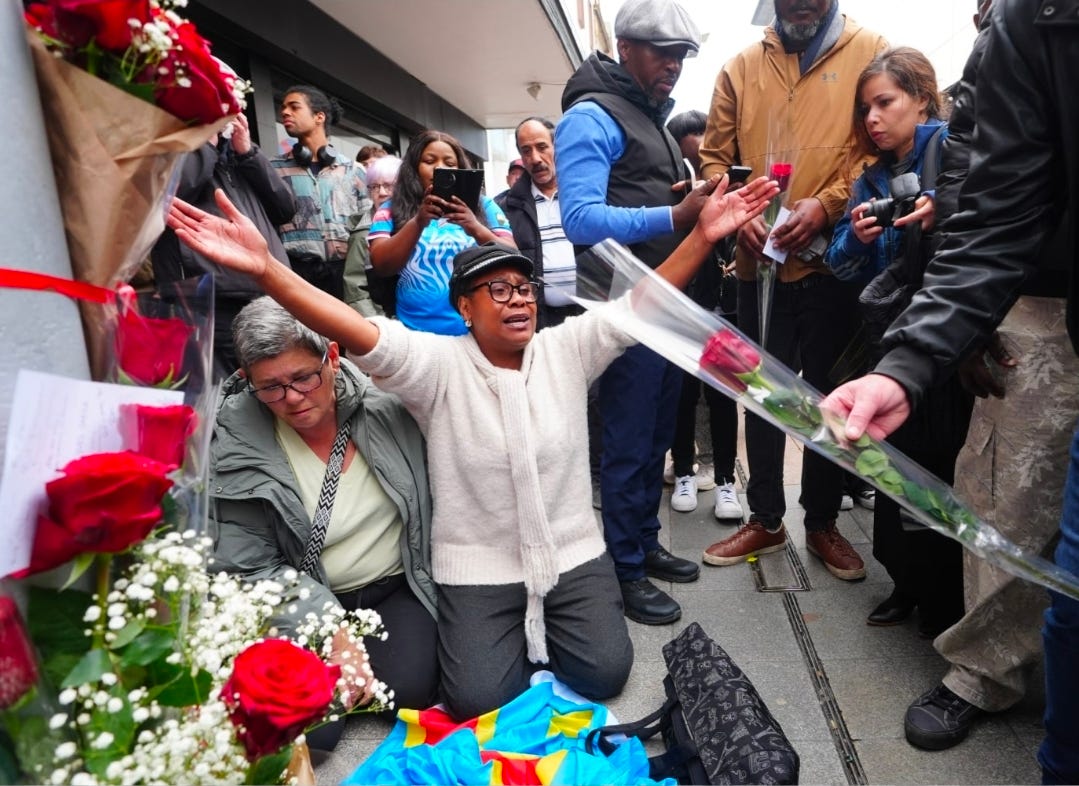
Community members gather in Dublin for Yves Sakila, turning grief into public memory after his death outside Arnotts.
This is why Americans Against ICE keeps documenting the machinery.
Because the pattern does not stop when the video ends. It continues in the official language, the headlines, the delay, the suspicion, the procedure, and the public pressure to move on before the harm has been fully named.
Yves Sakila’s death belongs in the same public record as every system that teaches people to accept cruelty when it is aimed at Black people, immigrants, the unhoused, and anyone already marked as disposable. The machinery is not only the moment of force. It is the system that arrives afterward to decide what the public is allowed to remember.
This work keeps the record open before cleaner words can bury what was visible.
Read the connected report:
Jamaica Calls It Security. America Calls It ICE Enforcement. The Machinery Is the Same.

In Jamaica, the state calls it security.
Yves Sakila’s death belongs in the same public record as every system that teaches people to accept cruelty when it is aimed at Black people, immigrants, the unhoused, and anyone already marked as disposable. The machinery is not only the moment of force. It is the system that arrives afterward to decide what the public is allowed to remember.
This work keeps the record open before cleaner words can bury what was visible.