

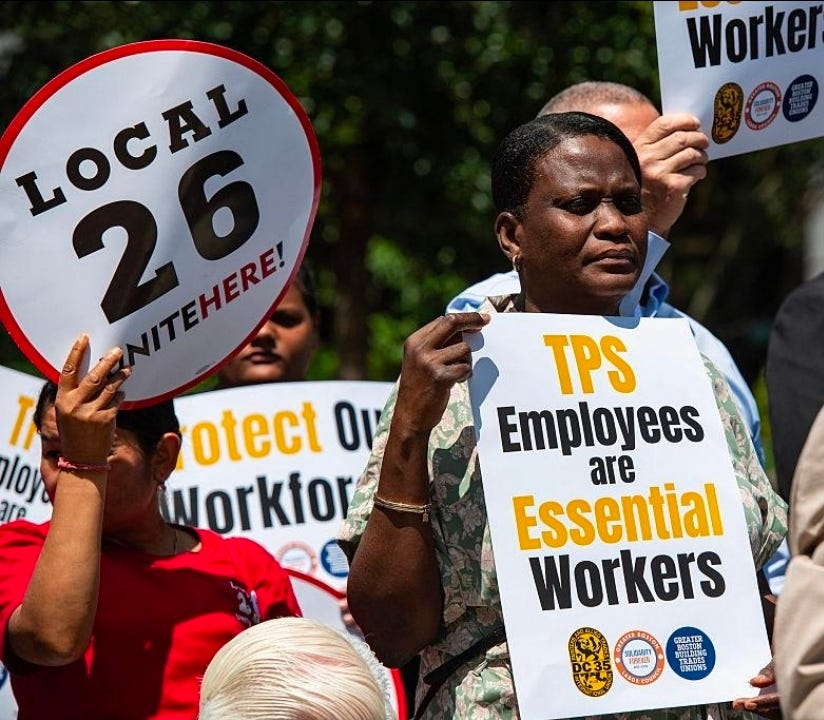
The Trump administration is withdrawing Temporary Protected Status from hundreds of thousands of Haitians while the State Department continues to warn Americans not to travel to Haiti because of violent crime, kidnapping, terrorism, unrest, and limited healthcare. One part of the federal government is dismantling protection from forced return while another documents the danger awaiting people sent back.
The termination does more than close an immigration program. It removes the protection supplied by TPS, ends TPS-based employment authorization, and exposes people without another lawful status or legal safeguard to ICE arrest, detention, and removal proceedings. The administration is using an administrative deadline to remove protection and expand the population exposed to ICE enforcement.
Not every Haitian TPS holder has the same immigration circumstances. Some may have asylum claims, pending applications, another lawful status, separate employment authorization, or other defenses against removal. But for people whose protection depends on TPS, the termination removes the TPS protection that shielded them from removal. It converts people who were protected from removal and authorized to work through TPS into people newly exposed to ICE enforcement through a government decision.
According to USCIS’s latest official guidance, July 27, 2026, is the operative termination date for Haiti’s TPS designation and related benefits. Employers were instructed to use that date when reviewing TPS-based employment documents. The policy therefore reaches far beyond immigration paperwork into paychecks, rent, healthcare, transportation, childcare, and every household expense supported by lawful employment. A worker does not experience TPS termination as a technical change in federal designation; they experience it as the government placing their job, family stability, and physical safety under direct threat.
The Supreme Court cleared the path for that machinery in Mullin v. Doe, consolidated with Trump v. Miot. The Court held that the TPS statute bars judicial review of nonconstitutional challenges to decisions involving a country’s designation, extension, or termination. It also concluded that the Haitian plaintiffs’ equal-protection claim was unlikely to succeed at the preliminary-relief stage.
The decision removed the lower-court barrier that had prevented the termination from taking effect and narrowed the legal routes available to challenge DHS. It gave the executive branch greater power to withdraw protection while depriving affected families of one of the few institutions capable of interrupting that decision.
The ruling did not make Haiti safer. It did not restore functioning government authority, rebuild hospitals, dismantle armed groups, reopen roads, or reduce mass displacement. It changed who could stop the Trump administration from ending protection while those conditions remained.
The State Department’s July 10 advisory keeps Haiti at Level 4: Do Not Travel, its highest warning. The department cites violent crime, kidnapping, terrorism, unrest, and limited healthcare. It says the United States has extremely limited capacity to provide emergency assistance there, restricts nonessential travel by U.S. personnel away from the embassy, and bars their family members from accompanying them.
The advisory also describes widespread kidnapping, armed-group fighting, random-gunfire danger, and local law enforcement with extremely limited capacity to respond. Those are not merely the warnings of immigration advocates. They are the federal government’s own description of the country to which Haitian families may be forcibly returned.
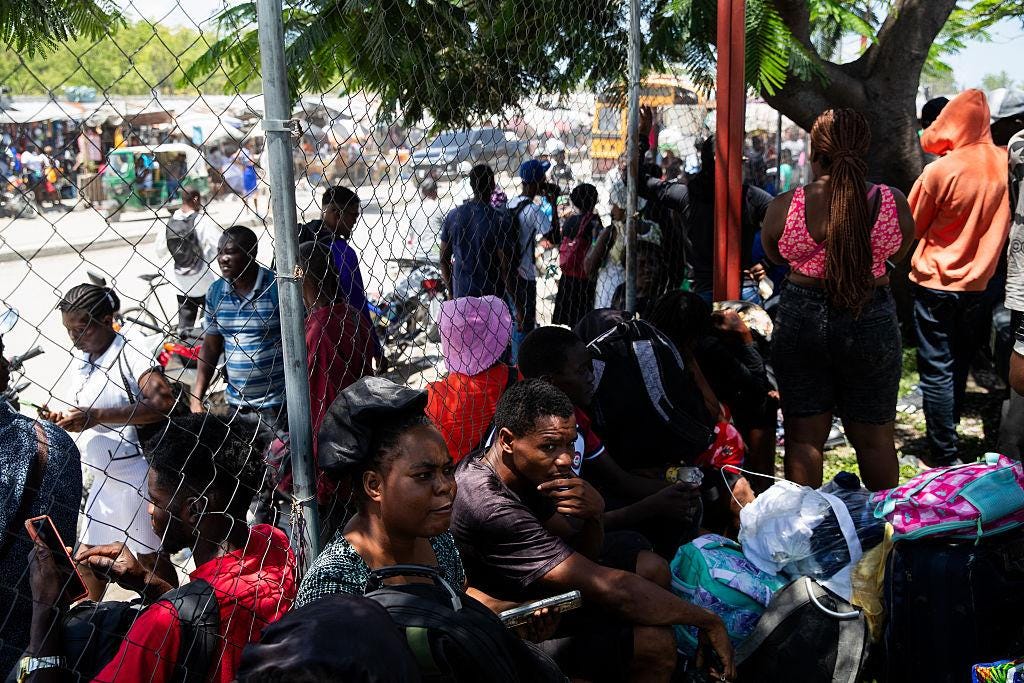
Haiti’s humanitarian emergency has deepened alongside its security collapse. Approximately 1.4 million people had been displaced by violence and insecurity as of March 2026. Forced return does not send people into an abstract national condition. It sends them into a country where armed violence, displacement, hunger, failing infrastructure, and institutional breakdown are already consuming civilian life.
Temporary Protected Status existed because the United States recognized that safe return was not possible. Haiti first received TPS following the catastrophic 2010 earthquake. Successive administrations extended or redesignated the country as political collapse, natural disasters, economic devastation, and expanding armed-group power continued to prevent safe return.
TPS was never a declaration that people could remain permanently. It was a legal recognition that deportation into existing conditions would be unsafe. The Trump administration is withdrawing that recognition without ending the danger.
For Haitian workers, the consequences begin inside the United States. Employers may lose trained staff. Families may lose income. Parents may face detention while children remain behind. Mixed-status households may be divided among U.S. citizens, people with pending cases, and relatives whose protection depended on TPS. Communities that spent years building schools, businesses, churches, union membership, housing stability, and local support networks are now being pushed into emergency legal triage.
Springfield, Ohio, has become one visible center of that fear. The city is home to an estimated 12,000 to 15,000 Haitian residents, though their immigration circumstances differ and not all hold TPS. The relevant fact is not that every Haitian resident faces the same legal deadline. It is that a large Haitian community now lives under the disruption created when the federal government withdraws protection from a substantial part of its population. That uncertainty is not collateral damage; it is part of the enforcement mechanism.
The administration terminates the protection, employers confront expiring TPS-based work authorization, and families scramble to determine whether another legal pathway exists. People without another status become vulnerable to ICE, and arrest, detention, and removal proceedings can follow. The government can then describe those arrests as routine enforcement, concealing the political decision that created the exposure in the first place.
This is how deportation machinery launders policy choices into administrative inevitability. The affected workers and families did not suddenly become dangerous, Haiti did not suddenly become stable, and their homes, jobs, children, and community ties did not disappear. The Trump administration changed their legal protection and positioned ICE to act on the vulnerability it created.
The human consequence is not limited to the person placed in removal proceedings. A parent’s detention can remove income from a household overnight. Lost work authorization can destabilize housing and healthcare. Deportation can separate spouses, divide parents from children, and send someone into a country where even U.S. officials are instructed to restrict their own movement.
The administration will present this as the expiration of a temporary program, but that language hides the deliberate sequence. TPS is temporary under federal law, yet terminating it remains an exercise of government power with foreseeable consequences. DHS knows what protection it is withdrawing, USCIS knows which employment documents depend on it, ICE knows who becomes exposed when it ends, and the State Department knows the conditions awaiting people returned to Haiti. Each agency controls one part of the machinery, while Haitian families carry the entire result.
The administration’s position requires the public to accept two incompatible messages: Haiti is unsafe enough that Americans should not enter, but safe enough for Haitians to be forced back. The government admits it cannot reliably assist its own citizens there, yet it is dismantling the protection that kept Haitian residents from being returned to those conditions. That is not protection ending because the emergency passed; it is protection ending while the emergency remains fully documented. The Trump administration is not discovering that these families suddenly became removable. It is creating the condition that makes them removable, then placing ICE behind the deadline.
Haitian families are being pushed toward ICE enforcement and forced return while the U.S. government continues to document Haiti as dangerously unstable.
We need your help: Upgrade to a paid subscription to help fund the reporting, verification, and public-record work required to track Haiti TPS termination, the loss of work authorization, ICE exposure, family separation, and forced return into conditions the U.S. government already recognizes as dangerous.
Paid support keeps this reporting open, independent, and available to the public.
Having recently learned that the Haitian people are the only reason why the usa was able to purchase Louisiana… because they defeated the French army so… I hope they do it again.