

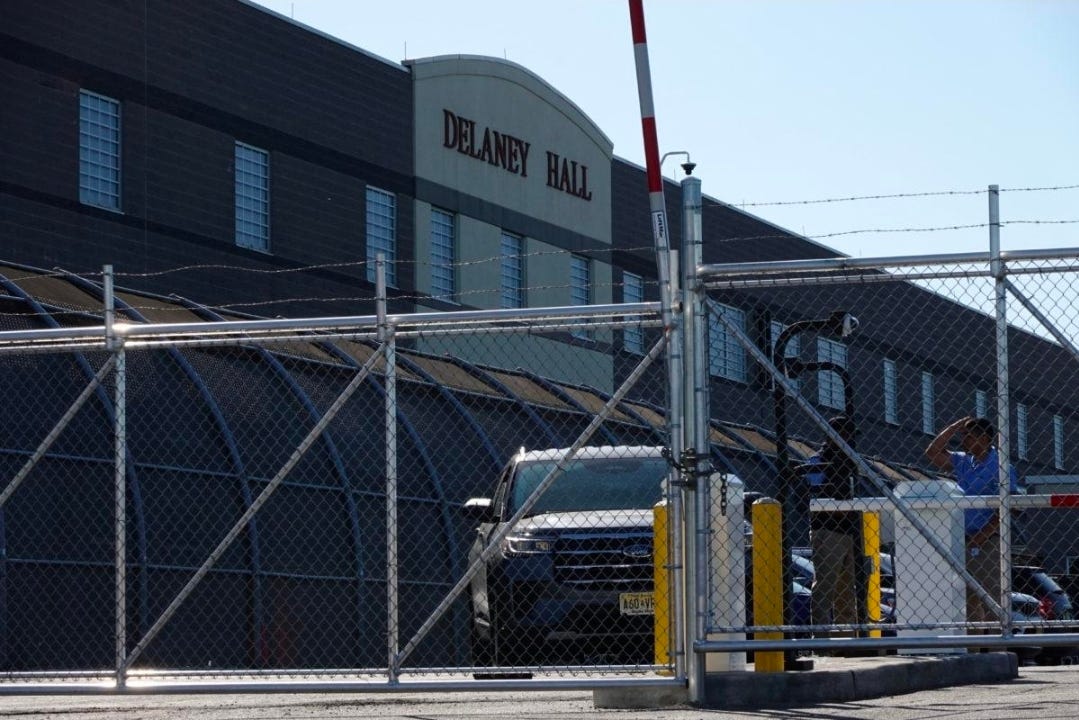
ICE does not only detain people behind locked doors. It also builds procedure around those doors, controls who gets through them, and decides when lawmakers, inspectors, families, and the public are allowed to see what is happening inside. Delaney Hall in Newark, New Jersey, is now one of the clearest examples of that pattern: a detention center facing reports of hunger strikes, abusive conditions, pepper spray, medical neglect, and blocked oversight at the same time ICE is trying to narrow access to detention facilities nationwide.
The latest fight is not just about one building in Newark. It is about whether ICE can use detention as a closed system while lawmakers are forced to ask permission to see the people held inside. ICE issued a May 11 memo that adds new restrictions for congressional offices seeking access to detained people. Under that memo, ICE says it will facilitate meetings only when the congressional office identifies specific detained individuals, submits proof of consent, and gives two days’ notice before the visit.
That sounds like procedure until the human consequence is named. If members of Congress have to identify people in advance, obtain proof of consent, and wait before entering, ICE gains time and control. It can shape the visit, narrow who lawmakers speak with, and limit what detainees can disclose in real time. For people inside facilities like Delaney Hall, that means one of the few outside channels capable of exposing abuse can be slowed down, filtered, or blocked before it reaches them.
At Delaney Hall, that obstruction is happening while detainees and advocates are reporting serious harm. Between 300 and 400 detainees were said by activists and detainees to be participating in a hunger and work strike over food, ventilation, medical care, and delays in immigration cases. Detainees also described inedible food, poor ventilation, illness spreading through the facility, delayed medical care, and lack of progress in their cases. DHS has denied that a hunger strike is taking place and has denied substandard conditions, while GEO Group, the private company operating Delaney Hall, has also denied poor-condition allegations.
The public record around Delaney Hall keeps widening. Senator Andy Kim said he was pepper-sprayed by federal agents outside the facility after he had been inside and had tried to help de-escalate a confrontation between protesters and ICE. He described seeing chaos inside and outside the facility and called Delaney Hall a failure. New Jersey Governor Mikie Sherrill has said she was denied access to the facility, while state health officials were reportedly denied full access for an inspection and allowed to inspect only a limited area.
That is why unannounced access matters. A staged visit is not oversight. A delayed visit is not the same as walking into a facility when people inside are asking to be seen. A controlled meeting list is not the same as lawmakers being able to speak freely with detainees about food, medical care, retaliation, transfers, violence, or the fear of what happens after the public stops watching.
ICE knows the difference. That is why these restrictions matter. When an agency can demand notice, control names, require paperwork, and limit access before lawmakers enter, it can turn oversight into a managed event. It can reduce a congressional visit to a narrow inspection instead of a real investigation. The people in custody become harder to reach, and the public gets a cleaned-up version of a system that detainees are describing as dangerous.
This is not a new tactic. The Trump administration has repeatedly tried to restrict congressional oversight of immigration detention, and some of those efforts have already been challenged in court. A federal court ruled earlier this year that a prior ICE policy requiring seven days’ notice for congressional inspections violated parts of federal appropriations law that prohibit DHS from using funds to prevent members of Congress from accessing facilities for oversight.
That legal context matters because Congress is not asking for a favor when it inspects detention facilities. Congressional oversight is supposed to function as a public safeguard. When ICE blocks or delays that access, it is not only frustrating lawmakers. It is weakening the public’s ability to know what is being done with federal power, federal money, and human beings held under federal custody.
The stakes are even higher because ICE’s detention system is expanding with enormous public funding. ICE received $75 billion through the 2025 budget law, including $45 billion for detention capacity expansion. Separate proposals have sought to add tens of billions more for ICE and border enforcement through 2029.
That is the contradiction ICE cannot hide behind. The agency is being handed extraordinary power and extraordinary money while trying to restrict the people responsible for inspecting how that power is used. If ICE has the resources to expand detention, move detainees, deploy force, contract with private prison operators, and build a larger enforcement machine, then it cannot credibly claim that public oversight is too burdensome when lawmakers show up asking to see inside.
Delaney Hall shows what happens when detention, secrecy, and force meet in one place. Families and advocates say people inside are being harmed. Detainees say they are striking over conditions. Lawmakers say access is being blocked or narrowed. ICE and DHS deny the worst claims. GEO denies poor conditions. Meanwhile, the public is left trying to understand what is happening inside a facility that the government keeps trying to control from the outside in.
The answer is not less oversight. It is more. Real oversight means lawmakers can enter without giving ICE time to prepare a sanitized version of custody. It means detainees can speak without ICE deciding in advance who gets heard. It means medical neglect, spoiled food, chemical force, retaliation, transfers, and abuse claims are not buried behind scheduling rules and consent paperwork controlled by the same system being investigated.
ICE detention cannot be allowed to grow behind locked doors, blocked visits, and managed narratives. Delaney Hall is not only a local crisis in Newark. It is a warning about what happens when an agency with expanding power decides that public accountability is an obstacle.
The people inside are asking to be seen.
The public has a right to know what ICE is trying to keep hidden.
ICE wants detention to happen behind doors the public cannot open.
This reporting is part of keeping those doors from closing quietly.
Support independent coverage that follows ICE detention, blocked oversight, medical neglect, retaliation, and abuse claims before they disappear into procedure.
Upgrade to a paid subscription or share this report so more people see what ICE is trying to keep hidden.
Related report:
