

Orlin’s Law was introduced because Immigration and Customs Enforcement deported a mother without her young son without first meeting the public-safety standard the proposal would require.
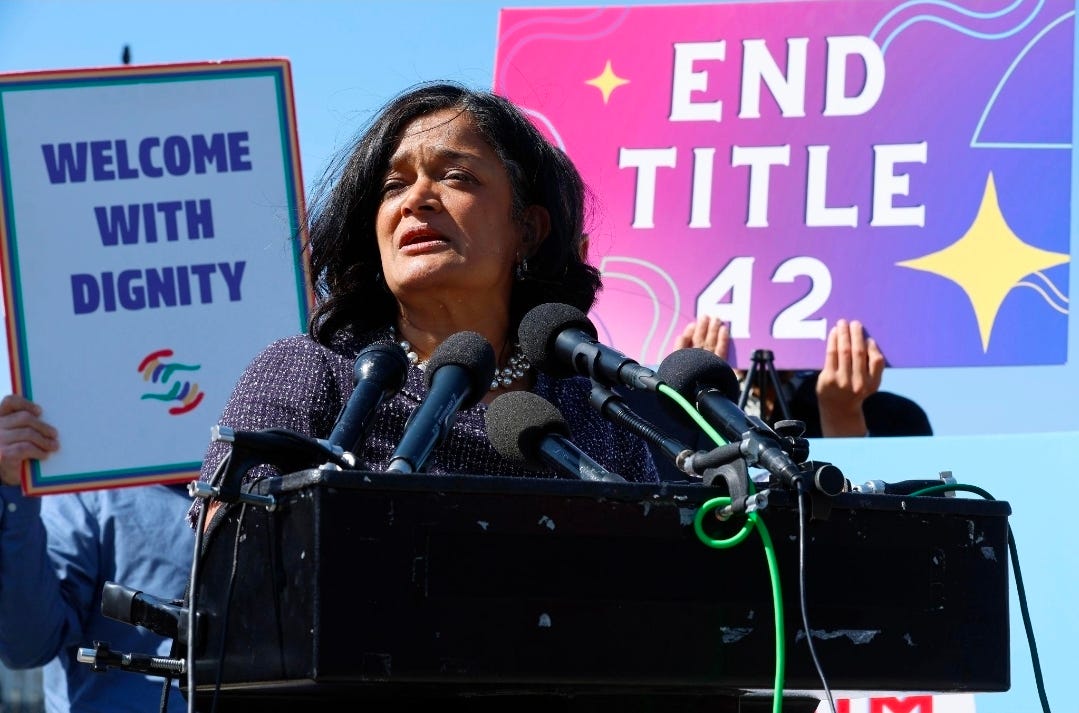
Rep. Pramila Jayapal introduced the legislation after ICE deported Wendy Hernandez Reyes to Honduras without Orlin Hernandez Reyes, her U.S.-citizen son. Wendy said she repeatedly begged officers to release her so she could care for him or deport them together. ICE removed her alone. Months later, Orlin was killed while living with the relative who had taken custody of him. He was three years old.
The bill would establish a presumption against ICE detention for parents and primary caregivers unless the agency meets the proposed public-safety standard. ICE would have to show through clear and convincing evidence that a covered parent or caregiver presents a specific threat that cannot be managed through supervised release. Under the proposal, release would become the starting point for covered parents and caregivers, and ICE would carry the burden of justifying detention.
That protection was absent when Wendy was detained while traveling to work. Local authorities in Alabama transferred her to ICE, which held her in Louisiana before deporting her on January 26. Her attorney said she had no criminal record. Her immigration status gave the government power over her movement, but it did not erase her responsibility for her child or Orlin’s need for his mother.
Wendy told officers that Orlin was a baby and that she would go wherever the government sent her as long as he could go too. She later said she continued requesting reunification through a detention-center tablet. On the day of her deportation, she said, the tablet stopped working, and she was shackled and placed on a plane without him.
In the statement announcing Orlin’s Law, Wendy said she begged officers not to take her without her son and that they refused to listen. She was not asking ICE for special treatment. She was trying to remain responsible for a toddler whose safety depended on her decisions.
Orlin was left in Florida with Samuel Maldonado Erazo, who is accused of abusing and killing him. Maldonado has been charged with murder and has pleaded not guilty. Authorities allege that Orlin suffered extensive physical abuse before his death.
The criminal charge concerns the man accused of killing Orlin. ICE remains accountable for enforcing the separation Wendy repeatedly asked it to prevent. The central government failure occurred before Orlin was killed: ICE removed the parent responsible for his safety without securing a stable outcome for him or preserving Wendy’s ability to control what happened next.
Americans Against ICE documented that failure in May, when the agency’s public response focused on blaming Wendy instead of accounting for the separation it enforced:
ICE Deported a Mother, Took Her Child, Then Blamed Her After He Was Killed.

When Wendy Hernandez Reyes was deported without her son, the separation was not an accident. It was state action. ICE removed a mother, left a small child behind, and then, after that child was…
Acting ICE Director Todd Lyons alleged after Orlin’s death that Wendy had abandoned her son and chosen to leave him with the man accused of killing him. Jayapal’s office said Wendy’s account and court records conflict with ICE’s portrayal that s one abandoned Orlin. ICE imposed the separation and then redirected public blame toward the mother who had asked the agency to keep her child with her.
Orlin’s Law would place limits around that power before another family is broken apart. In addition to restricting detention, the bill would establish an Office of Detained Parent Coordination for parents who remain in custody. The office would help protect parental rights and coordinate across immigration detention, family courts, child-welfare systems and custody proceedings.
Those systems do not automatically move together. A parent can be held in one state while a child remains in another. Court hearings can proceed while the parent lacks transportation, documents, legal help or reliable communication. A deportation can occur before the parent has resolved who will care for the child or whether the child will travel with them.
The proposed law would require ICE to provide detained parents opportunities to make custody decisions and participate in proceedings involving their children. It would also prevent the agency from deporting a parent without their child when the parent wants the child to accompany them.
Detention does not cancel parenthood. A deportation order does not transfer a mother’s authority to immigration officers. Parents retain the responsibility to decide who cares for their children, whether remaining together is safest and how they will participate in custody or child-welfare proceedings. Orlin’s Law would treat those responsibilities as obligations ICE must respect rather than administrative inconveniences the agency can disregard.
The bill also exposes how family separation continues beyond the formal border policy most Americans remember. Separation now happens through workplace arrests, traffic stops, detention transfers and deportations carried out while children remain with relatives, enter foster care or move into unstable placements.
ICE has insisted that it does not separate families and that officers ask parents whether they want their children deported with them. The agency did not publicly explain what happened in Wendy’s case, whether officers checked on Orlin after her removal or whether child-welfare authorities were alerted. Wendy said she asked repeatedly to take him and later struggled to recover custody because ICE deported her without the documents she needed.
A policy that exists on paper does not protect a child when officers can disregard the parent’s request without an enforceable consequence. Orlin’s Law attempts to replace agency discretion with legal duties: consider supervised release, preserve parental decision-making, coordinate with other systems and do not deport a parent alone when they want their child beside them.
Jayapal introduced the bill with more than two dozen House co-sponsors and support from immigrant-rights and child-welfare organizations. She has also demanded information from the Department of Homeland Security and ICE about children separated from parents through immigration enforcement. The legislation faces a difficult path in the Republican-controlled House, and its introduction does not guarantee that it will receive a vote or become law.
Congressional difficulty does not weaken the need for the protections. It exposes the choice before lawmakers. ICE can detain and deport parents while their children remain behind, and the public record in Wendy’s case does not show that the agency ensured Orlin’s safety after removing her.
The public record cited in this case does not provide a complete accounting of how many parents and primary caregivers have been detained or deported while their children remained in the United States, how often officers refused requests for joint removal, or how frequently detained parents lost practical access to custody proceedings.
Orlin’s case shows that ICE was able to deport Wendy without her son despite her requests to remain with him, then redirect blame toward her after he was killed. The proposed law is designed to stop that government-imposed separation before another child is placed at risk.
Orlin’s Law cannot return Wendy to the moment when she begged ICE not to take her without her son, and it cannot bring Orlin back. It can require the government to justify separating another parent from another child before the harm is set in motion, making family unity the governing presumption rather than a request ICE can ignore.
Children should not lose their parents because ICE treats family unity as optional.
Support Americans Against ICE’s work documenting detention, deportation, family separation and the public harm immigration enforcement leaves behind.
This is the kind of cause that should compel a revolution. Thank you Pramila for standing up on this.
I need to see where my own Representative stands on this one, and work with local lobbying groups to demand co-sponsorship… or thank my Rep for having already done it. (He’s one of the good ones.)
Lobbying can be discouraging work, when we see how many cycles of effort go into even incremental changes. But it lands different, having seen how even changes that have been stalled for a decade can suddenly break through when we reach a critical mass of voters speaking out and representatives getting educated.
It all starts with a vision—in this case, protecting children from ICE’s indifference.
Today, we work to support the vision. Tomorrow, gods willing, we change the world.