

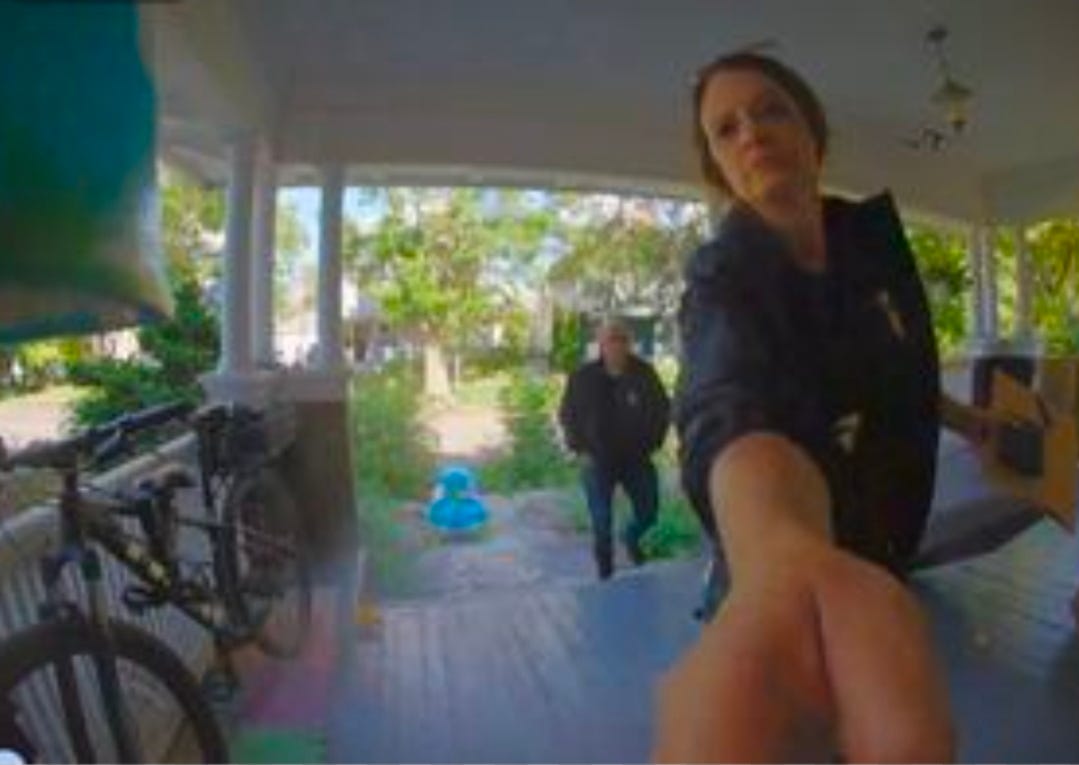
ICE is serving warning notices to Americans who criticize it. David Streever sent a blistering message to acting ICE Director Todd Lyons after the killing of Renee Good in Minneapolis, and federal officers later moved that criticism out of the inbox and into his family’s life. They went to his home in Rochester while he was away, gave his wife a warning notice, and later appeared at a New York City hotel where he was staying with his daughter.
Streever’s attorney said the message did not contain an explicit threat and described it as protected political speech. The message was angry because the subject was state violence. A citizen used speech to condemn ICE violence, and federal power answered by making itself visible at his door.
The home visit was already intimidation. The hotel encounter made it worse. Streever was not at home waiting for a routine letter. He was traveling and staying in New York City with his daughter. Federal officers appearing at that hotel turned criticism into something personally traceable. The message was clear: criticism of ICE can bring federal power into a person’s home, family life, travel, and private space.
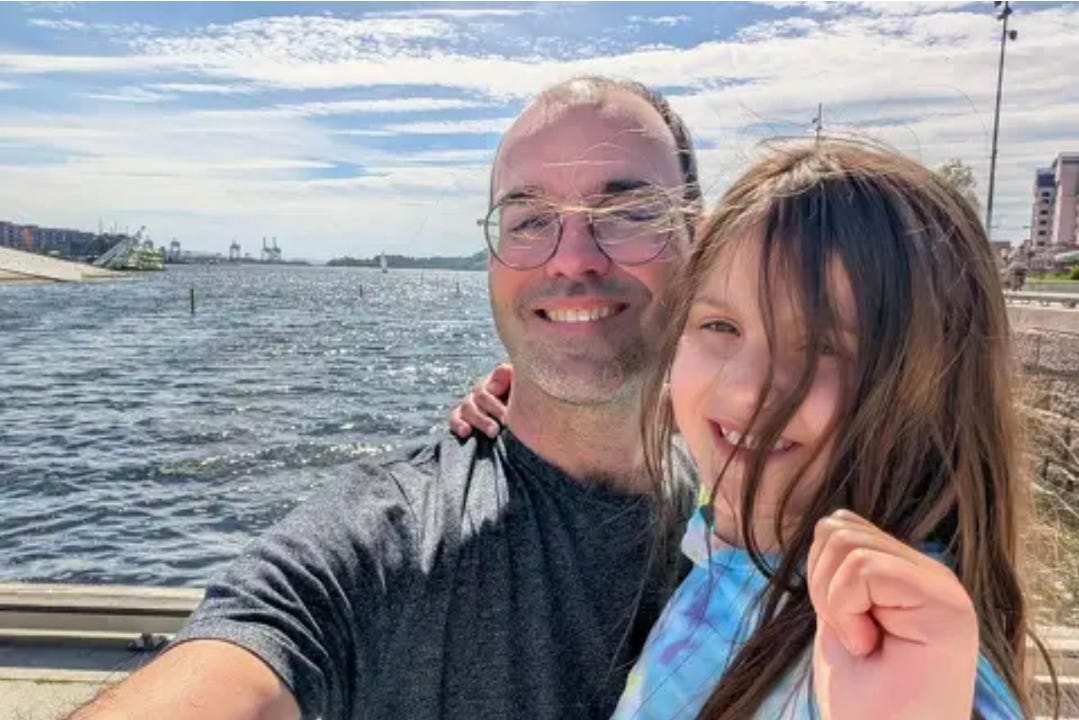
That family detail moves the warning notice from paperwork into intimidation.
This is not the first time Americans Against ICE has documented this kind of intimidation. Paigelynne Gonyea was confronted at work after a post calling for accountability after Renee Good’s killing. She had said Jonathan Ross should be indicted. Federal agents treated that demand for legal accountability as a threat, showed up at her workplace, presented paperwork tied to her post, and made dissent feel like an enforcement matter.
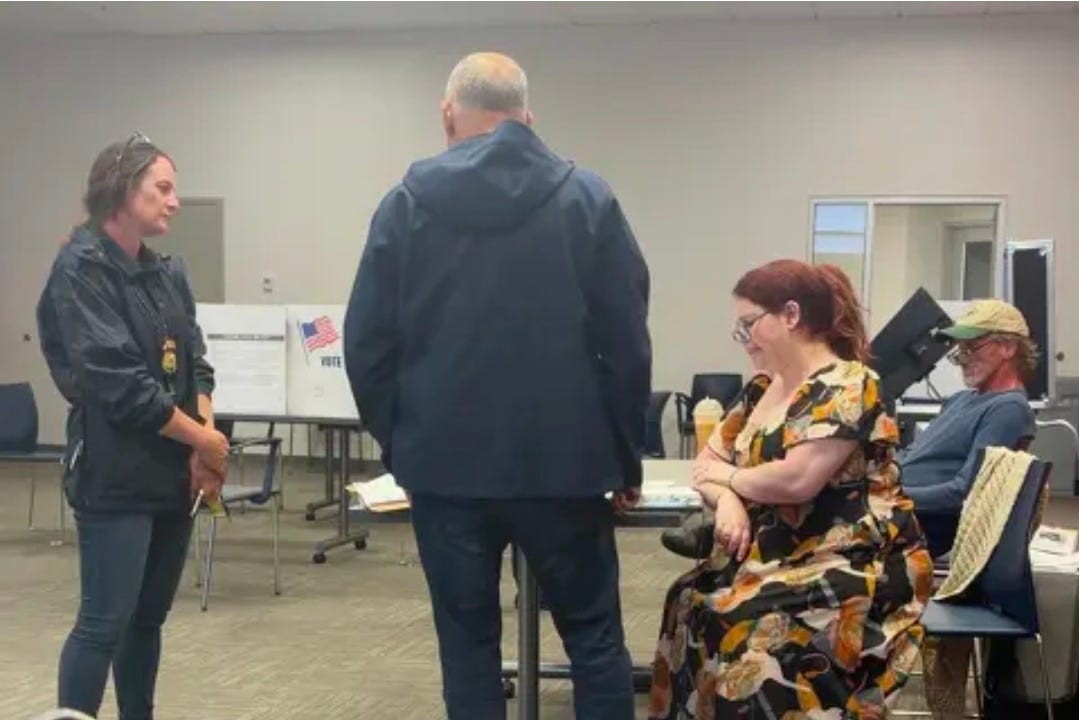
Streever’s case extends the same record Americans Against ICE already documented with Gonyea. In one case, agents confronted a critic at work. In the next, federal officers reached a critic through his home and a hotel where he was staying with his daughter. The warning notice may look like paperwork, but the pattern is intimidation.
They are not serving warrants. They are serving fear.
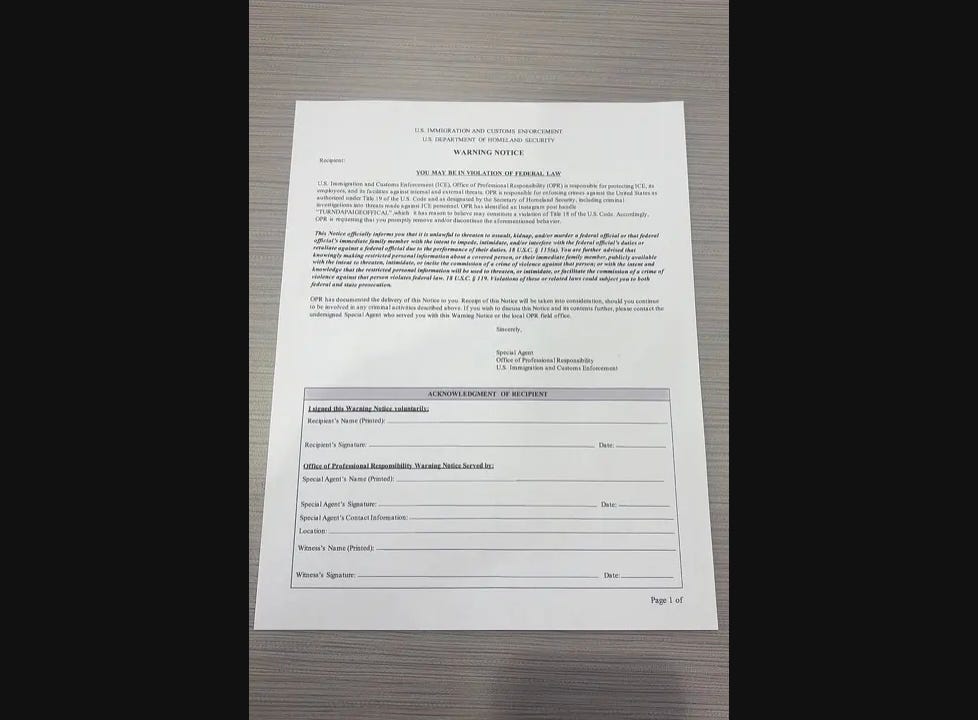
Warning notices look small on paper because that is how intimidation hides itself. A form can be made to look routine, and a visit can be described as a warning. But when armed federal power shows up after a citizen criticizes ICE, the purpose is not hard to read. It tells people that speaking about ICE violence can bring the government into their home, workplace, hotel, family space, and ordinary life.
The Minnesota killings are the reason this pattern matters. Minnesota officials sued the Trump administration for access to evidence they say they need to independently investigate three shootings by federal officers, including the killings of Renee Good and Alex Pretti. The lawsuit claimed the federal government reneged on cooperation with state investigations after a federal law-enforcement surge in Minneapolis.
ICE and the federal government have shown urgency when critics speak. The public has not seen that same urgency toward answering why people were killed, who gave the orders, why evidence was withheld, or why critics are being treated like the problem.
That is the vile inversion at the center of this story. In both cases, the government response moved toward the person demanding accountability. Gonyea’s call for indictment brought agents to her workplace. Streever’s criticism of ICE leadership brought officers to his home and hotel. The people asking why Americans were killed are being made to feel watched, while the agency tied to the violence keeps moving.
The deportation machine does not stop at raids, detention, shootings, or deportation flights. It extends into the aftermath by pressuring the people who keep naming victims and turning warning notices into tools of silence. A post, an email, or a demand for indictment should not put an American on a federal intimidation path.
None of us is safe when ICE can treat criticism as something to be served by officers. The danger is not only to Streever or Gonyea. The danger is to every person who sees what happened and decides it may be safer to stay quiet. That chilling effect is the point. Fear does not need a prosecution to work. Sometimes fear arrives as a warning notice handed to a spouse or presented at a job.
ICE must answer for this pattern. The public needs to know who authorized the warning notices, what records were used to locate critics, how agents tracked Streever to his hotel, why Gonyea was confronted at work, why criticism was turned into an enforcement encounter, and why a federal agency accused of killing Americans is being allowed to intimidate people demanding accountability.
The warning notice is not the story’s smallest detail. It is the weapon. ICE is using paper, badges, home visits, workplace confrontations, and hotel appearances to make criticism feel dangerous. This is not public safety. This is political intimidation dressed as procedure.
ICE violence does not stop at raids, detention, deportation, or shootings.
It continues through warning notices, workplace visits, hotel tracking, family intimidation, and pressure against the people who refuse to let the harm disappear.
Americans Against ICE documents these patterns because state violence grows when the public is trained to stay quiet.
Upgrade to support Americans Against ICE and help keep this documentation going.
Related AAI report
This is not the first warning-notice case Americans Against ICE has documented.
Read the prior report on Paigelynne Gonyea, who was confronted at work after criticizing ICE violence:
ICE Agents Confront Syracuse Woman at Work Over Post Calling for Indictment After Renee Good’s Killing

ICE agents confronted Paigelynne Gonyea at work over an Instagram post that called for Jonathan Ross to be indicted after the killing of Renee Good. The confrontation matters because it shows federal power moving directly against a person for public speech about an ICE killing. It also…
The ICE Agent Who Shot and Killed Renee Good Is Back on Duty

Reports say ICE agent Jonathan Ross, who shot and killed Renee Good, is back on active duty in another state while the FBI probe remains stalled.
I fully intend to continue blasting Fuck ICE and Arrest the President. and howling along with them (skipping a few words since I’m white) every single time I drive by DHS. Sorry to any dogs in the area. It’s pretty bad.😁
I agree keep on till it is shut down 💯 no rest for the wicked is true 👍🏼